

Now we are seven and all systems are go. Click http://www.stockbridgeupdates.com and in upper right corner, subscribe or leave us a comment. Find our complete archive from the first issue in August 2020 through April 15, 2026. Search an old article, read or reread them, and of course, take another look at all those fabulous photographs. if you would like to support Stockbridge Updates, go to VENMO @carole-owens-6 (no caps) or mail a check to P. O. Box 1072, Stockbridge, MA. 01262. If you like this issue, pass it on.
IN THIS ISSUE: VOL. II NO. 05 03/01/2021
by Bruce Blair
by Jed Baumwell
by Carole Owens
by Rick Wilcox
by Carole Owens, Managing Editor
by Carole Owens, Managing Editor
by Kate Fletcher
News
COVID Update
- The vaccination is now available for individuals 65 and over.
- Preregistration is the same – reprinted below. Please do not become frustrated – just keep trying – the problem is not organizational: the problem is the availability of enough vaccine. As more doses are available, preregistration will be less frustrating.
- A COVID Vaccination Information line has been set up in Pittsfield. The number is 413-449-5575. It is a recorded message updated weekly or as information becomes available.
- The W.E.B. DuBois Middle School is now a vaccination location for South County in addition to pharmacies like CVS and Walgreen’s and pharmacies in grocery stores.
- People must be pre-approved and pre-registered. If you are 65 +, to preregister go to www.maimmunizations.org, www.getvaccinatedberhsires.org or call 211 and select #2.
Opening and closing in the time of COVID
Canyon Ranch is closed until Spring.
From Tri-Town health: Governor Baker announced yesterday that Massachusetts will move forward to Step 2 of Phase III on Monday, March 1st and he anticipates advancing to Step 1 of Phase IV on Monday, March 22nd provided public health metrics continue to improve.
Changes coming Monday, March 1st:
- Indoor performance venues such as concert halls, theaters, and other indoor performance spaces will be allowed to reopen at 50% capacity with no more than 500 persons
- Indoor recreational activities with greater potential for contact (laser tag, roller skating, trampolines, obstacle courses) will be allowed to reopen at 50% capacity
- Capacity limits across all sectors with capacity limits will be raised to 50% and exclude employees
- Restaurants will no longer have a percent capacity limit and will be permitted to host musical performances; six-foot social distancing, limits of six people per table and 90 minute limits remain in place
News
Notes from Town Boards
Notes from the Finance Committee: February 18 via Zoom
Present:
Committee Members:
- Jay Bikofsky, Chair
- Jim Balfanz
- Bill Vogt
- Neil D. Holden
- Steve Shatz
- Diane Reuss
- Pamela Boudreau
Also present – Michael Canales, Town Administrator, Clarence Fanto, Berkshire Eagle, Hugh Page, Highway Department. and Michael Buffoni, Water Department
- Among the items discussed were possible warrant items: $40,000 for Planning Board consultants to continue for another year, $550,000 to repair and restore the Children’s Chime Tower, and $960,000 to build a raised area at the Red Lion Corner.
- It is anticipated that Stockbridge’s portion of the school budget will go up as will membership in Tri-Town Health. Trash collection rises annually and may result in a rise to the sticker cost passed to residents.
- The Police Department is requesting a new cruiser. It was suggested that if this were an annual expenditure, then it might be part of the annual budget rather than a warrant item. If that suggestion were adopted, then citizens at Town Meeting would not discuss and vote on the individual item but on the budget as a whole.
- Michael Canales said he was working on a schedule for repair/replacement of Highway Department vehicles and could add PD vehicles.
- Built into the budget, there was a 2% salary increase for town workers who are in a union and a 1.3% increase for non-union employees.
- The cost of moving the utilities from the Curtisville Bridge is $280,000, which was approved at the last Town Meeting by a transfer.
- Electric bills may be down due to solar array.
- There was a general comment about focusing on the “tax burden”. And keeping taxes low.
Editor’s note: Stockbridge collects approximately $11 million in taxes annually; the preponderance from real estate taxes. Of the $11 million, last year, Stockbridge set aside (saved) over $1.5 million while having one of the lowest tax “burdens” in the Commonwealth. Bravo! Please continue to spend wisely and not save gratuitously.

Notes from Stockbridge Bowl Stewardship Committee: February 18 via Zoom
Present:
- Jamie Minacci, Chair
- John Loiodice, Sewer and Water Commission
- Charles Kenny, Board of Health
- Michael Nathan, SBA
- Roxanne McCaffrey, SB
- Mike Buffoni, Water Department
Also present: Richard Seltzer, SBA, Anita Schermer, Democratic Town Committee, and James Wilusz, Tri-Town Health
- The Chair thanked the lake management consultants who reported last meeting: Dr. Ben Burpee, Dr. Bob Kortmann, and Chris Mayne.
- It was suggested that minutes of that meeting be sent to the consultants to assure technical information is accurately reported.
- The committee discussed the nine boulders that a lake front homeowner placed in Stockbridge Bowl and what mechanism exists for forcing removal/ enforcing all lake rules including not using RR ties which contain creosote in the lake and enforcing the order of conditions set down by the Conservation Commission.
- Jim Wilusz from Tri-Town Health announced there will be an important discussion about the risk/benefit of spraying for mosquitoes.
- Michael Nathan expressed the need for dredging to assure the continued health of the lake.
- Two warrant items were suggested for this year’s Town Meeting: to make the Lake Stewardship Committee a permanent commission with a budget; to move a water main out of the water under Tuckerman Bridge.

Notes from the Select Board: February 18 via Zoom
Present:
- Chuck Cardillo, Chair
- Patrick White
- Roxanne McCaffrey
- Michael Canales, Town Administrator
Also present: 5 Stockbridge residents (CTSBTV camera angle did not include their faces and information)
- The Select Board approved the request from Art Krieger, Beachwood, for a warrant item that will eventually allow the residents of Beachwood to make the fees to maintain their roads and beach an item on their Stockbridge tax bill.
- To qualify for MVP (Municipal Vulnerability) and HMM (Hazard Material Mitigation) grants, Stockbridge has to complete the forms.
- The work necessary on Stockbridge bridges goes forward and a plan to move more quickly and cost effectively was discussed. There was no final decision.
- The costs of the Children’s Chime Tower and the “raised piece of pavement” at Red Lion Inn corner are $550,000 and $960,000 respectively. The latter may be an estimate, because there was also mention of further discussion about the intersection at the 2/25 SB meeting.
- Questions were asked about the requirement (if any) for the date of Town Meeting.
Editor’s note: Rick Wilcox checked the original town charter (1737) and the incorporation papers (1739) and no requirement for the exact date of Town Meeting was specified. Over the 280 years of history, Town Meeting has occurred on many different dates. For example, in 1946, Town Meeting was held in February.
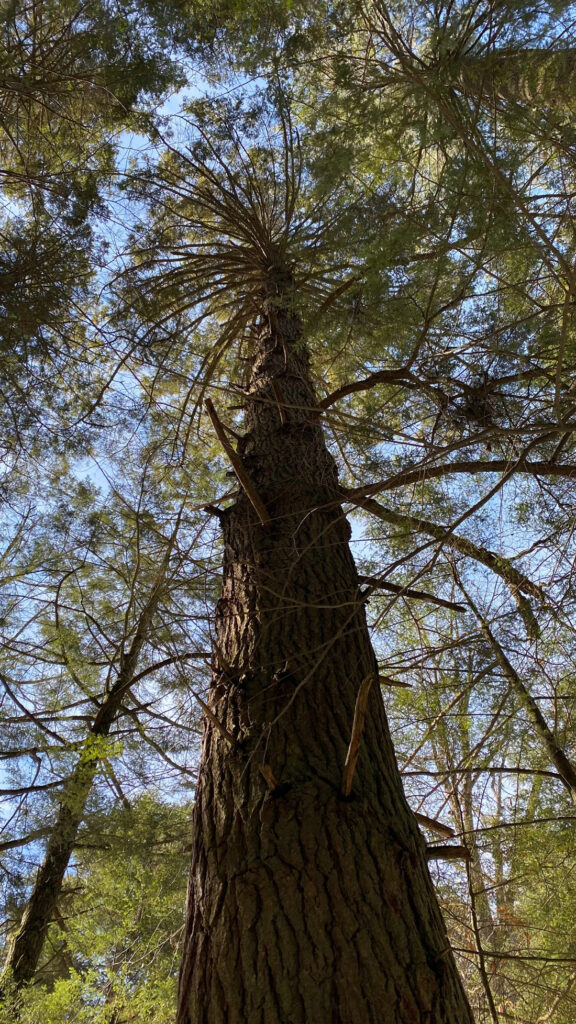
- We have an old growth forest in Stockbridge. It is a valuable resource with trees ranging in age from 2-400 years. However, according to three expert foresters who walked Ice, it is under attack from three insects. To save it, we must act quickly.
- The Glendale Post Office is now closed. There are additional post office boxes in the lobby of the Stockbridge Post Office. The Select Board is hoping there may be a solution in Glendale – McCaffrey suggested using town-owned land for boxes.
- The conversation about what will appear on the warrant will continue at 2/25 SB meeting.

Notes from Board of Selectmen Meeting: February 25 via Zoom
A joint meeting of the SB and Finance Committee
SB Present:
- Chuck Cardillo, chair
- Roxanne McCaffrey, member
- Patrick White, member
- Michael Canales, Town Administrator
Finance Committee present:
- Jay Bikofsky, Chair
- Committee Members:
- Jim Balfanz
- Pamela Boudreau
- Neil D. Holden
- Diane Reuss
- Steve Shatz
Also present: Regional School District Planning Board Chair Lucy Prashker, Taylor, Vice Chair Peter Taylor, Police Chief Fennelly, Water Superintendent Mike Buffoni and Sewer Superintendent Tony Campetti. In addition 22 citizens (unseen)
- Regional School District Planning Board
Lucy Prashker, RSDPB chairman, presented a report about a two-phase program to project needs of the schools and plan. Phase One was completed under a $50,000 grant. It projected that the current downward trend in enrollment will continue. That means less state aid but many fixed costs. The fixed costs may rise even if the school enrollment falls.
Phase Two, at a cost of approx. $240,000, will plan for that future. The cost will be covered by a $120,000 grant and $15,000 per town/ 8 towns/ $120,000. If the grant award is larger the allocation from town could be smaller; if the grant is smaller, the allocation could go up.
The joint SB and Finance Committee voted approval of the plan.
The $15,000 will appear as a warrant item at Town Meeting.
One possible recommendation may be a consolidation of the county schools.
- Police Department
- Although many budget items went down, the overall request was higher. The costs reduced or eliminated were after a review by Town Administrator who discovered unspent or underspent line items and projected this budget based on real expenditures. The total went up because the Police Department is requesting a new cruiser, a hybrid. The police cruiser is a hybrid and it is anticipated there will be substantial savings in fuel costs and emissions.
- Eliminated “special police” line item.
Editor’s question: does that include elimination of policeman at Red Lion corner? - Reduced overtime.
- Water Department
- Solar array reduced electric costs.
- Moved line items to maintenance.
- Water meters anticipated repair/replacement @ $300 per customer
- Reduced safe water tax to Commonwealth, postage, and office supplies. 4.9% reduction
- Residents have well and not connected to Stockbridge town water – apparently cannot be extended without building costly pumping stations.
- Sewer Department
- Reduced electricity and purchase of safety equipment. Otherwise, budget same as last year.
- Patrick White asked: can we extend sewer? Never studied question.
- Neil Holden would not support town paying for it.
- Ice Glen Tree Survey
Three forestry experts walked the Stockbridge Old Growth Forest in Ice Glen. They evaluated it as rare and valuable and also in fair to poor condition. Without treatment, the forest will be lost within 2.5-3 years. The recommendation of the experts is to conduct an inventory and assessment of the entire stand at a cost of $6,000 and to do it quickly. Kate Fletcher, Shelby Marshall, Jim Balfanz, Select Board members Roxanne McCaffrey, Chuck Cardillo and Patrick White supported spending $6,000 for the tree inventory and saving some of the oldest and tallest trees in New England. Nevertheless, the Finance Committee did not immediately support it and requested more information. The Finance Committee suggested it may relate to falling trees and public ways.
Joint meeting ended. Next joint meeting March 11: Highway, Fire Department, and capitol items including continuing Ice Glen item
The Select Board previously waived some alcohol license fees and now waived the seasonal liquor licenses for 501c3 nonprofits.
SB discussed bylaws
- Short-term rentals – two drafts under consideration. One is a zoning bylaw and the other provides the town with regulatory powers when an infraction occurs. White supported regulatory-only approach if the Town would monitor the percentage of housing stock that is residential. McCafffey suggested Tri-town Health input. Discussion to continue.
- Steven Stern, resident, spoke against postponing decisions. Isabel Rose also spoke in favor of clear regulations.
- Cardillo mentioned the problem is not in the future but is upon us, that is, more and more folks are buying properties not to live in but to rent.
- Resident Ben Liptzin asked if some AirB&B owners are putting renters in a basement without an exit, isn’t that a violation of fire code?
- Kate Fletcher and other residents had questions about how parking, dumpsters, fine collection, and costs to the town would be addressed in regulations. The discussion will continue on March 11.
- The Select Board reviewed a bylaw that requires house numbers to be visible from the street to aid first responders, EMT, fire, and ambulance in finding addresses. Continued to next meeting.
Notes from Planning Board
This month the Planning Board had 3 meetings. The regular PB meeting on February 16 followed by two meetings led by their consultant, Jeff Lacy, introducing a potential zoning bylaw called the Natural Resource Protection Zoning Bylaw (NRPZ). With Draft 2, Lacy added an H for Historic and referred to it as NHRPZ.
Regular Planning Board Meeting: February 16 via Zoom
Board Members:
- William Vogt, Chair
- Marie Raftery
- Christine Rasmussen
- Katherine Fletcher
- Nancy Socha
- Wayne Slosek
- Jennifer Carmichael, secretary
- Consultants: Jeff Lacy and Philip Arnold
In addition: On behalf of special permit requests: David and Ann Mintz, owners, David Potter, design, Jackson Alberti, Forsythe, Marc Volk, and attorney Lori Robbins
- Proposed new building on Lakeview Drive, David and Ann Mintz applicants, approved.
- Budget discussion: PB requested a raise for Jennifer Carmichael due to increased hours and a continuation of consultant fees ($40,000) for the second year.
- The Chair announced a zoning bylaw ready for the May Town Meeting “iffy”.
- Grant available from Berkshire Regional Planning. It would fund a survey of housing. PB turned down request to apply citing “too much on their plate”. Patrick White said MVP was conducting a town-wide survey and suggested Planning Board questions might be.
- Phil Arnold, consultant, said the three zoning bylaws for driveways, parking and signs are ready to be sent to the Town Attorney for review and then to the SB.
- The subcommittee formed to work with consultant Jeff Lacy was disbanded as not in compliance with Massachusetts Open Meeting Law (OML). The Chair requested that PB members wishing to ask questions or communicate ideas do not contact Lacy directly but go through Christine Rasmussen.
- Jeff Lacy conducted a general discussion about Natural and Historic Resource Protection Zoning (NHRPZ). Lacy stressed there will be hard decisions, and how PB decides depends on what it wants for Stockbridge.
Editor’s Note: The draft, identified as Draft #2 is protective of open space, controls density, is respectful of our history and natural resources, and protective of Stockbridge as a residential village. It seems a moment to salute the PB for bringing Lacy and his experience onboard.
Notes from the Planning Board Meetings: February 17 and February 23 via Zoom
Present: Consultant, PB members, and from the public: Nina Ryan, Barney and Julie Edmonds, Anita Schwerner, Richard Seltzer, Jamie Minacci, Select Board members Patrick White and Roxanne McCaffrey
Editor’s overview:
Natural and Historic Resource Protection Zoning (NHRPZ)
NHRPZ is a proposed zoning bylaw that relates to subdivisions only. There are criteria for when NHRPZ applies. For example, Lacy identified parcels of 20 acres or more to which NHRPZ would apply.
What if an owner has a parcel of 20 acres or more, but does not have adequate frontage for the number of houses he or she wishes to build? The owner proposes to build a road through the property to create more road frontage, that is by definition, subdividing. It is a subdivision NHRPZ applies.
By right
In 2020, a single house on Prospect Hill Road, zoned R4, sold to a developer. The house was on a parcel of 12+ acres with adequate road frontage for 3 houses (900 feet). The developer divided the property into 3 lots, built two additional houses, and sold all three. Since the developer satisfied the zoning criteria regarding lot size and road frontage per house, he could do as he pleased with his property by right of ownership.
Zoning
Governments, state and local, place restrictions on what individuals and businesses can do with their property. Limits are placed for the common good, for example health and safety. There may be a tension between what the owner wants to do and what zoning allows — between profitability and density. To maximize profit, the developer may want to build as many units as possible. The results may be congestion, loss of open space, buildings too close together for privacy and too close to the road for safety. Developer might argue that his development with increase taxes – raise money. Lacy reminded the PB that density also costs money – in roads, utilities, police, fire – perhaps more than it generates. Zoning attempts to balance the individual desire and the common good — what a developer wishes to do and what he can do.
NHRPZ
NHRPZ is a framework into which the PB plugs numbers. The framework is consistent; what happens in Stockbridge depends upon the numbers plugged in. A developer has a worksheet: What number of houses will generate sufficient profit to justify sticking the shovel in the ground? NHRPZ offers the Town of Stockbridge a worksheet as well: what do we consider acceptable density? The decisions made today will shape Stockbridge tomorrow.
PB February 17 via Zoom
- The following was a review of Draft # 2. Changes from Draft # 1 include:
- The H signifying Historic Protection was added.
- The divisor (defined below) was changed from 8 to 6 (the lower the number the greater the density)
- There was a suggestion – not yet adopted? – to change the % of preserved land from 80% to 60% (The lower the % the greater the density)
- NHRPZ replaces conventional subdivision zoning now on the books. However, an alternate plan can be approved by Special Permit if granted by PB.
- NHRPZ controls density, allows fewer units per property, and requires a percentage of conserved land. PB Chair voiced concern about the developer making money if fewer units are allowed. Christine Rasmussen suggested perhaps with more greenery the price per unit would be higher.
- While Open Space Residential Development (OSRD) suggested by Russell Arendt is density neutral; NHRPZ is density negative. Density neutral guarantees a developer the same number of units as could be built in a conventional subdivision; NHRPZ is density negative because the formula, by virtue of preserving a fixed % of the parcel, allows fewer units.
- Density neutral creates a building boom as it allows more units to be built at a lower cost (less infrastructure)
- As proposed, NHRPZ is applicable to parcels of 20 acres+ being subdivided. NHRPZ supplants conventional subdivision zoning, and 2–4-acre zoning IF a 20+ acre parcel was being subdivided. It does not apply to parcels less than 20 acres being subdivided or parcels with sufficient road frontage to build multiple units without subdividing.
- Cost/benefit to Stockbridge – The consultant did not appear to agree with those who suggested building more units was necessarily a net income to town.
PB February 23 via Zoom
- Consultant Lacy continued to explain NHRPZ which applies to subdivisions only.
- There are two key parts of NHRPZ: The Conservation Analysis and the Work Sheet.
- Conservation Analysis identifies what is “constrained”, that is, cannot be built on. The analysis is required of the developer, and at developer’s expense; the PB may hire their own expert.
- The goal is to determine which parts of the acreage must be preserved (called constrained). For example, wetlands, steep slopes, view shed, streams, and much more. Specifically, for Stockbridge, Lacy added things of Native American origin and of historic significance. The list can be augmented or more limited.
- As an example of the Work Sheet and at the PB’s request, Lacy used 37 Interlaken (DeSisto). Of the 320 acres, 244 would be preserved. That figure is arrived at by:
- Dividing the acreage between that zoned R2 in front (about 60 acres), and R4 in back (about 260 acres).
- From the front 60 subtract 10 acres of wetlands. Divide the remaining 50 acres by the “divisor” of 4 because it is R2 and 12 units are allowed – always round down.
- From the back 260 subtract 105 acres for steep slope. Divide the remaining 155 acres by 6 (because it is R4) and you can build 25.38 units – round down – 25.
- Your total is 37. That is the beginning.
- The next step is to determine the best location for building to avoid any natural assets (like a stream).
- The hard decisions to which the consultant referred are the numbers (the divisor, the % of slope, the % preserved etc.). The density is increased when the numbers are decreased. Lacy explained the framework is solid, helpful, and has been successfully adopted all over Massachusetts – the numbers plugged in creates the outcome – what a town will be.
Opinion
Opinion — A Challenge for the Planning Board
The duties of our volunteer Planning Board have become more complex. Concerns range from understanding current bylaws, following meeting procedures, tracking the budget, and coping with public engagement to the technical aspects of decision-making for increasingly complex individual building projects.
Yet the Board’s leaders continue to rush through a major housing development bylaw, calling it “Natural & Historic Resource Protection Zoning (NHRPZ”), which may well attract new developer construction in the town’s green belt. If the Board chairs and their associates have their way, this major change will come up for a vote at the May town meeting, piggy-backed on a Cottage Era Estate development revision.
The state requires all towns to have a Master Plan, and the Planning Board must oversee it. The 1996 Stockbridge Master Plan is the most outdated of any in the region. The idea of rushing through a major bylaw change with little time for public involvement suggests that special interests may be at work to make this change happen ASAP. But we first need a new Master Plan that involves everyone.
The law says: “A planning board… shall make a master plan that is designed to provide a basis for decision making regarding the long-term physical development of the municipality.” (Section 81D). It is the roadmap of our future.
The response to our outdated Master Plan from the Planning Board Chairs is to cite the 2016 Visioning Report. It concluded that participating residents (92%) wanted the preservation of “The Great Outdoors”, and “Historic /rural charm and natural beauty”( 91%). But it also concluded: “The divergence of opinion about the future direction of housing points to the need for further community education and discussion on this topic.” (Visioning Report Appendix).
“Education and discussion” have barely been addressed since 2016, but would be part of a new Master Plan.
The Visioners said: “Housing growth is a complicated issue facing most communities,” and planning for it is more complex than the Visioning Project can accomplish. Visioning Report (page 4). And they say that a new a Master Plan should follow the report!
The Planning Board leadership has apparently run afoul of Open Meeting Law requirements in their rush to get their developer-friendly bylaw through. The Planning Board Chairs should support meaningful public input. This bylaw should not appear on the May town warrant without a new Master Plan. Yes, it is hard work and it takes time – because we need to get it right.
by Bruce Blair
Opinion
Opinion — A Challenge for the Select Board
This letter serves as a challenge to the Town: In the 6 years that I have lived in Stockbridge, I can’t find one major public improvement initiative by the Town that has been clearly articulated to the residents, has started on schedule, and has stayed within budget.
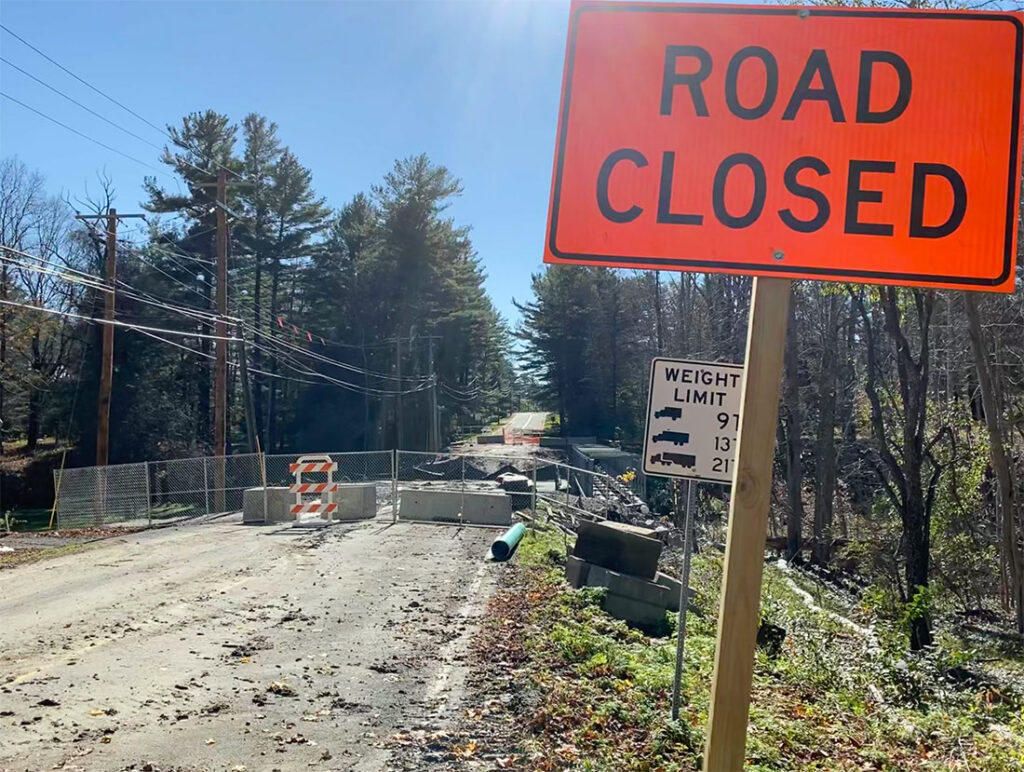
There have been and clearly will be capital needs: there are multiple bridges that are collapsing with road closures; there is a new town garage that was mismanaged and caused significant budget problems; there is an old town hall that has ongoing repairs but no effective reuse; the Stockbridge Bowl was a contentious, costly, and unproductive battle with the Association; solutions to the intersection at the Red Lion Inn have been kicked around for over two years; the high school continues to physically deteriorate while enrollment declines; the public facilities, like the town beach and the town playground, are an embarrassment; the small commercial district seems dated, and future tenancy is uncertain. There are many more examples which those who have lived here longer are well aware.
I’ve asked myself why, in such a beautiful setting, is the town unable or unwilling to initiate plans and then properly implement them? I have concluded the following:
The starting point for elected officials and many others who surround Town Hall is to keep taxes low. At the moment, it appears that revenues are insufficient to properly operate a full-service town. We continue plodding along with an untrained SB when we have a capable Town Manager. Wouldn’t a five person SB with a strong town manager be a better, more productive form of governance? We continue to reject possible cost savings and better services through cooperation with other towns. Do we still think that reliance on volunteer committees in lieu of paid professional staff will meet Town needs? In the 1950s this type of governance may have sufficed, but it doesn’t work in the 21st century.
The demographics of the Town are working against current conditions. The future requires a commitment to improving Town facilities. In cooperation with part-time residents and business owners, a capital plan needs to be generated. This plan requires the support of both the electorate and elected officials. It must identify immediate needs, longer term needs, their attendant costs, and financing alternatives. Such a plan must start to be implemented in the coming fiscal year.
by Jed Baumwell
The Last Word
Reader to Reader – We Got Mail
Dear Carole,
I am pleased that many city folks have come to settle in Stockbridge during the pandemic, but there are some other new residents who have settled in Stockbridge recently who are posing a serious threat to our environment. Climate change has allowed them to migrate to the north, and they have plans to decimate Ice Glen.
Thanks to Patrick White’s article in the last Stockbridge Updates, we now know that the woolly adelgid is attacking the hemlocks in Ice Glen, an Old Growth Forest, which contains the oldest and tallest hemlocks in Massachusetts. After the woolly adelgids arrive and start feeding on the hemlocks, the trees will die in only a few years. As a result, Ice Glen might be changed forever, and become a graveyard of dead hemlocks.
The good news is that we can solve this problem and allow Ice Glen to continue to be a special refuge for both wildlife and nature lovers.
Our family has experience with combatting woolly adelgids; we have a lake cabin in north central Massachusetts which is in a hemlock forest. Our hemlocks were badly afflicted by woolly adelgids several years ago and we treated the trees by injection. Those trees are now in vigorous good health, and we were able to avoid a catastrophe.
Patrick White has taken initial steps to assess the problems at Ice Glen, and has plans to seek support from the town, the state, and Stockbridge residents for financial contributions to restore the health of our stricken trees. I hope that many people in town will support and contribute to these efforts to preserve an environment that is a unique Stockbridge treasure.
Thanks,
Paul Sundberg
Dear Paul,
Thank you for your letter and your cogent thoughts. Also please thank your wonderful wife, Lenore, for all she does for Stockbridge Updates.
Carole
Dear Carole,
As a sometimes contributor to Updates and as a writer who has been known to get carried away on any number of subjects, I have run up against our esteemed Editor’s rule limiting article contributions to 400 words. I argued that I had much to say and it was of great value, but to no avail. Could she just make an exception just once for my vital contribution? No, she said, everyone plays by the same rules.
So I became an editor of my own work. I noticed it was faster to just write 400 words. And often much clearer, more concise, and accessible. Hey, not a bad idea! But I also realized that part of having a free press is that it must be allowed to set its own terms and limits. Want proof? Here is Chief Justice Warren Burger’s decision on the subject from the Supreme Court decision which protects this basic freedom to choose for the press. And his concluding paragraph is well under 400 words!
Miami Herald Publishing Co. vs. Tornillo, April 1974 In a unanimous decision, Chief Justice Burger argued that: “forcing a newspaper to print something that reason tells them should not be published violated free press guarantees. Furthermore, telling the Miami Herald what it must print is no different from telling them what not to print. Coupled with this argument was the point that enforcing the right to reply statute would incur printing costs and limit column space, effectively preventing the editors from printing other items that they may deem more important.”
In conclusion, Justice Burger wrote: “A newspaper is more than a passive receptacle or conduit for news, comment, and advertising. The choice of material to go into a newspaper, and the decisions made as to limitations on the size and content of the paper, and treatment of public issues and public officials — whether fair or unfair — constitute the exercise of editorial control and judgment. It has yet to be demonstrated how governmental regulation of this crucial process can be exercised consistent with First Amendment guarantees of a free press as they have evolved to this time.”
Bruce Blair
Dear Bruce,
Bless your heart for self-editing, for sharing this very important Supreme Court decision, and accomplishing it all in 385 words. My wish and the policy of Stockbridge Updates is to include all articles submitted as long as they follow the rules. So please keep them coming, and please follow the rules. There are only 3: all articles and opinion pieces must be 400 words or less, must have the name of the author attached, and must not have ad hominem attacks.
Carole
by Carole Owens
Insight
Stockbridge History – The Lock Up
Town residents of a certain age may remember the Youth Building on Shamrock Street. The building was home to many events including scouting and after school programs. Most might not recall that it was also the site of the first highway garage. The land was taken by the town c. 1876 to be allocated for a lockup.
To see how far reaching the impact of the Great Panic of 1873 was, one only had to turn to the town reports of that decade in Stockbridge. April 1874 Town Meeting, article 10: “to see what action the town will take in relation to locating, building, and maintaining a lockup.” The wheels of government do at times turn slowly. April 5, 1875, Annual Meeting, “article 11, To see about building a lockup.”
Like other improvements in the field of criminal justice, necessity is a great motivator, and Stockbridge was no exception. In the town report of April 1, 1875, Pauper Expenses: “there has been paid for Support of the Poor the sum of $1,592.09. Of this $414.15 was paid to aid transient poor, $57.00 of which was last years bill, leaving $357.15 paid on account of tramps this year. The tramp nuisance is getting to be unendurable and we hope the town will take measures to get the benefit of the new law just passed by the legislature, which authorizes towns to compel the tramps to do a certain amount of work.”
The town report of 1877, Tramps: The number of tramps lodged has been 449 at an expense of $180.35 as follows: Dennis Morissey $111.25; J.B. Hull $1040 coal for lockup; George Seymour $18.81 refreshments; T.B. Patterson $1.75 work; C.L. Lynch $1.50 keeping tramps; C.L. Lynch $4.50 wood for lockup; A. Hollenbeck $3.00 work at lockup; C.H. Willis $27.64 coal for lockup; Thomas Kincherly $1.50 keeping tramps. In the 1879 Town Report the number of tramps was down to 149 at an expense of $73.36.
The “new” brick Dutch Revival style Town Office of 1884, at 34 Main Street, would become home to the next lockup. At a September 17, 1902 Town meeting it was ordered to construct suitable quarters on town property and dispose of the present lockup building. The lockup of fine Stockbridge limestone was dismantled. Two cells were placed in the basement of the new Town Offices. In 1963 new cells, made famous by Arlo Guthrie, were placed in the newly renovated Town Hall.

by Rick Wilcox
Introduction
Stockbridge Updates Statement of Purpose
To inform without opinion or pressure and give the people of Stockbridge the facts they need to make informed decisions.
To provide space for opinion, but since facts and opinions are different, to clearly mark opinion pieces, and clearly identify the opinion holder.
Stockbridge Updates is a periodic newsletter delivered through email.
by Carole Owens, Managing Editor
News
The 2021 Town Election
Stockbridge Updates will publish “Stockbridge Candidates Q&A”
Stockbridge Updates invites all those running to retain their seats and those challenging them to please contact Stockbridge Updates and schedule an interview. In the May 1 issue, before election day, SU will print or videotape the candidates’ opening statements and answers to three questions.
To assure fairness, we will collect statements and answers whenever the candidate is ready and post them all in the same issue. Contact SU to be included in “Stockbridge Candidates Q&A”. Thank you. An informed electorate is the first priority of Stockbridge Updates.
Taken out papers:
- Christine Rasmussen: Planning Board
- Jamie Minacci: Moderator
- Jimmy Welch: Housing Authority
- Gary Pitney: Planning Board & Board of Assessors
- Charles Kenny: Board of Health
- Collected signatures and returned papers:
- Donald Schneyer, Water & Sewer Commissioner
- Gary Johnston, Moderator
- Mark Faber, Tree Warden
Open seats in 2021
3-year terms: Moderator, Selectman, Board of Assessors, Board of Health, Tree Warden, Sewer and Water Commission
5-year terms: Planning Board, Planning Board, Housing Authority
Appointments: Finance Committee, Berkshire Regional Planning Commission – alternate
The current occupants of the seats are:
- Gary Johnston, Moderator
- Ernest (Chuckie) Cardillo, Selectman
- Gary Pitney, Chair, Board of Assessors
- Charles Kenny, Chair, Board of Health
- Peter Curtin, Tree Warden
- Donald Schneyer, Chair, Sewer and Water Commission
- Christine Rasmussen, Planning Board
- Gary Pitney, Planning Board
- James Welch, Housing Authority
- Jay Bikofsky, Chair, Finance Committee
Thank you all for your service. Good luck to you and to the contenders.
The people currently in the seats may choose to run again or decline to run. All those wishing to run will return nomination papers with requisite signatures by 5:00 p.m. on Tuesday, March 30, 2021 to gain a place on the printed ballot.
Carole Owens, Managing Editor

Stockbridge votes!
Stockbridge votes for candidates at the voting booth and votes on the issues at Town Meeting.
The population of Stockbridge is 1731; the total number of registered voters is 1507. That means 87% of residents are registered voters. However, the number of ballots cast at the annual Town Meeting in 2019 – pre-COVID – was 556. During COVID, at the 2020 annual Town Meeting, 204 voted – more than voted at Town Meeting. In the local election of 2019, 548 voted – fewer than at Town Meeting. During COVID in 2020, 556 voted. Candidates for local positions with 3-400 votes won. 87% registered to vote; 36% exercised their right to vote, and 23% of registered voters elected our local representatives.

by Carole Owens, Managing Editor
Around Town
The Berkshire Cottages
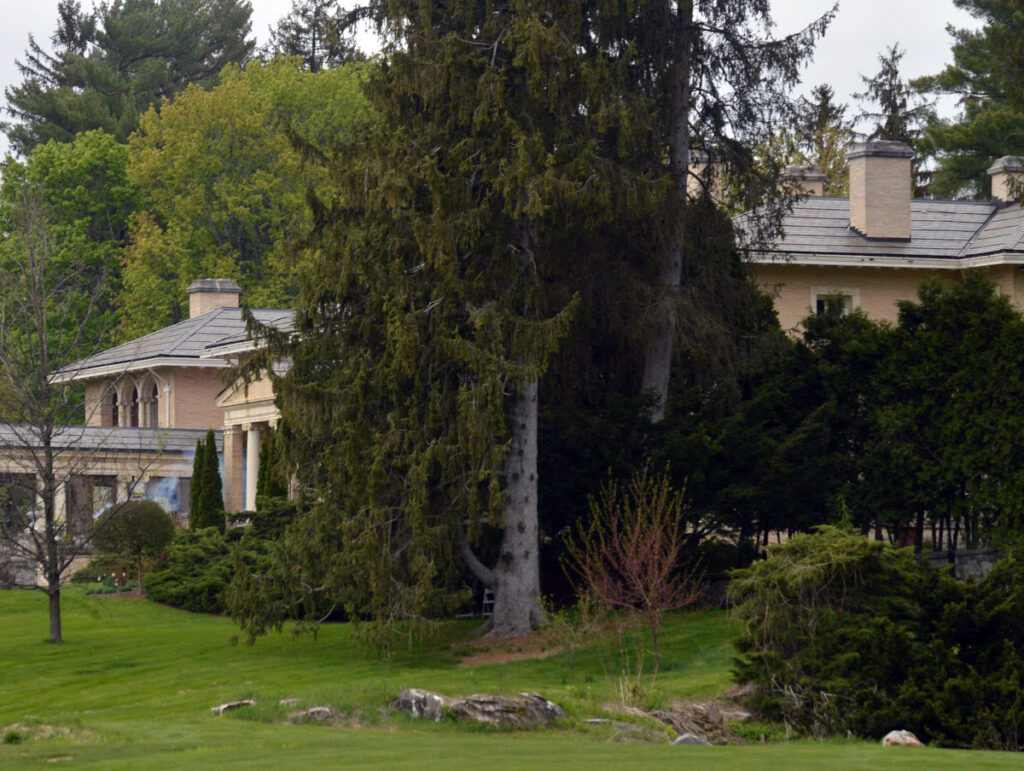
My book, The Berkshire Cottages, is now 40 years old. Old enough to be irrelevant, and yet, at a recent PB meeting, the question was asked: how many Berkshire Cottages are there? Sadly, the answer given was 3.
During America’s Gilded Age, there were 93 Berkshire Cottages built in South County alone. Great swaths of Stockbridge are covered with Berkshire Cottages. Cottages were contiguous or continuous from the intersection of Pine Street and Prospect Hill Road to the grounds of Tanglewood, from Main and Pine to the golf course. Others dot the landscape along Route 183, Old Stockbridge Road, and all over town.
By definition, a Berkshire Cottage is “more than 20 rooms on no fewer than 20 acres”, so whether the proposed zoning bylaw redefines the property size from 80 to 20 acres, many Cottages will be involved.
The acreage covered by the Cottages today, even after the sale of land over the decades just on Old Stockbridge Road is: Elm Court (300+ acres), and Merrywood (current acreage unknown). Even more important, many of the reuses of the old mansions are nonprofits: Naumkeag (48 acres), Norman Rockwell Museum (36 acres) Tanglewood (538 acres), Kripalu (125 acres), and Austen Riggs (unknown acreage in the center of town). Wheatleigh, a for profit business, has 22 acres. All of these are former Berkshire Cottages – over 1000 acres. Imagine if any of these, nonprofit or for profit, go out of business or want to sell land to stay afloat; Stockbridge will be forever changed.
Buildings are the repositories of our memories. Tear them down and there is a rent in the fabric of the Stockbridge story. Who were we, who are we, and who do we want to be? How did Norman Rockwell pick Stockbridge as America’s hometown? Why was Stockbridge called the “American Lake District”? Why did Carnegie and Vanderbilt call Stockbridge home? The answers constitute our Stockbridge story, and the story is inexorably contained in the walls of the Berkshire Cottages.
News
Update on the Cat and Dog Fountain

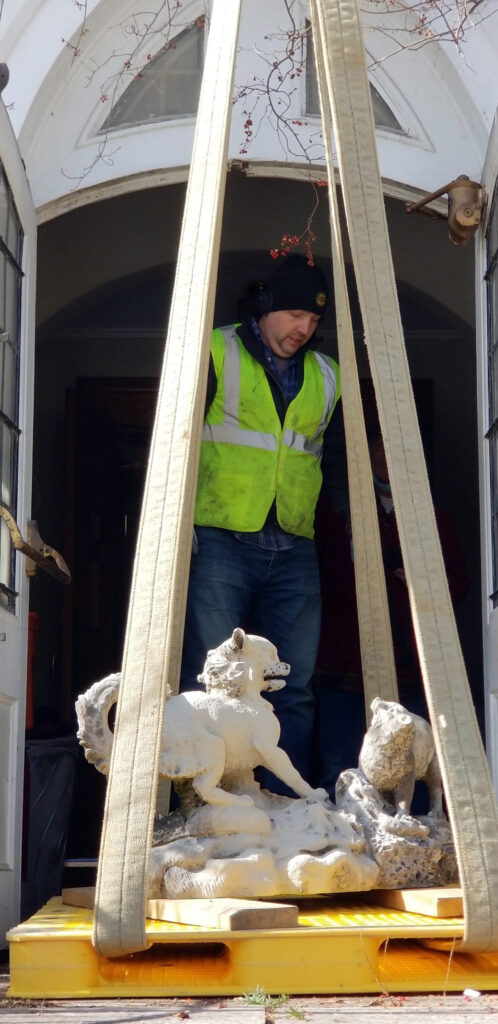
On a cold but sunny winter day, the cat and the dog may have been surprised to find themselves hoisted ignominiously by crane from their perch downtown and brought to a church where they will be restored by Jeff Gulick of Timberwolf Restorations LLC. Jeff’s studio is in what was formerly the All Saints Parish Church in Housatonic. Well-wishers kept the Cat and Dog company as the town-owned sculpture was carefully prepared for the trip to Housatonic by Thad Tomlinson and Frank Fay of Berkshire Crane & Logistics LLC. We will all miss the Cat and Dog, but we hope they will enjoy being out of the cold. As I left the church, Cat was happily chasing a mouse and Dog was curled up on an elegant antique sofa taking a nap.
Special thanks to Mike Buffoni (Water Superintendent), Hugh Page (Highway Foreman) and Mike Canales (Town Administrator) for their assistance and support with this project!
by Kate Fletcher
Sign Up for
Stockbridge Updates
Local news provided free of charge.
Past Issues
-
VOL. VII NO. 17 10/01/2026
-
VOL. VII NO. 16 09/15/2026
-
VOL. VII NO. 15 09/01/2026
-
VOL. VII NO. 14 07/15/2026
-
VOL. VII NO. 13 07/01/2026
-
VOL. VII NO. 12 06/15/2026
-
VOL. VII NO. 11 06/01/2026
-
VOL. VII NO. 10 05/15/2026
-
VOL. VII NO. 09 05/01/2026
-
VOL. VII NO. 08 04/15/2026
-
VOL. VII NO. 07 04/01/2026
-
VOL. VII NO. 06 03/15/2026
-
VOL. VII NO. 05 03/15/2026
-
VOL. VII NO. 04 03/01/2026
-
VOL. VII NO. 03 02/15/2026
-
VOL. VII NO. 02 01/15/2026
-
VOL. VII NO. 01 01/01/2026
-
VOL. VI NO. 22 10/15/2025
-
VOL. VI NO. 21 10/01/2025
-
VOL. VI NO. 20 09/21/2025
-
VOL. VI NO. 19 09/15/2025
-
VOL. VI NO. 18 09/01/2025
-
VOL. VI NO. 16 08/15/2025
-
VOL. VI NO. 15 08/01/2025
-
VOL. VI NO. 14 07/21/2025
-
VOL. VI NO. 13 07/15/2025
-
VOL. VI NO. 12 07/01/2025
-
VOL. VI NO. 11 06/15/2025
-
VOL. VI NO. 10 06/01/2025
-
VOL. VI NO. 09 05/15/2025
-
VOL. VI NO. 08 05/01/2025
-
VOL. VI NO. 07 04/01/2025
-
VOL. VI NO. 06 04/15/2025
-
VOL. VI NO. 05 03/15/2025
-
VOL. VI NO. 04 03/01/2025
-
VOL. VI NO. 03 02/15/2025
-
VOL. VI NO. 02 02/01/2025
-
VOL. VI NO. 01 01/15/2025
-
VOL. V NO. 22 11/15/2024
-
VOL. V NO. 21 11/01/2024
-
VOL. V NO. 20 10/15/2024
-
VOL. V NO. 19 10/01/2024
-
VOL. V NO. 18 09/15/2024
-
VOL. V NO. 17 09/01/2024
-
VOL. V NO. 16 08/15/2024
-
VOL. V NO. 15 08/01/2024
-
VOL. V NO. 14 07/15/2024
-
VOL. V NO. 13 07/01/2024
-
VOL. V NO. 12 06/15/2024
-
VOL. V NO. 11 06/01/2024
-
VOL. V NO. 10 05/15/2024
-
VOL. V NO. 09 05/01/2024
-
VOL. V NO. 08 04/15/2024
-
VOL. V NO. 07 04/01/2024
-
VOL. V NO. 06 03/15/2024
-
VOL. V NO. 05 03/01/2024
-
VOL. V NO. 04 02/15/2024
-
VOL. V NO. 03 02/01/2024
-
VOL. V NO. 02 01/15/2024
-
VOL. V NO. 01 01/01/2024
-
VOL. IV NO. 28 12/15/2023
-
VOL. IV NO. 27 12/01/2023
-
VOL. IV NO. 26 11/15/2023
-
VOL. IV NO. 25 11/01/2023
-
VOL. IV NO. 24 10/22/2023
-
VOL. IV NO. 23 10/15/2023
-
VOL. IV NO. 22 10/01/2023
-
VOL. IV NO. 21 09/22/2023
-
VOL. IV NO. 20 09/15/2023
-
VOL. IV NO. 19 09/08/2023
-
VOL. IV NO. 18 09/01/2023
-
VOL. IV NO. 17 08/22/2023
-
VOL. IV NO. 16 08/15/2023
-
VOL. IV NO. 15 08/01/2023
-
VOL. IV NO. 14 07/15/2023
-
VOL. IV NO. 13 07/01/2023
-
VOL. IV NO. 12 06/15/2023
-
VOL. IV NO. 11 06/01/2023
-
VOL. IV NO. 10 05/15/2023
-
VOL. IV NO. 09 05/01/2023
-
VOL. IV NO. 08 04/15/2023
-
VOL. IV NO. 07 04/01/2023
-
VOL. IV NO. 06 03/15/2023
-
VOL. IV NO. 05 03/11/2023
-
VOL. IV NO. 04 02/15/2023
-
VOL. IV NO. 03 02/01/2023
-
VOL. IV NO. 02 01/15/2023
-
VOL. IV NO. 01 01/01/2023
-
VOL. III NO. 24 12/15/2022
-
VOL. III NO. 23 12/01/2022
-
VOL. III NO. 22 11/15/2022
-
VOL. III NO. 21 11/01/2022
-
VOL. III NO. 20 10/15/2022
-
VOL. III NO. 19 10/01/2022
-
VOL. III NO. 18 09/15/2022
-
VOL. III NO. 17 09/01/2022
-
VOL. III NO. 16 08/15/2022
-
VOL. III NO. 15 08/01/2022
-
VOL. III NO. 14 07/15/2022
-
VOL. III NO. 13 07/01/2022
-
VOL. III NO. 12 06/15/2022
-
VOL. III NO. 11 06/01/2022
-
VOL. III NO. 10 05/15/2022
-
VOL. III NO. 09 05/01/2022
-
VOL. III NO. 08 04/15/2022
-
VOL. III NO. 07 04/01/2022
-
VOL. III NO. 06 03/15/2022
-
VOL. III NO. 05 03/01/2022
-
VOL. III NO. 04 02/15/2022
-
VOL. III NO. 03 02/01/2022
-
VOL. III NO. 02 01/15/2022
-
VOL. III NO. 01 01/01/2022
-
VOL. II NO. 24 12/15/2021
-
VOL. II NO. 23 12/01/2021
-
VOL. II NO. 22 11/15/2021
-
VOL. II NO. 21 11/01/2021
-
VOL. II NO. 20 10/15/2021
-
VOL. II NO. 19 10/01/2021
-
VOL. II NO. 18 09/15/2021
-
VOL. II NO. 17 09/01/2021
-
VOL. II NO. 16 08/15/2021
-
VOL. II NO. 15 08/01/2021
-
VOL. II NO. 14 07/15/2021
-
VOL. II NO. 13 07/01/2021
-
VOL. II NO. 12 06/15/2021
-
VOL. II NO. 11 06/01/2021
-
VOL. II NO. 10 05/15/2021
-
VOL. II NO. 09 05/01/2021
-
VOL. II NO. 08 04/15/2021
-
VOL. II NO. 07 04/01/2021
-
VOL. II NO. 06 03/15/2021
-
VOL. II NO. 05 03/01/2021
-
VOL. II NO. 04 02/15/2021
-
VOL. II NO. 03 02/01/2021
-
VOL. II NO. 02 01/15/2021
-
VOL. II NO. 01 01/01/2021
-
VOL. I NO. 10 12/15/2020
-
VOL. I NO. 09 12/01/2020
-
VOL. I NO. 08 11/13/2020
-
VOL. I NO. 07 11/01/2020
-
VOL. I NO. 06 10/18/2020
-
VOL. I NO. 05 10/01/2020
-
VOL. I NO. 04 09/15/2020
-
VOL. I NO. 03 09/01/2020
-
VOL. I NO. 02 08/18/2020
-
VOL. I NO. 01 08/06/2020