

Now we are seven and all systems are go. Click http://www.stockbridgeupdates.com and in upper right corner, subscribe or leave us a comment. Find our complete archive from the first issue in August 2020 through April 15, 2026. Search an old article, read or reread them, and of course, take another look at all those fabulous photographs. if you would like to support Stockbridge Updates, go to VENMO @carole-owens-6 (no caps) or mail a check to P. O. Box 1072, Stockbridge, MA. 01262. If you like this issue, pass it on.
IN THIS ISSUE: VOL. VII NO. 02 01/15/2026
by Michael Forbes Wilcox
by Carole Owens, Executive Editor
by Christine Rasmussen
Analysis
A Lifelong Pacifist
I have always been a pacifist. My earliest memories include times when I tried to bring people together. As the oldest of five siblings, I was often called upon the settle disputes, or to decide what the next activity would be. Perhaps that is how I learned the satisfaction of being a peacemaker.
We always had a houseful of pets, and long before I knew anything about local indigenous culture, I had become one with the concept that humans are just another type of animal. I became very uncomfortable with eating animal meat, because it felt to me like I was eating my pets. When I was no more than ten or eleven, I told my mother that I wanted to become a vegetarian. She said that was all right with her, but she was worried about how that might affect my health. She advised me to consult with my schoolteacher and with the school nurse to get their opinions.
My teacher, Miss Josephine O’Brien, pointed to the poster of the food pyramid in the front of the classroom and told me to notice the prominent place that meat had on it. The school nurse, Clara Burghart, told me that I needed to eat meat in order to get iron, and that if I stopped, I would grow weak and die. I didn’t want that, so I gave up my quest.
Until high school.
A new family moved into town. Nadia Tao Wend became my girlfriend in our senior year. Her father had been a vegetarian for most of his life. He did not proselytize. He asked me if I knew the expression “strong as an ox” — he explained that oxen are vegetarians. He gave me things to read and told me more than half the people on earth were vegetarians for religious reasons or out of poverty.
I read Let’s Eat Right to Keep Fit, by Adele Davis. In the back of that book there is a table of food content. Commonly used foods (such as a slice of bread or an egg) were listed, along with the nutrients they contained. I became a vegetarian on March 23, 1963. I began to keep a food diary and I recorded the amounts of each nutrient I was consuming.
I quickly realized that not only was I getting plenty of iron (from green vegetables, for example) but that I was eating, even without meat, more than twice the required amount of protein I needed.
I also learned that it takes six times as much land to grow a given amount of protein in the form of meat than it takes to grow food that can be consumed directly, such as rice and beans. If everyone in the world had become a vegetarian when I did, we would not be in the midst of a climate crisis.

by Michael Forbes Wilcox
News
Community Preservation Committee (CPC), December 17, 2025, Hybrid meeting
- Sally Underwood-Miller, Chair, explained there are three “pots” of money – Open Space, Historic Preservation and Affordable Housing
- In years past, there was a reserve fund and a larger award from the state to distribute. This year more was requested than CPC had finds available.
- The awards, and the five denied, are as follows:
Affordable Housing
Construct $ 51,500.00 Roof Repair
Affordable Housing Trust $ 50,000.00 Emergency Funding
Affordable Housing Trust $ 125,000.00 Fund the Trust
Stockbridge Housing Authority $ 25,000.00 Deck and Patio Repair
Open Space/Recreation
Stockbridge Bowl Association $ 10,000.00 Bullard Wood Reforestation
Gould Meadows $ 45,000.00 Parking Lot Improvements Stockbridge Sportsman’s Club $ 30,000.00 Handicap Access Improvements
Berkshire Botanical Gardens $ 7,500.00 Parking Lot ADA improvements – DENIED
Laurel Hill $ 60,000.00 Preserve Improvements
Berkshire Waldorf High School $ 35,000.00 Wyeth Curtis Memorial Bench – DENIED
Michael Cristopher $ 6,000.00 – remove metal fence – DENIED
Norman Rockwell $ 6,000.00 – Historic Tree Maintenance
250th Committee $ 25,000.00 250th Celebrations – DENIED
Parks & Rec $ 100,000.00 Bidwell Park updates and expansion
Historic Preservation
Berkshire Theatre Group $ 150,000.00 Berkshire Playhouse Renovation
Kripalu $ 50,000.00 Shadow Brook East Gatehouse
Cemetery Commission $ 44,575.00 Vault (from money returned to CPC as unused)
Open Space and Historic Preservation James Lawson $600,000 Konkapot Apiary – DENIED

Editorial
Editorial: Celebrate!
Happy 250th anniversary! But wait, what exactly are we celebrating? Our United States of America, always unique and often revolutionary, surprisingly, is celebrating a piece of parchment. That’s right. It is the anniversary of some words – the 250th anniversary of the Declaration of Independence, signed July 4, 1776.
One of the least instructive of children’s verses is “sticks and stones may break my bones, but words will never harm me.”
Words can harm profoundly. Name-calling, labeling, false accusations, personal attacks are all words that can hurt feelings and reputations, cloud truth and perceptions or clarify. Words, and how we use them, can start wars and end friendships. On July 4, 1776, words established a separate nation with a new style of governing and enumerated the rights granted to the citizens thereof. Exactly 1338 words changed the world for the next 250 years because they made real something many thought impossible.
Among the 1338 were what Walter Isaacson called “the greatest sentence ever written.” What did it say?
“We hold these truths to be self-evident, that all men are created equal, that they are endowed by their Creator with certain unalienable Rights, that among these are Life, Liberty and the pursuit of Happiness.”
Is it true what they say?
Is democracy crumbling? Are we bearing witness to the demise of democracy even as we celebrate its founding?
It is next to impossible to understand what is occurring as it occurs. It takes time and distance to gain perspective, but maybe we don’t have much time. Maybe we must vote in 11 months. Maybe, if the East Wing of the White House is metaphor, then we must act swiftly or suffer more loss. If we are out of time and must understand right now, then, how?
Thomas Jeffereson said by reading newspapers.
We are blessed with so many. Not just our two dailies, but with a plethora of local papers from the Sandisfield Times to Stockbridge Updates, the Egremont News to the New Marlborough
5-Town News, the Otis Observer, and more. Those small-town newspapers run like a backbone through our South County towns. Big and small, they all need our support, a kind word, a pat on the back.
Consider:
“Freedom of the press is not just important to democracy, it is democracy.” – Walter Cronkite
“Diversity of opinion is a good thing.” – Thomas Jefferson
“I disagree with what you say but will defend to the death your right to say it.” – Evelyn Beatrice Hall
Maybe we gain understanding and perspective by focusing on our own feelings. Are we quieter because there might be consequences for speaking up, uneasy because our government doesn’t reflect our values, more frightened? Feel like folks used to be nicer?
Don’t laugh — being nice is a mandatory underpinning of sustaining democracy. It is what enables us to recognize and protect the rights of others. It is what makes it impossible to turn away if another is being scooped up and thrown into a black van by masked men. Remember the rights granted were not equivocal rights, the rights were absolute, nonnegotiable, God-given, and unalienable.
So, how do we keep our rights? “That to secure these rights, Governments are instituted among Men, deriving their just powers from the consent of the governed…” Never forget, just powers are derived from the governed, that’s us..Carole Owens
Executive Editor

by Carole Owens, Executive Editor
Events
Events
- Norman Rockwell Museum presents – Family Program: Honoring Dr. Luther King Jr. January 17 @ 10am – 3pm
- Celebrate the life and legacy of Dr. Martin Luther King, Jr. with a special day of family activities at Norman Rockwell Museum.
- Experience a guided family tour with our museum educators, exploring Rockwell’s powerful Civil Rights era paintings. Then, take part in drop-in artmaking where families can create works inspired by themes of equality and hope. Throughout the day, enjoy story and poetry readings honoring MLK Jr.’s life and work in our classroom.
- Family Gallery Tours at 10:15, 11:30, 1pm
- Free with museum admission, Kids, teens, and Members free.
- https://www.nrm.org/events/family-pro
- At the Stockbridge Library
- LEGOs in the Library (Children 3+) Thursday, January 15 @ 3:30 pm – 4:30 pm
- Homeschool Art Club Friday, January 16 @ 1:30 pm – 2:30 pm
- A Day in Revolutionary Stockbridge Saturday, January 24 @ 10:00 am – 4:00 pm
- Future Fortune Club for Teens (For teens 14 to 18 yrs old) Tuesday, January 27, 2026⋅5:00 – 6:00pm
- Play With Clay (Children 3+) Wednesday, January 28 @ 10:30 am – 11:30 am
- Julie McCarthy on the book The Shankill: A Portrait of Pride and Resilience – Event held at the Berkshire Waldorf High School Friday, January 30 @ 5:30 pm – 7:00 pm

News
From the State House
Seasonal Communities Act
With the final regulations for SCA being released soon, I am concerned that no public forums have been scheduled to begin an education program around its provisions.
Stockbridge Updates previously reported on SCA adopted in 2024, which allows tourism-heavy communities, including Stockbridge—where many homes are seasonal, and housing costs are high—to use new policy tools to support the creation of year-round housing. With final regulations expected from the state by December 31, 2025, Stockbridge is positioned to start a review of the formal framework ahead of the spring town meeting, when Stockbridge residents may vote to accept or reject the designation.
The Commonwealth allocated $4 million to the Seasonal Communities Grant Program. Communities that vote to join are expected to receive a minimum base grant of approximately $50,000, with additional grants ranging from $50,000 to $175,000 for housing. SCA gives communities the authority to:
- increase the residential property tax exemption for primary residences to 50% of the average assessed value of residential property instead of the general statutory level of 35%.
- acquire year-round housing occupancy restrictions for rental or other housing;
- acquire and develop housing units with preference for housing seasonal public employees;
- acquire and develop affordable and “attainable” housing for the benefit of year-round residents (which may be targeted to artists) — the term “attainable” is a construct to be defined by HLC to reflect conditions in seasonal communities.
The designation as seasonal also imposes two obligations on the community: - to adopt zoning provisions allowing the use of undersized lots in single-family residential zones for development of “attainable” year-round housing — this does not require an exemption from floor area by-laws or wastewater/septic laws.
- to adopt by-laws permitting the construction of “tiny” houses, houses under 400 square feet in floor area (excluding lofts); tiny houses could include movable tiny houses.
Seasonal municipalities may apply for a waiver of these provisions, with the criteria expected in the final regulation.
Closing 2025 on a happy note:
Thank you, Rep. Leigh Davis and Sen. Paul Mark, for a holiday gift of federal funds for housing rehabilitation in Berkshire County. Last week, because of their advocacy, Lt. Gov. Kim Driscoll announced that $5.45 million in federal Community Development Block Grant funds is coming to Berkshire County, with Great Barrington, in conjunction with Egremont and Stockbridge, receiving $1.25 million to rehabilitate approximately 14 housing units, including roof replacements and accessibility modifications.
Also, due to lobbying efforts, Egremont, Great Barrington, Lee, Lenox, New Marlborough, Richmond, Sandisfield, Sheffield, West Stockbridge, and Williamstown were determined eligible to engage in the SCA designation process. Stockbridge, as a community designated by legislation, is automatically eligible for this designation due to its high percentage of seasonal housing. While the designation is ‘automatic’ in the state’s view, it must still be formally approved by a local legislative vote (Town Meeting) to unlock the program’s tools and funding.
If acceptance of this tool is to be on the May Town Meeting warrant, several issues will need to be discussed to ensure voters understand its provisions before they vote. These include, among other things:
- Attainable Housing on Undersized Lots
How will the town adjust zoning bylaws to permit year-round, attainable housing on smaller lots. - Year-Round Occupancy Restrictions
What are the pros and cons of legal restrictions to prevent homes from being used seasonally or as short-term rentals, ensuring they are available for primary residents for at least 10 months of the year? - Permission for “Tiny Homes.”
By right, construction of tiny homes of 400 feet or less that are restricted to year-round residency defined as ten months a year. What do these homes look like? I was pleasantly surprised to see photos of several small homes. - Year-Round Housing Trust Funds
The law allows municipalities to create local or regional trust funds dedicated to developing and preserving affordable and attainable housing. These trusts can accept various forms of funding and property for flexible use in housing initiatives. What could this money be used for? - Essential Worker and Artist Preferences
The Act permits towns to give preference to certain professions, such as teachers, first responders, and local artists, in housing they develop or acquire. This could involve policies like prioritizing these groups in affordable housing lotteries or providing down payment assistance. - Enhanced Property Tax Exemptions
Participating communities can increase the local residential property tax exemption for primary homes by up to 50% of the average assessed value. As specified in the act, a seasonal community can increase this exemption for primary residences to no more than 50% of the average assessed value of all residential parcels. Will Stockbridge take advantage of this provision?
A Word About Housing in Berkshire County
Michael McNally, in the “Building Homes, Building Futures” report (October 2025), writes that Berkshire County needs to add roughly 1,900 to 2,500 units over the next decade to meet the needs of the workforce. Closing the housing gap would add nearly 4,400 new employees to the county, generate $444 million in new economic activity, and generate $12.8 million in local taxes. His report continues, “We need to invest in solutions to help families afford housing now and prevent evictions, such as vouchers and targeted homeownership interventions.”
The National Taxpayers Union Foundation website reports: Massachusetts is losing taxpayers due to its high cost of living, dissatisfaction with state policies and governance, including issues with crime and business regulations, and a desire for a better quality of life. Many of those leaving are young, working-age adults (25–44). The majority relocated to either New Hampshire or Florida, with other popular destinations being California, North Carolina, Texas, and Washington. Despite domestic outmigration, Massachusetts’s total population has been growing due to international immigration, a trend that local leaders are closely monitoring, given the potential impact of federal action on the labor force in tourism-dependent regions like the Berkshires.

by Christine Rasmussen
News
Kampoosa Bog Committee, December 15, 2025, Hybrid meeting
The heart of the Area of Critical Environmental Concern (ACEC) is Kampoosa Bog and its associated surface waters, wetlands, groundwater and rare species habitat.
Scientifically, Kampoosa is not a bog, but a fen, contained in a small basin (the Kampoosa drainage basin), with an inflow of calcareous cold groundwater with a high concentration of rare species.
The Kampoosa Bog ACEC contains one of the Commonwealth’s most significant rare species habitats. The fen and adjacent areas within the ACEC provide habitat for at least 19 state-listed rare species. It is critical to preserve and protect it.
The goal of the committee: to reduce negative impacts on the bog.
Some of the things that do negatively impact Kampoosa are road salt, other forms of run-off, and activities such as paving too close to the bog.
Discussion then shifted to sources of funds for safeguards, to protect habitats and the ecosystem as well as restoring them.
A committee member, Sally Underwood-Miller mentioned an initiative of Governor Healey’s that sounded as if there would be funds available for those activities.

Analysis
Our History
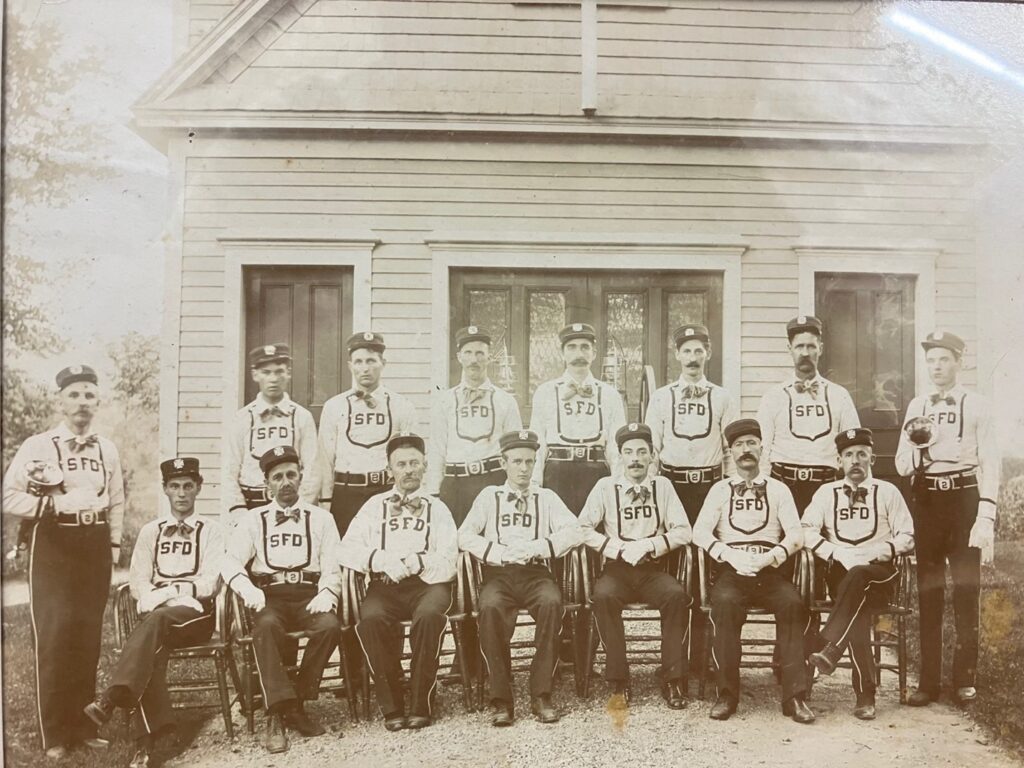
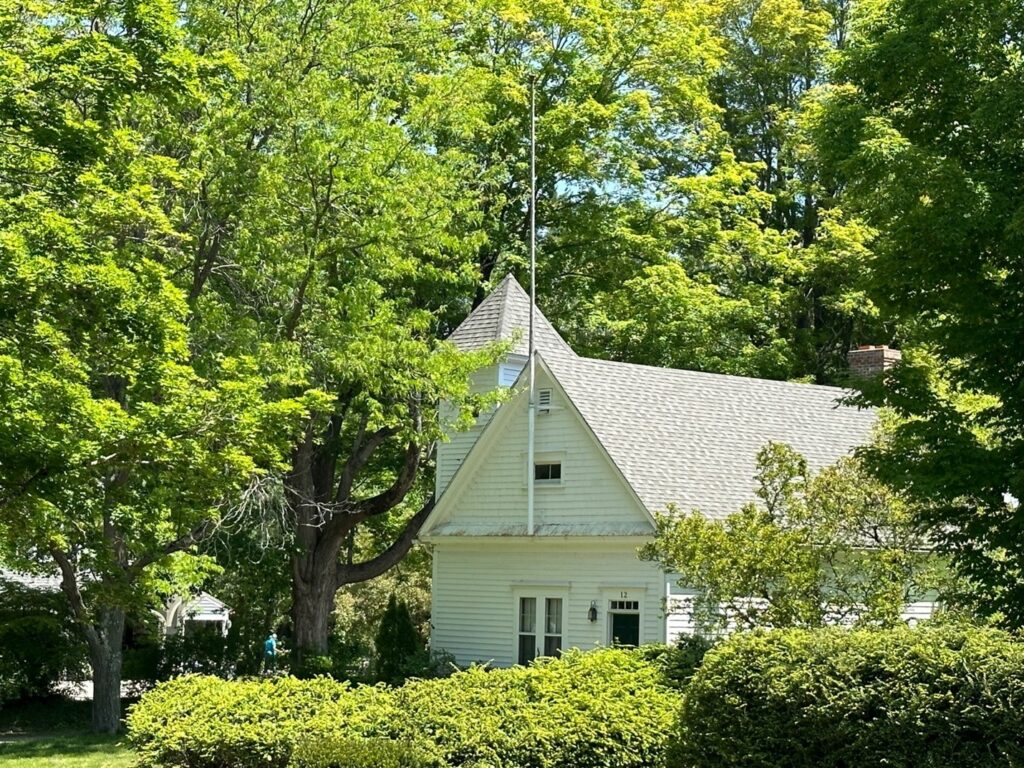
Stockbridge Fire Department Hose Co. #1 Elm Street & #2, Church Street
By Rick Wilcox
Stockbridge Fire Department Hose Co. #1 Elm Street & #2, Church Street
By Rick Wilcox
Editors Note: Before Rick was a reliable local historian, he was our Stockbridge Police Chief. Behind his back, shh, we called him Superman. He stood a post at Red Lion corner, directing traffic and we all waved. He walked a beat along Main Street, told funny stories, and we all laughed. Now, as we contemplate a new firehouse, Rick leads us through the history of our old ones. Rick recounts Town Meeting articles and votes and Chris Marsden adds comments. This is Part One of Two.
Town Meeting April 6, 1896: [On the Town Warrant]
Article XIII “To see if the town will appropriate a sum sufficient to place a marker of the Society of the Sons of the American Revolution at the grave of each revolutionary soldier or sailor buried in this town the expense not exceed one dollar each.”
Voted and approved same. Voted to appropriate $600.00 for the care of the Town Cemetery and $200 for the care of the Catholic cemetery.
Article XI voted to accept the report of the committee on building suitable buildings for the care of the fire apparatus and the committee is discharged. The committee also finds that there has been difficulty in securing a permanent suitable place storing the hose cart at the west end of the village. The committee therefore suggests the erection of smaller building not to cost over $950 to be located on the west side of the cemetery lot south of house of Thomas Doyle, suitable for drying and storing the hose at the end of the village and for the convenience of Fire Company # 2. All of which is respectfully submitted, Dr. Williams, FS Aymar, Committee. Voted $1,500.00 be appropriated for the purchase of a building and site of Mrs. ME Dunbar and $1,000.00 for moving and altering the same and $1,500.00 for seating a building for fire apparatus on cemetery lot on Church Street for Hose Co. No. 2.
[Town Warrant] Monday 8th day of February 1932
Article 22 voted that on behalf of the American Legion the moderator appoint a committee of five to arrange a public meeting to celebrate the birthday of George Washington. Rev. AR Brown, Rev EA Lane, Mr. JJC Lynch, Voted the citizens be asked whether they approved of having horse races on town park the afternoon of Memorial Day. Voted 77 yes, no 0.
Chris Marsden: “The Church Street Hose Co. was #2. Hose Co #1 was organized on Oct. 6, 1894 with a meeting of 11 organizers at the Town Office building. Hose co #2 was organized about a year later. Neither had permanent quarters right away.
Hose # 2 erected their building first in 1897 and the Elm Street station for # 1 was finished in 1899. My grandfather, Francis Pilling, always stated the Pilling Brothers built Hose Company #1 and Hose Company #2 and the Glendale station but not Interlaken. Hose Company #2 have put a 30-feet and 3 inches flag staff on the front end of their cozy house on Church street, surmounted by a handsome gilt ball and on all public or holiday the company will throw to the breeze their beautiful flag, which is 5 by 8 feet in size.” The Berkshire County Eagle, 1897, “Ground was broken last week on the fine little plot of ground on Elm street known as the old South School district grounds, and which is very dear to the hearts of us older people who took our elementary lessons in the old academy which stood on this very site. The hose house for company No. 1, which is to be built this coming winter by the well-known building firm, the Pilling Brothers, on this lot, will be somewhat larger than the one on Church street, and some of the taxpayers re wondering why it could not have been planned to have built it large enough to have a good size public hall on the second floor. No town in the state is as much in need of a good large, as well as convenient public hall as Stockbridge. Even dramatic readings and high school graduating exercises have to be taken to the Congregational church or to its parlors to find decent place. The old town hall has served its day and generation and now is old enough to be put on the retired list.
News
Parks and Recreation Commission, January 5, 2026, Hybrid meeting
- Solar Lights for Skating Rink will be motion activated for further savings
- Updates on Pavilion that is slated to be built in the Town Offices Park. Money was approved by Community Preservation Committee (CPC) as a recommendation to Town Meeting
- Linda Barbadoro reported on the Easter Egg Hunt planned for spring perhaps in partnership with Stockbridge Library
- Ice sculpture show in partnership with library: purchase a hot cocoa stand
- Open Gym Hours on Saturdays discussed by Johanna Lenski.
- Under Katie Szwyd chairmanship, the number and variety of events and activities is multiplying. Anita Schwerner offered to include them in her weekly email and Katie asked if Stockbridge Updates would as well.
Editor’s note: Chair will forward schedule, and SU is pleased to add Stockbridge Parks and Rec Commission activities as a regular listing under Events. - Commission member Johanna Lenski described a “Dance Workshop in the Park” conducted by the Intrinsic Movement Experience. Barbadoro asked if the instructor was insured and offered that ACT Insurance offers coverage for a day if artists and crafts people want protection for an event. The Chair asked if there was a charge. Lenski said it was free to the public. A motion was made to allow the Dance in the Park probably at the Town Office’s park. Motion to allow the dancing in the park event passed.
- Disc Golf Course was discussed and it was decided to install a bulletin board with information rather than having signs at each “basket.”
- The Chair said she would apply for 3 trees from the number that National Grid is providing under the “Conservation Commission Tree Allowance” to replace trees National Grid removed.

Analysis
Planning Board (PB), December 16, 2025, Hybrid meeting
- Berkshire Bank at 33 Main Street is now Beacon Bank. The new bank has submitted an application for a permit for a new sign. They requested one less sign than was there during the Berkshire Bank occupancy, therefore, Chair Kate Fletcher suggested a condition be placed on the approval: a future occupant may have the same number of signs Berkshire Bank had and was not limited to the number Beacon Bank was requesting. With that condition, approval was granted unanimously.
- The Chair reopened discussion on Elm Court. Discussion was focused on a single question: was the application submitted to the Permitting Authority (the Select Board) a modification to the existing permit or should it be a new plan? 3.
- The Chair explained the decision should be based on whether it is a simple change or a complex change.
- Several times during the discussion it was stressed that the PB has no official role in the process, but the Chair felt they still should “weigh in” and “exercise due diligence.”
- On the one question: should this be labeled a modification or a new plan, the criterium for the decision was whether it was a substantial change or a simple change, PB board members weighed in and some attendees also spoke.
- It was a short meeting – about 40 minutes – when the Chair said it appeared there was wide agreement, even consensus – she said it appeared that 6 out of 7 PB members were in agreement – that the application was a substantial and not a simple change.
- The Chair moved, “the PB recommends that the application submitted in October 2025 be considered as a new plan and not an amendment.” It passed 6 – 1.
- The consequences of the recommendation were then discussed. When asked what would happen if the Permit Granting Authority adopted the PB suggestion, the Chair said she hoped the developers would make a new plan and the Permit Granting Authority would take it on its own merits, “assuming they continue but who knows.” She added that she had raised the issue of what would happen next “with Michael.”
- Only two of those present expressed a different opinion: PB member, Wayne Slosek, and Jonathan Silverstein, attorney for Elm Court.
- Slosek wanted to make clear that he was not voting in favor of the motion because first he wanted to hear the peer reviewers’ determination. With respect to the change from amendment to new application, it was his understanding that there was no difference, that is, whether it was a new application “or the peer reviewers allowed it to go forward as an amendment, there were the same regulatory requirements, and everything scrutinized under the same scope.”
- Silverstein agreed there were substantial changes but explained that, by law, a modification (or amendment) includes substantial changes. He gave the example of a cannabis business that had a permit as a cultivator and changed to a purveyor. That was a substantial change treated as an amendment/modification to the approved permit. In fact, Silverstein continued, a modification emphasizes the substantial changes. In a modification, elements of the original approved plan that remain unchanged need not be considered and only the changes are considered.
Editor’s note: 1. A peer review is requested by the Permitting Authority but paid for by the applicant. The peer reviewer advises the Permitting Authority (the SB) about the elements of the application. The peers are experts in the field who, for the benefit of the SB, answer certain questions such as whether the application meets local bylaws and what its potential impacts may be. One of the questions posed was whether or not this application is properly labeled a modification. Slosek was indicating that he preferred to wait for the expert opinion on whether the application was correctly labeled a modification. 2. Elm Court is now named Berkshire Vanderbilt Estate (BVE). SU refers to it as Elm Court to facilitate locals knowing which Berkshire Cottage is under discussion.

News
Reader to Reader
To Stockbridge Updates:
Thank you so much Carole. Very glad to stay in touch. SU so helpful in that regard.
Yes – all the best we can be and do in 2026.
(Also, another thank you, for listing me as a contributor to SU in your recap for the year.)
I am totally impressed with what you are doing for Stockbridge. If you don’t think it is making a difference, just look around!
Kind regards,
Ramelle Pulitzer
Hi Carole,
Just a quick note to thank you for your very kind words and kudos to the library. We are most grateful!
And, thank you, as always, for another informative edition of Stockbridge Updates.
Warmly,
Wendy Pearson (Director)
Hi Carole Owens,
I agree that we need to preserve our history. I also think that we are frayed and tattered after 50 years of defunding the common good across our nation. Libraries are great institutions of the public sphere. They are open to all and free to all, socio-economically diverse institutions that are vital to thriving communities. Many — too many — people think they can go it alone, do their own research on their smart phones, talk to others who may have opinions but perhaps not always information, and etc. Why we think a community institution whose mission is to provide opportunities for lifelong learning and cultural enrichment that are free to all is antiquated is a mystery to me.
Regards,
Sharon Shaloo
Dear Dr. Owens,
My name is Mike Lenner, and I am reaching out because my family recently purchased a home at 176 Division Street in Great Barrington. I have a strong interest in learning about the history of the land and the previous owners.
In researching the history of this area, I came across your articles and books, particularly your writing in the Berkshire Edge. Based on your work, I believe the land we now sit on was previously owned by an individual who perished on the Lusitania.
I would be grateful for any additional information or resources you might be able to point me toward regarding the history of the property or the previous owners.
Thank you very much for your time and expertise.
Best regards,
Mike Lenner
Dear Mr. Lenner,
I have not forgotten you, just over-committed. Please send me the names of prior owners. Your attorney probably did a tile search and provided you with the names. As soon as I have the names, I can help.
Thank you for being in touch, Carole

Letters regarding the Elm Court Debate: Modification or new application
To the PB from Bruce Blair in support of requesting a new application
Dear Planning Board Members:
First, thank you all for your service in dealing with the volume and pace of change that has come to Stockbridge. While change is bound to occur, I think that excessive scale of development is the critical concern that people in town are talking about these days. How do we manage the sheer size of rapid commercial and residential growth and still preserve the natural beauty and heritage of Stockbridge?
To that end, I am asking you to require that Elm Court submit a new permit. The developer has created a substantial new scale of development for the project, as is her right, but as the changes are so significant, a new permit should be filed to ensure the project is clearly described and appropriately regulated. The addition of 38 new residences in the permit modification presents questions of scale and town-wide impact that far exceed those in the original permit. These permanent residences are not the equivalent of guest rooms or “lodges” in any common-sense use of the terms and they add new layers of regulatory complexity to the project.
Thank you for your time and consideration.
Bruce Blair
To Berkshire Eagle from Shirley Miller in support of considering the modification and not requesting a new application
To the editor [Berkshire Eagle]: I don’t think a new permit for Elm Court is needed.
The nature of the project has not changed, merely the physical dimensions. This can be approved under the current permit without restarting the whole process which will add years to the project.
The modification process is open to the public, especially abutters. All will have the chance to raise objections and negotiate the final shape of the project. Compromise means that nobody gets everything they want. Surely, there is a middle ground that can be found under the current permit.
Shirley Miller
To the Editor:
A neighbor of mine who’s an attorney in New Jersey was on the Zoom meeting and had commented during the discussion. He mentioned he wasn’t sure but raised the question of whether amendments to a Special Permit could be appealed, which is what initially got me thinking about it.
Michael Lucia
Michael is a member of the Old Stockbridge Road Neighborhood Association (OSRNA.org)
Dear Michael,
It is not unusual for folks to write Stockbridge Updates and ask a question that they would like SU to research an answer or ask a Town official. SU is happy to do it, and actually, considers it part of our job.
So first we checked Mass.gov and learned: “Amendments to special permits can typically be appealed, but the process and rules vary by jurisdiction.”
Oh-oh, it said “rules vary by jurisdiction,’” so SU checked with our Town Administrator. Here is that exchange:
Michael, someone had suggested to me that an amendment to a Special Permit might not be appealable, but they were not sure.
Michael Canales, Town Administrator (TA), responded, “The Town does not make determinations regarding appeal rights. The Town’s role is processing applications, the permitting authority making determinations based on the information submitted, and the Town carrying out those decisions in accordance with state and local law.”
I asked what happens if the Amendment is denied.
“Under Massachusetts zoning law, if a special permit or similar application is denied, the applicant generally must wait two years before reapplying for the same or substantially similar project, unless the permitting authority votes to waive that restriction. An applicant may also withdraw an application prior to a decision, in which case the two-year waiting period does not apply.
Michael Canales
Town Administrator
Since the first answer was an explanation for why he didn’t answer, SU checked further and asked Jonathan Silverstein, attorney for BVE.
Attorney Silverstein responded:
Good afternoon, Carole,
Nice to hear from you. Please see my responses to your questions in the text of your email below.
I wish you a very happy and healthy New Year.
Jonathan
- First question, I would like to know if the abutters are correct in believing they cannot appeal a modification. No, this is not correct. Any decision of the Select Board as special permit granting authority may be appealed under the State Zoning Act.
- I do not fully understand his second answer. Attendees as well as members of PB seemed quite sure that VBE can change the word modification to new and resubmit the same day. They seem equally sure having a new proposal offers them more rights in the process than a modification. Michael’s answer sounds as if VBE has to wait two years to resubmit if the modification is denied unless the SB/Permitting Board waives that the restriction. That sounds debatable and debatable points go to court and that takes time. The Select Board should treat this as an amendment and focus its review on those aspects of the project that would change under the current proposal, rather than pretending that a fully approved project does not already exist. However, were the Board to decide instead to treat this as a “new” special permit, no new submission would be required from VBE. The application materials VBE submitted to the Select Board include all of the documents and information required for any special permit application—new or amended. The 2-year prohibition on “repetitive petitions” would only apply if the Board voted to deny VBE’s application.
Jonathan M. Silverstein
Blatman, Bobrowski, Haverty & Silverstein, LLC
Carole,
I understand now that the process for appealing is the same whether it’s a new permit or an amendment. Thanks again for taking the time to explain it.
One point I think is worth putting out there is that the petitioner/owner should seriously explore whether the entire Elm Court property can be brought fully into Lenox. In practice it already functions as a Lenox neighborhood, access, day-to-day use, and the impacts are all felt on the Lenox side, so having it split across town lines just creates confusion and makes the permitting/process feel messy and duplicative. Even if it’s not simple, it could be something that becomes part of a broader negotiation: align the property with the town that actually services and experiences it, and reduce the ambiguity about who has authority and responsibility.
Michael Lucia
Editor’s note: Our Town Administrator has requested on Town email over his title that SU post this: “My responses are provided in reply to specific questions you have asked as a citizen, and I ask that they be recognized and presented as such. Press releases and official Town communications are issued through established publications such as The Berkshire Eagle and The Berkshire Edge.”
SU is honoring his wish that his responses be “presented as such.”
And yet…
We are not sure SU is less than any other newspaper listed in the editorial above and not sure how the request fits into guidelines from Mass.gov
“In Massachusetts, there are no specific state regulations that govern how a Town Administrator interacts with the press. However, general principles of public information and transparency apply. The key points are:
- Public Records Law: Massachusetts General Laws Chapter 66, Section 10 mandates that public records be accessible to the public, which includes communications from town officials, including Town Administrators.
- Local Policies: Individual towns may have their own policies regarding press interactions. It is advisable to check local bylaws or administrative policies for specific guidelines.
- Role of the Town Administrator: The Town Administrator typically serves as the chief executive officer of the town and may be the primary spokesperson. Their responses to the press can be influenced by the town’s communication policies.
- Best Practices: Town Administrators are encouraged to communicate transparently and effectively with the media, balancing the need for public information with confidentiality and legal considerations.
We hope that Stockbridge Updates will be treated as a serious local resource for our townsfolk and thus will be automatically included when Michael sends out press releases or other informational pieces to print or on-line media.
News
Stockbridge Fire Department Hose Co. #1 Elm Street & #2, Church Street
Editors Note: Before Rick was a reliable local historian, he was our Stockbridge Police Chief. Behind his back, shh, we called him Superman. He stood a post at Red Lion corner, directing traffic and we all waved. He walked a beat along Main Street, told funny stories, and we all laughed. Now, as we contemplate a new firehouse, Rick leads us through the history of our old ones. Rick recounts Town Meeting articles and votes and Chris Marsden adds comments. This is Part One of Two.
Town Meeting April 6, 1896: [On the Town Warrant]
Article XIII “To see if the town will appropriate a sum sufficient to place a marker of the Society of the Sons of the American Revolution at the grave of each revolutionary soldier or sailor buried in this town the expense not exceed one dollar each.”
Voted and approved same. Voted to appropriate $600.00 for the care of the Town Cemetery and $200 for the care of the Catholic cemetery.
Article XI voted to accept the report of the committee on building suitable buildings for the care of the fire apparatus and the committee is discharged. The committee also finds that there has been difficulty in securing a permanent suitable place storing the hose cart at the west end of the village. The committee therefore suggests the erection of smaller building not to cost over $950 to be located on the west side of the cemetery lot south of house of Thomas Doyle, suitable for drying and storing the hose at the end of the village and for the convenience of Fire Company # 2. All of which is respectfully submitted, Dr. Williams, FS Aymar, Committee.
Voted $1,500.00 be appropriated for the purchase of a building and site of Mrs. ME Dunbar and $1,000.00 for moving and altering the same and $1,500.00 for seating a building for fire apparatus on cemetery lot on Church Street for Hose Co. No. 2.
[Town Warrant] Monday 8th day of February 1932
Article 22 voted that on behalf of the American Legion the moderator appoint a committee of five to arrange a public meeting to celebrate the birthday of George Washington. Rev. AR Brown, Rev EA Lane, Mr. JJC Lynch, Voted the citizens be asked whether they approved of having horse races on town park the afternoon of Memorial Day. Voted 77 yes, no 0.
Chris Marsden: “The Church Street Hose Co. was #2. Hose Co #1 was organized on Oct. 6, 1894 with a meeting of 11 organizers at the Town Office building. Hose co #2 was organized about a year later. Neither had permanent quarters right away.
Hose # 2 erected their building first in 1897 and the Elm Street station for # 1 was finished in 1899. My grandfather, Francis Pilling, always stated the Pilling Brothers built Hose Company #1 and Hose Company #2 and the Glendale station but not Interlaken. Hose Company #2 have put a 30-feet and 3 inches flag staff on the front end of their cozy house on Church street, surmounted by a handsome gilt ball and on all public or holiday the company will throw to the breeze their beautiful flag, which is 5 by 8 feet in size.” The Berkshire County Eagle, 1897, “Ground was broken last week on the fine little plot of ground on Elm street known as the old South School district grounds, and which is very dear to the hearts of us older people who took our elementary lessons in the old academy which stood on this very site. The hose house for company No. 1, which is to be built this coming winter by the well-known building firm, the Pilling Brothers, on this lot, will be somewhat larger than the one on Church street, and some of the taxpayers re wondering why it could not have been planned to have built it large enough to have a good size public hall on the second floor. No town in the state is as much in need of a good large, as well as convenient public hall as Stockbridge. Even dramatic readings and high school graduating exercises have to be taken to the Congregational church or to its parlors to find decent place. The old town hall has served its day and generation and now is old enough to be put on the retired list.
by Rick Wilcox
News
SU FYI
- Early Saturday morning, SU learned that Tina Packer died. It is indeed a tragedy. She will be missed. Her life, however, was a triumph. She contributed to this community and the community of the arts, of literature, and the community of givers. We all have a Tina story. The luckiest have more than one because all the stories about Tina entertained and informed. Details about funeral arrangements will follow.
- CORRECTIONS: The list of 93 of 100 contributors had three mistakes: there is no “l” in Ackerman; there is no “g” in Schwerner, and wonderful Michael Forbes Wilcox was completely left out! An article by Michael is below under. If anyone else was inadvertently left out, PLEASE let us know.
- The People’s Pantry Food Drive
Most Needed Foods
Canned protein (tuna, chicken, beans)
Canned Fruits and vegetables
Dry goods (Pasta, rice, lentils, beans)
Baking (oils, tomato sauce, tomato paste)
Kid’s snacks (granola bars, fruit cups or crackers)
Hygiene (toothpaste, deodorant, soap)
Drop off: The People’s Pantry, Saint James Place, Great Barrington, Monday and Thursday mornings
Or
The Stockbridge Library - Congratulations! Stockbridge is named a Climate Leader by the Commonwealth. Our village is one of 28 so designated out of 351 municipalities. This announcement would be incomplete without mentioning and thanking Laura Dubester and her entire Green Committee. For 15 years Dubester was Director of the Center for Ecological Technology. Under Dubester’s leadership, the center expanded its programs and outreach efforts.
Her commitment to waste management, emissions reductions, and practical, sustainable solutions for our climate was much longer than 15 years. In Stockbridge, this true believer worked to establish a Green Committee to make Stockbridge cleaner and to help the village save money. When the committee was established, she accepted the Chair. Under her leadership, principles were put into action. During her tenure as Chair of Stockbridge Green Committee, she delivered practical, scalable climate solutions.
Any funds granted or acknowledgement given, should have Dubester’s name attached

Sign Up for
Stockbridge Updates
Local news provided free of charge.
Past Issues
-
VOL. VII NO. 17 10/01/2026
-
VOL. VII NO. 16 09/15/2026
-
VOL. VII NO. 15 09/01/2026
-
VOL. VII NO. 14 07/15/2026
-
VOL. VII NO. 13 07/01/2026
-
VOL. VII NO. 12 06/15/2026
-
VOL. VII NO. 11 06/01/2026
-
VOL. VII NO. 10 05/15/2026
-
VOL. VII NO. 09 05/01/2026
-
VOL. VII NO. 08 04/15/2026
-
VOL. VII NO. 07 04/01/2026
-
VOL. VII NO. 06 03/15/2026
-
VOL. VII NO. 05 03/15/2026
-
VOL. VII NO. 04 03/01/2026
-
VOL. VII NO. 03 02/15/2026
-
VOL. VII NO. 02 01/15/2026
-
VOL. VII NO. 01 01/01/2026
-
VOL. VI NO. 22 10/15/2025
-
VOL. VI NO. 21 10/01/2025
-
VOL. VI NO. 20 09/21/2025
-
VOL. VI NO. 19 09/15/2025
-
VOL. VI NO. 18 09/01/2025
-
VOL. VI NO. 16 08/15/2025
-
VOL. VI NO. 15 08/01/2025
-
VOL. VI NO. 14 07/21/2025
-
VOL. VI NO. 13 07/15/2025
-
VOL. VI NO. 12 07/01/2025
-
VOL. VI NO. 11 06/15/2025
-
VOL. VI NO. 10 06/01/2025
-
VOL. VI NO. 09 05/15/2025
-
VOL. VI NO. 08 05/01/2025
-
VOL. VI NO. 07 04/01/2025
-
VOL. VI NO. 06 04/15/2025
-
VOL. VI NO. 05 03/15/2025
-
VOL. VI NO. 04 03/01/2025
-
VOL. VI NO. 03 02/15/2025
-
VOL. VI NO. 02 02/01/2025
-
VOL. VI NO. 01 01/15/2025
-
VOL. V NO. 22 11/15/2024
-
VOL. V NO. 21 11/01/2024
-
VOL. V NO. 20 10/15/2024
-
VOL. V NO. 19 10/01/2024
-
VOL. V NO. 18 09/15/2024
-
VOL. V NO. 17 09/01/2024
-
VOL. V NO. 16 08/15/2024
-
VOL. V NO. 15 08/01/2024
-
VOL. V NO. 14 07/15/2024
-
VOL. V NO. 13 07/01/2024
-
VOL. V NO. 12 06/15/2024
-
VOL. V NO. 11 06/01/2024
-
VOL. V NO. 10 05/15/2024
-
VOL. V NO. 09 05/01/2024
-
VOL. V NO. 08 04/15/2024
-
VOL. V NO. 07 04/01/2024
-
VOL. V NO. 06 03/15/2024
-
VOL. V NO. 05 03/01/2024
-
VOL. V NO. 04 02/15/2024
-
VOL. V NO. 03 02/01/2024
-
VOL. V NO. 02 01/15/2024
-
VOL. V NO. 01 01/01/2024
-
VOL. IV NO. 28 12/15/2023
-
VOL. IV NO. 27 12/01/2023
-
VOL. IV NO. 26 11/15/2023
-
VOL. IV NO. 25 11/01/2023
-
VOL. IV NO. 24 10/22/2023
-
VOL. IV NO. 23 10/15/2023
-
VOL. IV NO. 22 10/01/2023
-
VOL. IV NO. 21 09/22/2023
-
VOL. IV NO. 20 09/15/2023
-
VOL. IV NO. 19 09/08/2023
-
VOL. IV NO. 18 09/01/2023
-
VOL. IV NO. 17 08/22/2023
-
VOL. IV NO. 16 08/15/2023
-
VOL. IV NO. 15 08/01/2023
-
VOL. IV NO. 14 07/15/2023
-
VOL. IV NO. 13 07/01/2023
-
VOL. IV NO. 12 06/15/2023
-
VOL. IV NO. 11 06/01/2023
-
VOL. IV NO. 10 05/15/2023
-
VOL. IV NO. 09 05/01/2023
-
VOL. IV NO. 08 04/15/2023
-
VOL. IV NO. 07 04/01/2023
-
VOL. IV NO. 06 03/15/2023
-
VOL. IV NO. 05 03/11/2023
-
VOL. IV NO. 04 02/15/2023
-
VOL. IV NO. 03 02/01/2023
-
VOL. IV NO. 02 01/15/2023
-
VOL. IV NO. 01 01/01/2023
-
VOL. III NO. 24 12/15/2022
-
VOL. III NO. 23 12/01/2022
-
VOL. III NO. 22 11/15/2022
-
VOL. III NO. 21 11/01/2022
-
VOL. III NO. 20 10/15/2022
-
VOL. III NO. 19 10/01/2022
-
VOL. III NO. 18 09/15/2022
-
VOL. III NO. 17 09/01/2022
-
VOL. III NO. 16 08/15/2022
-
VOL. III NO. 15 08/01/2022
-
VOL. III NO. 14 07/15/2022
-
VOL. III NO. 13 07/01/2022
-
VOL. III NO. 12 06/15/2022
-
VOL. III NO. 11 06/01/2022
-
VOL. III NO. 10 05/15/2022
-
VOL. III NO. 09 05/01/2022
-
VOL. III NO. 08 04/15/2022
-
VOL. III NO. 07 04/01/2022
-
VOL. III NO. 06 03/15/2022
-
VOL. III NO. 05 03/01/2022
-
VOL. III NO. 04 02/15/2022
-
VOL. III NO. 03 02/01/2022
-
VOL. III NO. 02 01/15/2022
-
VOL. III NO. 01 01/01/2022
-
VOL. II NO. 24 12/15/2021
-
VOL. II NO. 23 12/01/2021
-
VOL. II NO. 22 11/15/2021
-
VOL. II NO. 21 11/01/2021
-
VOL. II NO. 20 10/15/2021
-
VOL. II NO. 19 10/01/2021
-
VOL. II NO. 18 09/15/2021
-
VOL. II NO. 17 09/01/2021
-
VOL. II NO. 16 08/15/2021
-
VOL. II NO. 15 08/01/2021
-
VOL. II NO. 14 07/15/2021
-
VOL. II NO. 13 07/01/2021
-
VOL. II NO. 12 06/15/2021
-
VOL. II NO. 11 06/01/2021
-
VOL. II NO. 10 05/15/2021
-
VOL. II NO. 09 05/01/2021
-
VOL. II NO. 08 04/15/2021
-
VOL. II NO. 07 04/01/2021
-
VOL. II NO. 06 03/15/2021
-
VOL. II NO. 05 03/01/2021
-
VOL. II NO. 04 02/15/2021
-
VOL. II NO. 03 02/01/2021
-
VOL. II NO. 02 01/15/2021
-
VOL. II NO. 01 01/01/2021
-
VOL. I NO. 10 12/15/2020
-
VOL. I NO. 09 12/01/2020
-
VOL. I NO. 08 11/13/2020
-
VOL. I NO. 07 11/01/2020
-
VOL. I NO. 06 10/18/2020
-
VOL. I NO. 05 10/01/2020
-
VOL. I NO. 04 09/15/2020
-
VOL. I NO. 03 09/01/2020
-
VOL. I NO. 02 08/18/2020
-
VOL. I NO. 01 08/06/2020