

Now we are seven and all systems are go. Click http://www.stockbridgeupdates.com and in upper right corner, subscribe or leave us a comment. Find our complete archive from the first issue in August 2020 through April 15, 2026. Search an old article, read or reread them, and of course, take another look at all those fabulous photographs. if you would like to support Stockbridge Updates, go to VENMO @carole-owens-6 (no caps) or mail a check to P. O. Box 1072, Stockbridge, MA. 01262. If you like this issue, pass it on.
IN THIS ISSUE: VOL. I NO. 03 09/01/2020
by Carole Owens, Editor
by Carole Owens, Editor
by Charles Kenny, Chair
by Jim Wilusz, Executive Director
by Bob Jones
by Bruce Blair
by Patrick White
Introduction
Stockbridge Updates Statement of Purpose
To inform without opinions or pressure and give you the facts you need to make your own decisions.
To provide space for opinion, but since facts and opinions are different, to clearly mark opinion pieces, and clearly identify the opinion holder.
Stockbridge Updates is a periodic newsletter delivered through email.
by Carole Owens, Editor
Editorial
Voter's Guide
September 1, 2020 is Primary day! Please vote.

Voting in the time of Covid may seem challenging but is nevertheless important. Here is a voter’s guide.
There is one polling place in Stockbridge. It is in Town Hall located on Main Street. It is on the lower level. Signs will direct you. Wear a mask and observe social distancing.
The poll is open from 7 A.M. to 8 P.M.
If you are voting by mail, and you received your ballot, possibly you already returned it. If you did not, in order for your vote to count, mail it before September 1 or place it in the drop box at Town Hall at any time before the poll closes at 8 P.M. September 1.
General Election November 3, 2020! Vote!
When you requested your mail-in ballot, if you checked the box for “all 2020 elections” then a ballot for the General Election November 3, 2020 will arrive automatically. As soon as it does, fill it out and mail it back.
If you did not request a ballot for “all elections” and you want to vote by mail in the General election, request a ballot as soon as possible. It may take a week or two to arrive. You can go to www.stockbridge-ma.gov click on the link and download the application for a ballot. You can pick up an application at the town trash compactor, the downstairs lobby of Town Hall, and outside the police station lobby.
Voting in person will be at Town Hall from 7 A.M. – 8 P.M. and just as on Primary Day there will be asks and social distancing.
More information is available at:
The town website: stockbridge-ma.gov
Stockbridge Town Clerk Terri Iemolini, at clerk@stockbridge-ma.gov or 298-4170 extension 251
League of Women Voters has posted information at www.VOTE411.org

by Carole Owens, Editor
News
Town News: September 1, 2020
Notes from the August 27 Select Board Meeting
The Select Board met on August 27. 2020. Actions taken included:
Scott Muir was appointed Deputy Director of Emergency Management.
Announcements were made about an opening on the School Committee and an appointment to the Regional (8-town) School District Planning Board.
Norman Rockwell Museum was granted a year-round All Alcoholic Beverages General On-Premises License at 9 Glendale Road.
Professor Thomas Coote made his report on the absence of Eurasian milfoil in Stockbridge Bowl and said he was “not sure” why there was no milfoil.
Update on 1783 Ox Roast/King Solomon archaeology project and National Parks Service grant for testing at the 1739 Meetinghouse site—by the Chime Tower on Main St.—was presented by the Stockbridge-Munsee Community. Look for a press release about the project to follow.
Lake Stewardship
At the Stockbridge Bowl Stewardship Committee meeting, on Wednesday August 19, 2020, the committee elected a new chair: Jamie Minacci replaced Michael Nathan.
Insight
About the Stockbridge Board of Health

Each of the three members of the Stockbridge Board of Health is elected for three-year overlapping terms. A registered nurse and two medical doctors currently sit on the board. The board meets quarterly with the boards of Lee and Lenox to oversee the Tri-Town Health Department and as needed. Tri-Town Director Jim Wilusz, R.S., the Stockbridge Board, and Finance Committee Chairman Jay Bikofsky recently developed a plan to stabilize the financial status of Tri-Town, calling together the administrators, finance committees, and health boards of all three towns to implement the plan. The history, multiple functions, and substantial accomplishments of Tri-Town are summarized elsewhere in Updates by Director Wilusz.
The board also addresses matters of public health specific to Stockbridge. Recently, Covid-19 has occupied much of the board’s attention, but concerns about the future of the elderly residents, reliability of the town’s ambulance coverage, accountability of the mosquito control program, and Stockbridge Bowl cyanobacterial blooms have also required the board’s consideration and action. Cyanobacterial bloom prevention illustrates how the board operates.
Massachusetts General Law Chapter 111, Section 122 (excerpted): “The board of health shall examine into all nuisances, sources of filth and causes of sickness within its town, …, which may, in its opinion, be injurious to the public health, shall destroy, remove or prevent the same as the case may require; and shall make regulations for the public health and safety relative thereto…” When, in late summer of 2019, the board had to issue a health advisory against water activities in the Bowl due to a potentially hazardous bloom of cyanobacteria, the board determined to do its best to adhere to Section 122’s mandate. The board formed an advisory committee and sought out and secured the advice of a cyanobacterial-bloom expert Robert Kortmann, PhD who recommended that an ongoing diagnostic testing program be initiated through GZA a Geo- Technical and Environmental Management firm in Glastonbury CT. Stockbridge Board of Health took this recommendation before the Stockbridge Board of Selectmen and Finance Committee, who promptly approved it, funded it, and got it up and running. For the public health and safety, the board issued regulations to ensure that a scientific basis would serve to control interventions in the Stockbridge Bowl that might predispose to cyanobacterial blooms in the future.
Going forward, it is likely that Covid-19 will remain at the front of the public health concerns for the foreseeable future. Together with Tri-Town and the town’s Emergency Management Team, the board will continue to work to minimize the negative impact of this extraordinary challenge. Meanwhile, the board will endeavor not to lose sight of the importance of day-to-day public health and safety issues.
Editor’s note: Kenny practiced orthopedic surgery in Berkshire County for 35 years, including 15 years at the Corner House in Stockbridge.
by Charles Kenny, Chair
Insight
Tri-Town Health District: Optimizing Our Approach to Public Health Delivery Systems
In 1929, the leadership of the small farming towns of Lee, Lenox, and Stockbridge, to combat a milk disease outbreak, decided to join forces to share the cost of a milk inspector. It was an unprecedented decision. The milk inspector would be responsible for setting up a regional system to sample raw milk and ensure that the community members were protected from disease. Since then, Tri-Town has evolved into a comprehensive public health system.
Fast forward ninety-one (91) years later, The Tri-Town Health Department, the oldest health district in the Commonwealth, still stands strong today. Under the authority of the Lee, Lenox, and Stockbridge Boards of Health we are required under MGL Chapter 111 to promote, protect, and sustain local public health, avoid and prevent negative health outcomes, provide disease investigation through routine monitoring, promote and implement health and wellness strategies, protect environmental health, reduce health disparities and social determinants of health, and improve overall health.
For ninety years and counting, this regional model in how municipal services are delivered continues to be at the forefront. Now more than ever as we combat a global pandemic, we responded to COVID-19 hitting on all cylinders, our regional health department was prepared and ready.
Our district model offers a model for municipalities looking to explore this form of service delivery. The District continues to offer the roadmap for how effective regional public health models function with respect to sustainability, service delivery and streamlining operations. One of the many benefits of a health district is the ability to meet demands of member towns, streamlining service delivery, and having the capacity to respond to the unique needs of the communities in which we serve.
- Ability to respond to off-hours emergencies and weekends.
- Inspectional services are in full compliance with regulatory laws and requirements.
- Requests for plan approval and permitting are fast, streamlined, and efficient.
- Reporting and annual renewals are in real time.
- Strength and working relationships with other municipal departments to ensure the community members receive the highest quality of services
- And of course, having adequate staffing to combat a global pandemic.
The 3-town leadership has invested in our district for more than 9 decades and for good reason. We were prepared to respond, react, and direct public health services to fight this pandemic. We thank the residents and those that had the forward-thinking idea of sharing resource so long ago.
We thank the Boards of Health, town residents for their constant support in our District as we continue to deliver core public health services as continue to battle a pandemic, educate the community, ensure businesses are safe, and to keep the overall health and wellness of our residents a priority. For a comprehensive list of programs and services please visit www.tritownhealth.org
Editor’s note: James J. Wilusz has dual licenses as a Registered Sanitarian and a Registered Environmental Health Specialist.
by Jim Wilusz, Executive Director
Opinion
What Is Happening Next Door in Lee?
I’ve been thinking about neighbors lately, given the strife and turmoil we’ve been facing as a nation and even on a local level. Merrimack-Webster defines a neighbor as one located near or living near another. The second describes a neighbor as “Fellow Man”. Neighbors in South and Central Berkshire County are facing a problem that many don’t know we have.
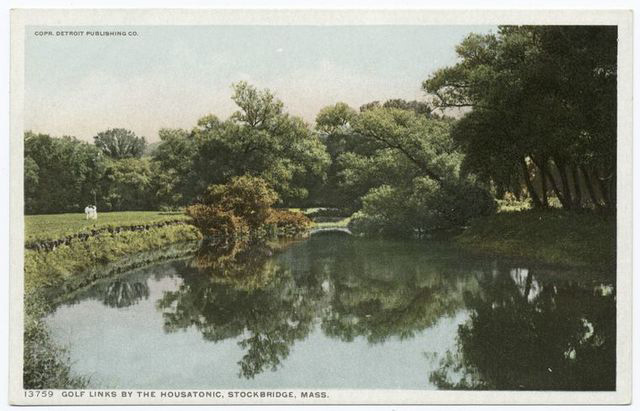
This year, the Towns of Sheffield, Great Barrington, Stockbridge, Lenox, Lee and Pittsfield came to an agreement regarding the removal of toxic chemicals from the Housatonic River. The representatives of these towns met secretly with representatives of the General Electric Corporation and representatives of the Environmental Protection Agency (EPA) and crafted an agreement for the remediation of PCBs in the Housatonic. It was not generally known that these meetings were taking place.
The agreement reached was hailed by many as a victory for all, a victory for the river and a great conservation measure. One does not have to dig deep to see that this is not the case.
Selectmen of the Town of Lee voted to allow the chemical dump, and in exchange, be paid $25,000,000. Select Boards are usually lay people and it is not unusual that none of the three sitting members had a background in a scientific field required to make the decision.
The residents of Lee are furious, terrified by creation of a wasteland in their midst. There are concerted efforts to reverse the decision, legal remedies sought.
But getting back to neighbors. The representatives of all the aforementioned towns started out with another agreement amongst themselves. If one town balked at participating in the GE-EPA plan, all would back out. Against the wishes of the townspeople, the chemical dump is planned for Lee/Lenoxdale. Did the other towns back out in support of their neighbors? No. They presumed it would not affect the health of their towns. In fact, it probably will. In fact it is our collective problem
We are all in the Housatonic River Valley corridor. GE and EPA assured us the chemical dump won’t leak, but they cannot guarantee this. The company that manufactures the liner that will be used for the dump will not guarantee it when used to contain chemicals.
The natural soil and geological makeup of the Berkshires connect all of us as does the river. Underground limestone channels are our source of clean water. We are neighbors not only in proximity, but in a shared ecology. If the dump leaks what happens in Lee will also happen downstream. In addition, the waste is going to be trucked from your town, through your streets to the dump site.
Good neighbors would be just as angry if representatives of a neighboring town disregarded the voters and agreed to a chemical dump. Moreover, as neighbors, we are all complicit and it will affect us all.
Editor’s note: Jones was a Stockbridge resident for 15 years serving on the Fountain Committee, the ZBA, and the Stockbridge Zoning Review Committee. He now lives in Lee.
by Bob Jones
Insight
Our Children's Chimes
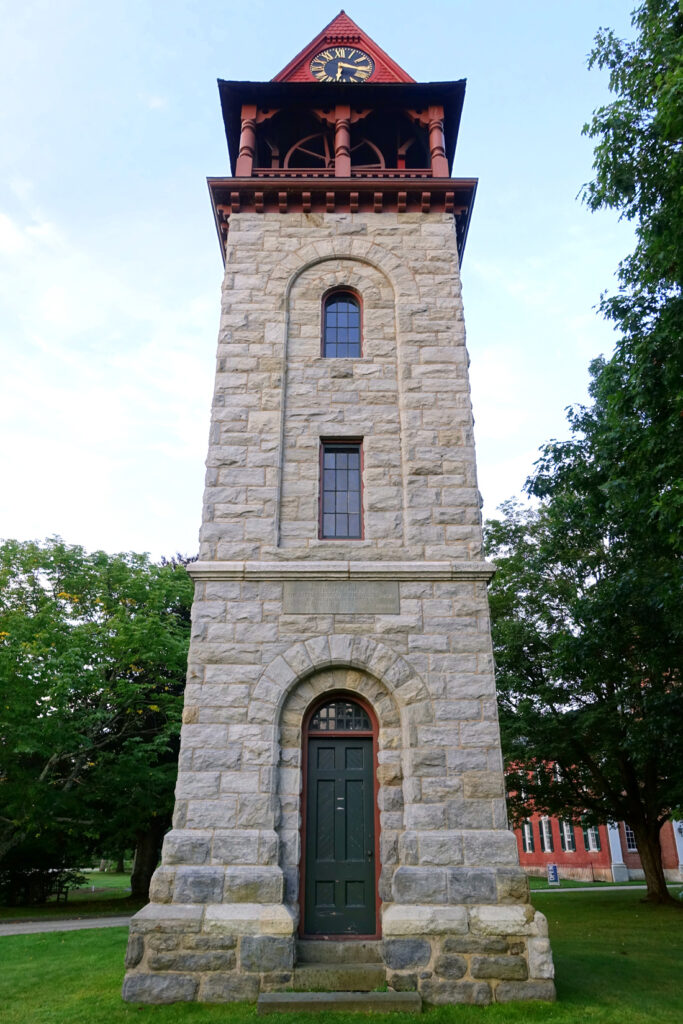
The Children’s Chimes bell tower is silent for yet another season. In recent years, the ringing has been increasingly interrupted for ad hoc repairs. In 2017, it became clear that renovations could no longer be put off.
The chimes are a rare musical commodity, played entirely by hand instead of computer, using cables and levers that had not been serviced since 1975. The frame holding the heavy bells on the floor above the playing console was being held up by temporary jacks, probably for decades, and had begun to sag toward the wall of the tower itself. Cables sometimes broke while the chimes were being played. The levers had become so unevenly matched as musical instruments that playing them required a feel for the unexpected in pressure and return that made timing an evolving challenge. That we had made it through the previous several years at all was due to the repair efforts of town highway department employee and mechanical wizard Lindy Searing, who serviced the bells as well as played them.
Mary Boyce was a member of the Finance Committee at the time, conveyed the need for repairs to the Board of Selectmen near the close of the 2017 season. The bells ceased operation. By the fall of 2019 there was still no plan, so chimes leader Claire Williams and I decided on our own to seek out expert help and apply for a Community Preservation grant to cover the costs. The family-run Verdin Company in Ohio has been doing this work since 1842. Verdin’s long and extensive body of work and their passion and expertise convinced me that they are the people for the job. The only other comparable companies are in Europe.
Verdin gave us a comprehensive assessment and proposal for long term repairs for around $166,000. Town officials wanted the cost to be put on the town warrant rather than use Community Preservation Funds, and apparently added another $100,000 to the cost to cover an engineering study of the tower.
After Covid, the Finance Committee wanted the project tabled as too expensive under the circumstances. They also wanted the project put out to bid. In all fairness to the Committee, they probably had little knowledge of what they were being asked to approve.
The Select Board is showing a strong interest in bringing back our landmark chime tower and its unique musical instrument, along with the tradition of playing for the people of the town for the past 140 years. This board has recently shown a knack for connecting some of the various agencies of town government toward a common goal.
So, are the Children’s Chimes coming back? Will I ever climb those steps again to play “Shenandoah” once more? The best answer at this time is a firm “maybe”. Stay tuned for Updates!
by Bruce Blair
Perspective
Let's Start a Conversation About Short-Term Rentals
Here are the main three recommendations contained below:
- Raise the local option occupancy tax from 4% to 6%
- Monitor and collect data for compliance
- Considering limiting the number of nights per year that properties can be rented when not owner-occupied
If there’s one area of the economy that’s still booming, it’s short-term rentals. Since 2011, the market nationwide for short-term rentals has grown by 1,530%. On Friday, there were 110 short-term rentals listed on approximately 50 websites like Airbnb and Booking.com, with an average rate of $300 per night.
Stockbridge has approximately 1,400 housing units, mostly single-family homes with a smattering of condos and multi-family dwellings. There’s about an even split between homes occupied by full-time residents and second-homeowners.
With a median property assessment of just over $500,000, residents often own homes in the lower half of property assessments in town. Residents’ houses are often more modest, in the family for years, not as close to the Stockbridge Bowl.
Our residents’ homes are exactly the types of homes that investors in short-term rentals look for. You can often make more on an annualized basis from renting a house that cost you $400,000 than one that costs you over a million.
When it comes to short-term rentals, we have a number of issues to address. One is taxes. A second is compliance. A third is fielding complaints from neighbors. And finally, we need to address whether as a town we want to put the brakes on absentee owners’ purchases of our housing stock for the purpose of listing the properties as short-term rentals.
What are we not talking about?
This piece is not relevant to either renting a room in your house or renting an accessory dwelling unit, like a cottage or an apartment on your property. I strongly support allowing residents to reduce their cost of ownership by renting out a room or an apartment on their owner-occupied property. I view this as a way to offset the costs of ownership in our town, and to enable our homes to stay affordable for current or future full-time residents. Rather, the topic of this discussion is properties acquired by absentee owners for the primary purpose of renting them on short-term rental websites or through local brokers.
Tax issues
In my opinion, the town has two issues to decide: one, the occupancy tax rate and two, how do we ensure compliance, i.e. make sure that folks pay the taxes due to Massachusetts (some of which are remitted to the town), as they rent their properties?
In 2009, the Legislature increased the maximum local option occupancy tax from 4% to 6%. Traditionally, this applied to hotels like the Red Lion Inn. In 2019, the Legislature passed a law that levies this tax on entire properties that are rented by individuals through services like Airbnb. The tax does not apply to rooms rented in owner-occupied houses.
Unlike our surrounding neighbors, Stockbridge never increased this tax rate. Had we raised the rate to 6% in 2010, we would have generated extra occupancy tax revenue of between $1 million and $1.5 million over the past ten years. That’s money that was instead raised through residential property taxes. If more homes are converted to short-term rental properties, we will leave substantially more on the table in coming years. It is my position that we should immediately raise the local option tax rate to 6% to reduce the burden of funding the town’s budget via property taxes.
Compliance Issues
There are a number of headaches that can come with short-term rentals. There can be noise, parking, and trash problems. Some renters will treat properties as party houses. A high density of short-term rental properties can impact a neighborhood’s character, and reduce our sense of community. They can negatively impact the affordability of houses to prospective residents. They can be advertised and rented to large groups that far exceed the rating of the septic systems or the bill for sewer that the property is charged. Finally, there can be safety issues such as reduced access for emergency vehicles and the way the property is (or is not) maintained.
Of course, there is also the question of tax compliance. How do we ensure that properties that are rented to short-term guests are collecting and remitting the taxes due to the state and the town?
Finally, there is bandwidth. How we will field complaints related to these issues, and enforce current and future laws to regulate these rentals that we want to put in place?
A company called Granicus automates many of these processes. They provide compliance and monitoring software, real-time data on rentals scraped from over 50 short-term rental platforms, and consulting and advisory services to help us craft our bylaws and policies.
The software isn’t cheap: It would cost the town upwards of $20,000 per year based on the current number of rentals we have. One way to pay for it might be, as part of a short-term rental bylaw, to allow the select board to set an annual registration fee for all units listed as short-term rentals on non-owner-occupied properties. An annual fee of approximately $200 would cover the cost of licensing the software.
Fielding complaints and enforcing the law
Already, our town employees are fielding an increased number of complaints related to short-term rentals. Just ask our Police Chief, Fire Chief or Building Inspector. As more properties are purchased for the purpose of short-term rentals, fielding neighbors’ complaints will consume more and more of our employee’s time and the town’s resources. We may need to consider staffing a position that would oversee, monitor and manage the enforcement of the town’s laws.
The Granicus platform includes an 800 number you can call to report complaints, reducing the burden on the town in answering and tracking property complaints. The system also features the ability to communicate via the USPS to the property’s owners, educating them on the town’s policies and notifying them of violations. Such a system can reduce these added burdens on town officials.
Should we limit short-term rentals?
First let’s review the numbers. Give or take a hundred, there are approximately 700 homes in Stockbridge occupied by full-time residents. As I mentioned, there are just over 100 short-term rentals listed as of last week. The market for short-term rentals in the United States has increased 1530% in the past nine years, for an average annual growth rate of 158%. Even if the market matures and growth drops to 30% a year, by 2030 over 400 homes in Stockbridge would be absentee owned for the purpose of short-term rentals. In ten years, this could literally cut the number of resident-owned homes by more than half.
This would fundamentally change the nature of the town. Neighborhoods would be less a community and more like a dispersed motel. Folks would be coming and going all the time. Compliance could be a nightmare.
The town needs to seriously consider putting the brakes on short-term rentals. One way to do this is to limit the number of days a rental unit could be rented each year, as Lenox did with its short-term rental bylaw last year. Such a limitation would not apply to residents who also live on their property. Questions of whether to grandfather current rental properties would also need to be considered.
By limiting the number of days that a property can be rented, there is less incentive for an absentee investor to purchase a property, as it becomes harder to make the numbers work. Such a bylaw would preserve our housing stock for full-time residents, protecting the residential character of our neighborhoods, ensuring we can staff our volunteer fire department, and maintain the small-town nature of our community as it has been for hundreds of years.
I believe we should debate these issues in two parts: First, I plan to put forth a bylaw that raises the local option occupancy tax to 6% and puts in place the laws we need to ensure compliance and prevent abuse. Second, we should debate whether we want to defend the residential nature of our community by limiting the number of days a property can be rented and thereby reducing the incentives for properties in Stockbridge to be purchased by absentee renters.
Change is hard. It is far easier to do nothing. Without change, though, we could preside over a permanent change in the fundamental character of our town. Now is the time to decide the kind of town we want to be and take action accordingly.
Patrick White serves on the Select Board and Conservation Commission.
by Patrick White
Sign Up for
Stockbridge Updates
Local news provided free of charge.
Past Issues
-
VOL. VII NO. 17 10/01/2026
-
VOL. VII NO. 16 09/15/2026
-
VOL. VII NO. 15 09/01/2026
-
VOL. VII NO. 14 07/15/2026
-
VOL. VII NO. 13 07/01/2026
-
VOL. VII NO. 12 06/15/2026
-
VOL. VII NO. 11 06/01/2026
-
VOL. VII NO. 10 05/15/2026
-
VOL. VII NO. 09 05/01/2026
-
VOL. VII NO. 08 04/15/2026
-
VOL. VII NO. 07 04/01/2026
-
VOL. VII NO. 06 03/15/2026
-
VOL. VII NO. 05 03/15/2026
-
VOL. VII NO. 04 03/01/2026
-
VOL. VII NO. 03 02/15/2026
-
VOL. VII NO. 02 01/15/2026
-
VOL. VII NO. 01 01/01/2026
-
VOL. VI NO. 22 10/15/2025
-
VOL. VI NO. 21 10/01/2025
-
VOL. VI NO. 20 09/21/2025
-
VOL. VI NO. 19 09/15/2025
-
VOL. VI NO. 18 09/01/2025
-
VOL. VI NO. 16 08/15/2025
-
VOL. VI NO. 15 08/01/2025
-
VOL. VI NO. 14 07/21/2025
-
VOL. VI NO. 13 07/15/2025
-
VOL. VI NO. 12 07/01/2025
-
VOL. VI NO. 11 06/15/2025
-
VOL. VI NO. 10 06/01/2025
-
VOL. VI NO. 09 05/15/2025
-
VOL. VI NO. 08 05/01/2025
-
VOL. VI NO. 07 04/01/2025
-
VOL. VI NO. 06 04/15/2025
-
VOL. VI NO. 05 03/15/2025
-
VOL. VI NO. 04 03/01/2025
-
VOL. VI NO. 03 02/15/2025
-
VOL. VI NO. 02 02/01/2025
-
VOL. VI NO. 01 01/15/2025
-
VOL. V NO. 22 11/15/2024
-
VOL. V NO. 21 11/01/2024
-
VOL. V NO. 20 10/15/2024
-
VOL. V NO. 19 10/01/2024
-
VOL. V NO. 18 09/15/2024
-
VOL. V NO. 17 09/01/2024
-
VOL. V NO. 16 08/15/2024
-
VOL. V NO. 15 08/01/2024
-
VOL. V NO. 14 07/15/2024
-
VOL. V NO. 13 07/01/2024
-
VOL. V NO. 12 06/15/2024
-
VOL. V NO. 11 06/01/2024
-
VOL. V NO. 10 05/15/2024
-
VOL. V NO. 09 05/01/2024
-
VOL. V NO. 08 04/15/2024
-
VOL. V NO. 07 04/01/2024
-
VOL. V NO. 06 03/15/2024
-
VOL. V NO. 05 03/01/2024
-
VOL. V NO. 04 02/15/2024
-
VOL. V NO. 03 02/01/2024
-
VOL. V NO. 02 01/15/2024
-
VOL. V NO. 01 01/01/2024
-
VOL. IV NO. 28 12/15/2023
-
VOL. IV NO. 27 12/01/2023
-
VOL. IV NO. 26 11/15/2023
-
VOL. IV NO. 25 11/01/2023
-
VOL. IV NO. 24 10/22/2023
-
VOL. IV NO. 23 10/15/2023
-
VOL. IV NO. 22 10/01/2023
-
VOL. IV NO. 21 09/22/2023
-
VOL. IV NO. 20 09/15/2023
-
VOL. IV NO. 19 09/08/2023
-
VOL. IV NO. 18 09/01/2023
-
VOL. IV NO. 17 08/22/2023
-
VOL. IV NO. 16 08/15/2023
-
VOL. IV NO. 15 08/01/2023
-
VOL. IV NO. 14 07/15/2023
-
VOL. IV NO. 13 07/01/2023
-
VOL. IV NO. 12 06/15/2023
-
VOL. IV NO. 11 06/01/2023
-
VOL. IV NO. 10 05/15/2023
-
VOL. IV NO. 09 05/01/2023
-
VOL. IV NO. 08 04/15/2023
-
VOL. IV NO. 07 04/01/2023
-
VOL. IV NO. 06 03/15/2023
-
VOL. IV NO. 05 03/11/2023
-
VOL. IV NO. 04 02/15/2023
-
VOL. IV NO. 03 02/01/2023
-
VOL. IV NO. 02 01/15/2023
-
VOL. IV NO. 01 01/01/2023
-
VOL. III NO. 24 12/15/2022
-
VOL. III NO. 23 12/01/2022
-
VOL. III NO. 22 11/15/2022
-
VOL. III NO. 21 11/01/2022
-
VOL. III NO. 20 10/15/2022
-
VOL. III NO. 19 10/01/2022
-
VOL. III NO. 18 09/15/2022
-
VOL. III NO. 17 09/01/2022
-
VOL. III NO. 16 08/15/2022
-
VOL. III NO. 15 08/01/2022
-
VOL. III NO. 14 07/15/2022
-
VOL. III NO. 13 07/01/2022
-
VOL. III NO. 12 06/15/2022
-
VOL. III NO. 11 06/01/2022
-
VOL. III NO. 10 05/15/2022
-
VOL. III NO. 09 05/01/2022
-
VOL. III NO. 08 04/15/2022
-
VOL. III NO. 07 04/01/2022
-
VOL. III NO. 06 03/15/2022
-
VOL. III NO. 05 03/01/2022
-
VOL. III NO. 04 02/15/2022
-
VOL. III NO. 03 02/01/2022
-
VOL. III NO. 02 01/15/2022
-
VOL. III NO. 01 01/01/2022
-
VOL. II NO. 24 12/15/2021
-
VOL. II NO. 23 12/01/2021
-
VOL. II NO. 22 11/15/2021
-
VOL. II NO. 21 11/01/2021
-
VOL. II NO. 20 10/15/2021
-
VOL. II NO. 19 10/01/2021
-
VOL. II NO. 18 09/15/2021
-
VOL. II NO. 17 09/01/2021
-
VOL. II NO. 16 08/15/2021
-
VOL. II NO. 15 08/01/2021
-
VOL. II NO. 14 07/15/2021
-
VOL. II NO. 13 07/01/2021
-
VOL. II NO. 12 06/15/2021
-
VOL. II NO. 11 06/01/2021
-
VOL. II NO. 10 05/15/2021
-
VOL. II NO. 09 05/01/2021
-
VOL. II NO. 08 04/15/2021
-
VOL. II NO. 07 04/01/2021
-
VOL. II NO. 06 03/15/2021
-
VOL. II NO. 05 03/01/2021
-
VOL. II NO. 04 02/15/2021
-
VOL. II NO. 03 02/01/2021
-
VOL. II NO. 02 01/15/2021
-
VOL. II NO. 01 01/01/2021
-
VOL. I NO. 10 12/15/2020
-
VOL. I NO. 09 12/01/2020
-
VOL. I NO. 08 11/13/2020
-
VOL. I NO. 07 11/01/2020
-
VOL. I NO. 06 10/18/2020
-
VOL. I NO. 05 10/01/2020
-
VOL. I NO. 04 09/15/2020
-
VOL. I NO. 03 09/01/2020
-
VOL. I NO. 02 08/18/2020
-
VOL. I NO. 01 08/06/2020