

Notes from the Finance Committee: February 18 via Zoom
Present:
Committee Members:
- Jay Bikofsky, Chair
- Jim Balfanz
- Bill Vogt
- Neil D. Holden
- Steve Shatz
- Diane Reuss
- Pamela Boudreau
Also present – Michael Canales, Town Administrator, Clarence Fanto, Berkshire Eagle, Hugh Page, Highway Department. and Michael Buffoni, Water Department
- Among the items discussed were possible warrant items: $40,000 for Planning Board consultants to continue for another year, $550,000 to repair and restore the Children’s Chime Tower, and $960,000 to build a raised area at the Red Lion Corner.
- It is anticipated that Stockbridge’s portion of the school budget will go up as will membership in Tri-Town Health. Trash collection rises annually and may result in a rise to the sticker cost passed to residents.
- The Police Department is requesting a new cruiser. It was suggested that if this were an annual expenditure, then it might be part of the annual budget rather than a warrant item. If that suggestion were adopted, then citizens at Town Meeting would not discuss and vote on the individual item but on the budget as a whole.
- Michael Canales said he was working on a schedule for repair/replacement of Highway Department vehicles and could add PD vehicles.
- Built into the budget, there was a 2% salary increase for town workers who are in a union and a 1.3% increase for non-union employees.
- The cost of moving the utilities from the Curtisville Bridge is $280,000, which was approved at the last Town Meeting by a transfer.
- Electric bills may be down due to solar array.
- There was a general comment about focusing on the “tax burden”. And keeping taxes low.
Editor’s note: Stockbridge collects approximately $11 million in taxes annually; the preponderance from real estate taxes. Of the $11 million, last year, Stockbridge set aside (saved) over $1.5 million while having one of the lowest tax “burdens” in the Commonwealth. Bravo! Please continue to spend wisely and not save gratuitously.

Notes from Stockbridge Bowl Stewardship Committee: February 18 via Zoom
Present:
- Jamie Minacci, Chair
- John Loiodice, Sewer and Water Commission
- Charles Kenny, Board of Health
- Michael Nathan, SBA
- Roxanne McCaffrey, SB
- Mike Buffoni, Water Department
Also present: Richard Seltzer, SBA, Anita Schermer, Democratic Town Committee, and James Wilusz, Tri-Town Health
- The Chair thanked the lake management consultants who reported last meeting: Dr. Ben Burpee, Dr. Bob Kortmann, and Chris Mayne.
- It was suggested that minutes of that meeting be sent to the consultants to assure technical information is accurately reported.
- The committee discussed the nine boulders that a lake front homeowner placed in Stockbridge Bowl and what mechanism exists for forcing removal/ enforcing all lake rules including not using RR ties which contain creosote in the lake and enforcing the order of conditions set down by the Conservation Commission.
- Jim Wilusz from Tri-Town Health announced there will be an important discussion about the risk/benefit of spraying for mosquitoes.
- Michael Nathan expressed the need for dredging to assure the continued health of the lake.
- Two warrant items were suggested for this year’s Town Meeting: to make the Lake Stewardship Committee a permanent commission with a budget; to move a water main out of the water under Tuckerman Bridge.
Notes from the Select Board: February 18 via Zoom
Present:
- Chuck Cardillo, Chair
- Patrick White
- Roxanne McCaffrey
- Michael Canales, Town Administrator
Also present: 5 Stockbridge residents (CTSBTV camera angle did not include their faces and information)
- The Select Board approved the request from Art Krieger, Beachwood, for a warrant item that will eventually allow the residents of Beachwood to make the fees to maintain their roads and beach an item on their Stockbridge tax bill.
- To qualify for MVP (Municipal Vulnerability) and HMM (Hazard Material Mitigation) grants, Stockbridge has to complete the forms.
- The work necessary on Stockbridge bridges goes forward and a plan to move more quickly and cost effectively was discussed. There was no final decision.
- The costs of the Children’s Chime Tower and the “raised piece of pavement” at Red Lion Inn corner are $550,000 and $960,000 respectively. The latter may be an estimate, because there was also mention of further discussion about the intersection at the 2/25 SB meeting.
- Questions were asked about the requirement (if any) for the date of Town Meeting.
Editor’s note: Rick Wilcox checked the original town charter (1737) and the incorporation papers (1739) and no requirement for the exact date of Town Meeting was specified. Over the 280 years of history, Town Meeting has occurred on many different dates. For example, in 1946, Town Meeting was held in February.
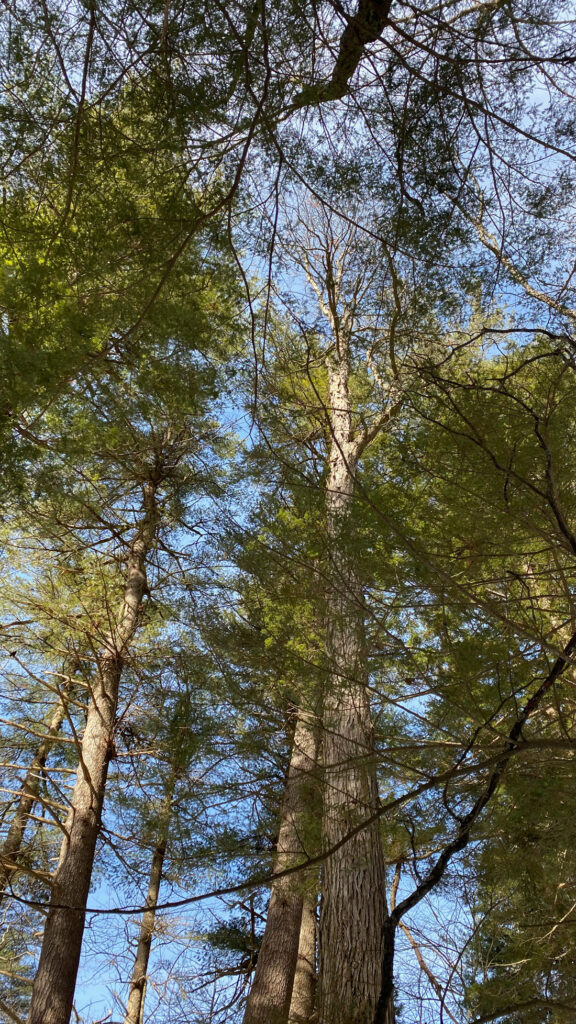
- We have an old growth forest in Stockbridge. It is a valuable resource with trees ranging in age from 2-400 years. However, according to three expert foresters who walked Ice, it is under attack from three insects. To save it, we must act quickly.
- The Glendale Post Office is now closed. There are additional post office boxes in the lobby of the Stockbridge Post Office. The Select Board is hoping there may be a solution in Glendale – McCaffrey suggested using town-owned land for boxes.
- The conversation about what will appear on the warrant will continue at 2/25 SB meeting.
Notes from Board of Selectmen Meeting: February 25 via Zoom
A joint meeting of the SB and Finance Committee
SB Present:
- Chuck Cardillo, chair
- Roxanne McCaffrey, member
- Patrick White, member
- Michael Canales, Town Administrator
Finance Committee present:
- Jay Bikofsky, Chair
- Committee Members:
- Jim Balfanz
- Pamela Boudreau
- Neil D. Holden
- Diane Reuss
- Steve Shatz
Also present: Regional School District Planning Board Chair Lucy Prashker, Taylor, Vice Chair Peter Taylor, Police Chief Fennelly, Water Superintendent Mike Buffoni and Sewer Superintendent Tony Campetti. In addition 22 citizens (unseen)
- Regional School District Planning Board
Lucy Prashker, RSDPB chairman, presented a report about a two-phase program to project needs of the schools and plan. Phase One was completed under a $50,000 grant. It projected that the current downward trend in enrollment will continue. That means less state aid but many fixed costs. The fixed costs may rise even if the school enrollment falls.
Phase Two, at a cost of approx. $240,000, will plan for that future. The cost will be covered by a $120,000 grant and $15,000 per town/ 8 towns/ $120,000. If the grant award is larger the allocation from town could be smaller; if the grant is smaller, the allocation could go up.
The joint SB and Finance Committee voted approval of the plan.
The $15,000 will appear as a warrant item at Town Meeting.
One possible recommendation may be a consolidation of the county schools.
- Police Department
- Although many budget items went down, the overall request was higher. The costs reduced or eliminated were after a review by Town Administrator who discovered unspent or underspent line items and projected this budget based on real expenditures. The total went up because the Police Department is requesting a new cruiser, a hybrid. The police cruiser is a hybrid and it is anticipated there will be substantial savings in fuel costs and emissions.
- Eliminated “special police” line item.
Editor’s question: does that include elimination of policeman at Red Lion corner? - Reduced overtime.
- Water Department
- Solar array reduced electric costs.
- Moved line items to maintenance.
- Water meters anticipated repair/replacement @ $300 per customer
- Reduced safe water tax to Commonwealth, postage, and office supplies. 4.9% reduction
- Residents have well and not connected to Stockbridge town water – apparently cannot be extended without building costly pumping stations.
- Sewer Department
- Reduced electricity and purchase of safety equipment. Otherwise, budget same as last year.
- Patrick White asked: can we extend sewer? Never studied question.
- Neil Holden would not support town paying for it.
- Ice Glen Tree Survey
Three forestry experts walked the Stockbridge Old Growth Forest in Ice Glen. They evaluated it as rare and valuable and also in fair to poor condition. Without treatment, the forest will be lost within 2.5-3 years. The recommendation of the experts is to conduct an inventory and assessment of the entire stand at a cost of $6,000 and to do it quickly. Kate Fletcher, Shelby Marshall, Jim Balfanz, Select Board members Roxanne McCaffrey, Chuck Cardillo and Patrick White supported spending $6,000 for the tree inventory and saving some of the oldest and tallest trees in New England. Nevertheless, the Finance Committee did not immediately support it and requested more information. The Finance Committee suggested it may relate to falling trees and public ways.
Joint meeting ended. Next joint meeting March 11: Highway, Fire Department, and capitol items including continuing Ice Glen item
The Select Board previously waived some alcohol license fees and now waived the seasonal liquor licenses for 501c3 nonprofits.
SB discussed bylaws
- Short-term rentals – two drafts under consideration. One is a zoning bylaw and the other provides the town with regulatory powers when an infraction occurs. White supported regulatory-only approach if the Town would monitor the percentage of housing stock that is residential. McCafffey suggested Tri-town Health input. Discussion to continue.
- Steven Stern, resident, spoke against postponing decisions. Isabel Rose also spoke in favor of clear regulations.
- Cardillo mentioned the problem is not in the future but is upon us, that is, more and more folks are buying properties not to live in but to rent.
- Resident Ben Liptzin asked if some AirB&B owners are putting renters in a basement without an exit, isn’t that a violation of fire code?
- Kate Fletcher and other residents had questions about how parking, dumpsters, fine collection, and costs to the town would be addressed in regulations. The discussion will continue on March 11.
- The Select Board reviewed a bylaw that requires house numbers to be visible from the street to aid first responders, EMT, fire, and ambulance in finding addresses. Continued to next meeting.
Notes from Planning Board
This month the Planning Board had 3 meetings. The regular PB meeting on February 16 followed by two meetings led by their consultant, Jeff Lacy, introducing a potential zoning bylaw called the Natural Resource Protection Zoning Bylaw (NRPZ). With Draft 2, Lacy added an H for Historic and referred to it as NHRPZ.
Regular Planning Board Meeting: February 16 via Zoom
Board Members:
- William Vogt, Chair
- Marie Raftery
- Christine Rasmussen
- Katherine Fletcher
- Nancy Socha
- Wayne Slosek
- Jennifer Carmichael, secretary
- Consultants: Jeff Lacy and Philip Arnold
In addition: On behalf of special permit requests: David and Ann Mintz, owners, David Potter, design, Jackson Alberti, Forsythe, Marc Volk, and attorney Lori Robbins
- Proposed new building on Lakeview Drive, David and Ann Mintz applicants, approved.
- Budget discussion: PB requested a raise for Jennifer Carmichael due to increased hours and a continuation of consultant fees ($40,000) for the second year.
- The Chair announced a zoning bylaw ready for the May Town Meeting “iffy”.
- Grant available from Berkshire Regional Planning. It would fund a survey of housing. PB turned down request to apply citing “too much on their plate”. Patrick White said MVP was conducting a town-wide survey and suggested Planning Board questions might be.
- Phil Arnold, consultant, said the three zoning bylaws for driveways, parking and signs are ready to be sent to the Town Attorney for review and then to the SB.
- The subcommittee formed to work with consultant Jeff Lacy was disbanded as not in compliance with Massachusetts Open Meeting Law (OML). The Chair requested that PB members wishing to ask questions or communicate ideas do not contact Lacy directly but go through Christine Rasmussen.
- Jeff Lacy conducted a general discussion about Natural and Historic Resource Protection Zoning (NHRPZ). Lacy stressed there will be hard decisions, and how PB decides depends on what it wants for Stockbridge.
Editor’s Note: The draft, identified as Draft #2 is protective of open space, controls density, is respectful of our history and natural resources, and protective of Stockbridge as a residential village. It seems a moment to salute the PB for bringing Lacy and his experience onboard.
Notes from the Planning Board Meetings: February 17 and February 23 via Zoom
Present: Consultant, PB members, and from the public: Nina Ryan, Barney and Julie Edmonds, Anita Schwerner, Richard Seltzer, Jamie Minacci, Select Board members Patrick White and Roxanne McCaffrey
Editor’s overview:
Natural and Historic Resource Protection Zoning (NHRPZ)
NHRPZ is a proposed zoning bylaw that relates to subdivisions only. There are criteria for when NHRPZ applies. For example, Lacy identified parcels of 20 acres or more to which NHRPZ would apply.
What if an owner has a parcel of 20 acres or more, but does not have adequate frontage for the number of houses he or she wishes to build? The owner proposes to build a road through the property to create more road frontage, that is by definition, subdividing. It is a subdivision NHRPZ applies.
By right
In 2020, a single house on Prospect Hill Road, zoned R4, sold to a developer. The house was on a parcel of 12+ acres with adequate road frontage for 3 houses (900 feet). The developer divided the property into 3 lots, built two additional houses, and sold all three. Since the developer satisfied the zoning criteria regarding lot size and road frontage per house, he could do as he pleased with his property by right of ownership.
Zoning
Governments, state and local, place restrictions on what individuals and businesses can do with their property. Limits are placed for the common good, for example health and safety. There may be a tension between what the owner wants to do and what zoning allows — between profitability and density. To maximize profit, the developer may want to build as many units as possible. The results may be congestion, loss of open space, buildings too close together for privacy and too close to the road for safety. Developer might argue that his development with increase taxes – raise money. Lacy reminded the PB that density also costs money – in roads, utilities, police, fire – perhaps more than it generates. Zoning attempts to balance the individual desire and the common good — what a developer wishes to do and what he can do.
NHRPZ
NHRPZ is a framework into which the PB plugs numbers. The framework is consistent; what happens in Stockbridge depends upon the numbers plugged in. A developer has a worksheet: What number of houses will generate sufficient profit to justify sticking the shovel in the ground? NHRPZ offers the Town of Stockbridge a worksheet as well: what do we consider acceptable density? The decisions made today will shape Stockbridge tomorrow.
PB February 17 via Zoom
- The following was a review of Draft # 2. Changes from Draft # 1 include:
- The H signifying Historic Protection was added.
- The divisor (defined below) was changed from 8 to 6 (the lower the number the greater the density)
- There was a suggestion – not yet adopted? – to change the % of preserved land from 80% to 60% (The lower the % the greater the density)
- NHRPZ replaces conventional subdivision zoning now on the books. However, an alternate plan can be approved by Special Permit if granted by PB.
- NHRPZ controls density, allows fewer units per property, and requires a percentage of conserved land. PB Chair voiced concern about the developer making money if fewer units are allowed. Christine Rasmussen suggested perhaps with more greenery the price per unit would be higher.
- While Open Space Residential Development (OSRD) suggested by Russell Arendt is density neutral; NHRPZ is density negative. Density neutral guarantees a developer the same number of units as could be built in a conventional subdivision; NHRPZ is density negative because the formula, by virtue of preserving a fixed % of the parcel, allows fewer units.
- Density neutral creates a building boom as it allows more units to be built at a lower cost (less infrastructure)
- As proposed, NHRPZ is applicable to parcels of 20 acres+ being subdivided. NHRPZ supplants conventional subdivision zoning, and 2–4-acre zoning IF a 20+ acre parcel was being subdivided. It does not apply to parcels less than 20 acres being subdivided or parcels with sufficient road frontage to build multiple units without subdividing.
- Cost/benefit to Stockbridge – The consultant did not appear to agree with those who suggested building more units was necessarily a net income to town.
PB February 23 via Zoom
- Consultant Lacy continued to explain NHRPZ which applies to subdivisions only.
- There are two key parts of NHRPZ: The Conservation Analysis and the Work Sheet.
- Conservation Analysis identifies what is “constrained”, that is, cannot be built on. The analysis is required of the developer, and at developer’s expense; the PB may hire their own expert.
- The goal is to determine which parts of the acreage must be preserved (called constrained). For example, wetlands, steep slopes, view shed, streams, and much more. Specifically, for Stockbridge, Lacy added things of Native American origin and of historic significance. The list can be augmented or more limited.
- As an example of the Work Sheet and at the PB’s request, Lacy used 37 Interlaken (DeSisto). Of the 320 acres, 244 would be preserved. That figure is arrived at by:
- Dividing the acreage between that zoned R2 in front (about 60 acres), and R4 in back (about 260 acres).
- From the front 60 subtract 10 acres of wetlands. Divide the remaining 50 acres by the “divisor” of 4 because it is R2 and 12 units are allowed – always round down.
- From the back 260 subtract 105 acres for steep slope. Divide the remaining 155 acres by 6 (because it is R4) and you can build 25.38 units – round down – 25.
- Your total is 37. That is the beginning.
- The next step is to determine the best location for building to avoid any natural assets (like a stream).
- The hard decisions to which the consultant referred are the numbers (the divisor, the % of slope, the % preserved etc.). The density is increased when the numbers are decreased. Lacy explained the framework is solid, helpful, and has been successfully adopted all over Massachusetts – the numbers plugged in creates the outcome – what a town will be.