From the Berkshire Waldorf High School
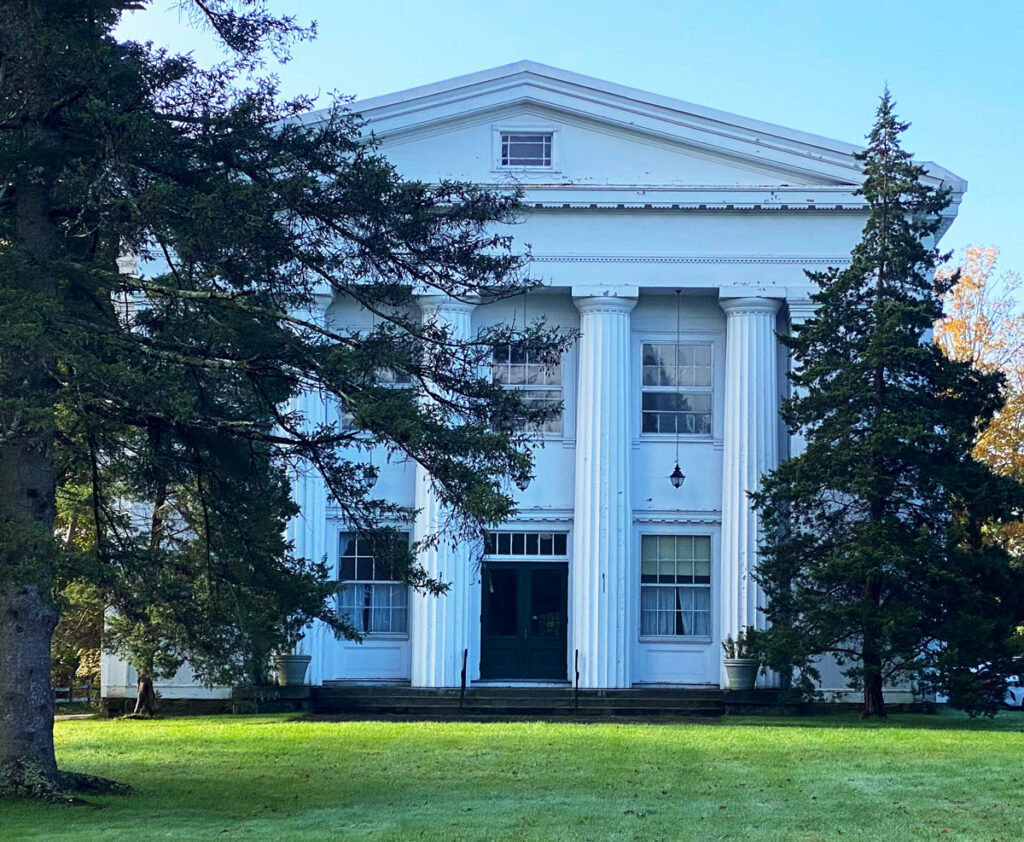
The Jane & Jack Fitzpatrick Trust has awarded Berkshire Waldorf High School a $250,000 grant toward the cost of remediating asbestos in Old Town Hall as part of the school’s project to purchase and renovate the building as its permanent home.
Earlier this year, the Myrin Institute provided a multi-year grant of $500,000 directed at this effort. Individual donors have provided a significant portion of the overall $6.5 million project cost.
Trustees of the Fitzpatrick Trust write, “The Berkshire Waldorf Board has done great work in finding a permanent home for the school, while at the same time preserving a beautiful and important historical building on the town’s Main Street.”
Asbestos remediation will be a first step toward the planned renovation. Architectural and engineering work by Pamela Sandler Architects began last year, and the school hopes to begin actual construction in January 2024.
Stephen Sagarin, Berkshire Waldorf High School Executive Director, said, “We cannot adequately express our gratitude to the institutions, and more than 100 donors, who have contributed to the project so far for their generosity and dedication to our school and to the Town of Stockbridge.”
Board Chair Teresa O’Brient added, “This project is the last, best hope for Old Town Hall to avoid demolition. It will provide millions in direct economic benefit to the Town of Stockbridge, both in terms of construction spending and ongoing support of town merchants.”
The Fitzpatrick Trust grant is contingent on school ownership of the Old Town Hall, currently owned by the First Congregational Church of Stockbridge, UCC. The Church and Berkshire Waldorf High School have entered into a purchase and sale agreement, contingent on the Stockbridge Zoning Board of Appeals approving a variance. The hearing will likely occur before Thanksgiving 2023.
The Old Town Hall has been unoccupied since 2007, when Stockbridge Town Offices moved into the former Stockbridge Plain School. The building was originally constructed in 1829, with a larger addition in 1904.
Berkshire Waldorf High School, founded in 2002, enrolls approximately 50 students in grades 9 through 12. The school provides an education for adolescents using existing facilities and resources. Among them are: Stockbridge Library, fields, and courts; Shakespeare & Company and the Berkshire Theater Group; Berkshire South Regional Community Center; Berkshire Art Center, local artists’ and artisans’ studios.
From the Healey-Driscoll Administration
$4 Billion Affordable Homes Act to Increase the production of, and lower the cost of, housing.
This multi-pronged approach includes $4 billion in capital spending, 28 substantive policy changes, three executive orders, and two targeted tax credits. The majority of the spending will have benefits for moderate-income and low-income households. Click here to read The Affordable Homes Act.
The Purpose
“The cost of housing is the biggest challenge facing the people of Massachusetts. We said from day one of our administration that we were going to prioritize building more housing to make it more affordable across the state,” said Governor Healey. “The Affordable Homes Act delivers on this promise. It’s the largest housing investment in Massachusetts history.”
The Funding
The Transfer Tax — Healey administration wants to give cities and towns the option of adopting a real estate transaction fee of 0.5 percent to 2 percent on the portion of a property sale over $1 million. Additional legislation and policy changes would result in funds.
What will the Affordable Homes Act do?
It is estimated it could create more than 40,000 new homes in Massachusetts, chipping away at a shortage that was estimated at 200,000.
A total of $1.6 billion will provide for the repair, rehabilitation and modernization of the state’s more than 43,000 public housing units
$200 million would be authorized for the Housing Innovations Fund to support alternative forms of rental housing for the homelessness, seniors, veterans, and transitional units for persons recovering from substance abuse.
$115 million to ensure new affordable housing developments meet “green” standards
Allow accessory dwelling units less than 900 square feet “by right” throughout the state
$1.83 billion would be directed to housing production and preservation as follows:
$800 million for the Affordable Housing Trust Fund to provide resources to create or preserve affordable housing and first-time homebuyer opportunities for households in Disproportionately Impacted Communities.
$425 million for Housing Stabilization and Investment Fund to support preservation
$175 million for HousingWorks Infrastructure Program to fund municipal infrastructure projects to encourage denser housing development.
$100 million for Commonwealth Builder to spur construction of affordable homeownership opportunities.
$100 million for Mixed-Income Housing to support middle-income housing production.
$50 million for the Momentum Fund — initiative designed to leverage state resources to support large scale, mixed-income multifamily development.
Editor’s note: As a Justice40 Community, Stockbridge will be eligible for many of these grants. SU volunteers to help in preparation of any of the grants as a contribution to the village.
From: Robert T Leverett; Subject: Ice Glen
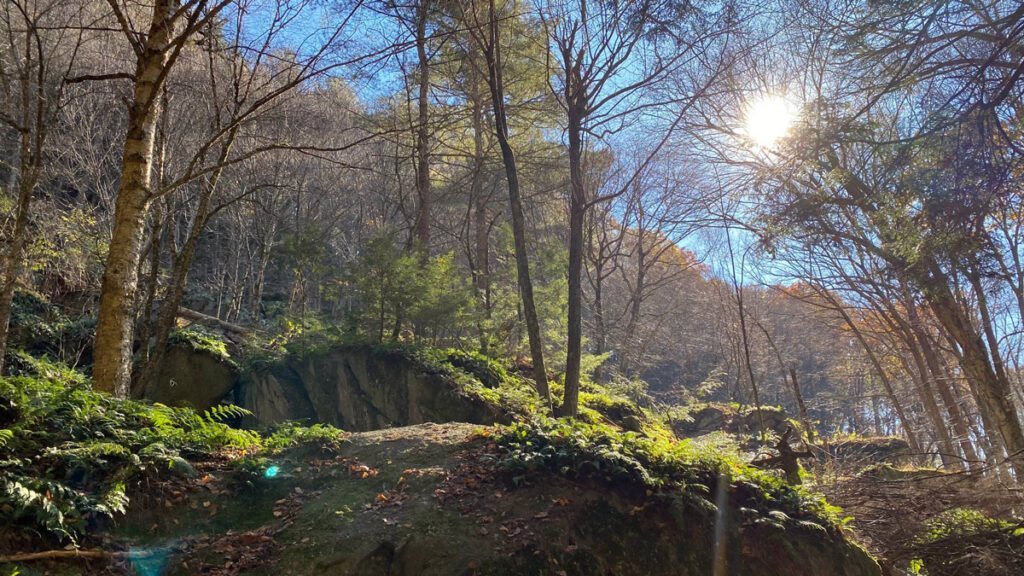
Jared Lockwood and I have begun an update of the measurements of the big trees growing in and surrounding the Glen. We have a long way to go but have already remeasured a few of the most prominent white pines. The numbers tell a story of continued growth despite the advancing age of the forest. This, in turn, speaks to the continuing positive climate role of Ice Glen’s trees. Treating the hemlocks and ashes is proving to be a good climate mitigation strategy.
Yesterday, we remeasured the huge Ice Glen pine at the south end of the Glen. I’m pleased to report that it is now 13.52 feet in girth and 163.25 feet in height! That is up from 13.43 feet in girth and 161.8 feet in height as measured by Jared in 2020. Using a statistical volume-biomass mode named FIACOLE, this amount of growth represents the sequestering of about 409 lbs of CO2 absorbed from the atmosphere each year– an impressive amount considering that the pine is probably over 300 years old. Oh yes, the Ice Glen Pine has joined the ranks of single-trunk, forest-grown white pines with a trunk volume of 1,000 cubic feet or more. It is a very exclusive club.
We climbed and volume-modeled the pine in Oct 2006. At that time, the pine’s trunk volume was 920 cubes. The current trunk volume based on our statistical models is 1,042 ft^3. The addition has been 122 ft^3 gained in 17 years, or 7.2 ft^3/year of wood and bark. This does not include the underground growth which is usually given as 15%. This brings us to 8.3 ft^3 of trunk volume growth per year.
In time, we’d like to compute the above-ground carbon stored in pine-dominated area on the north side of the Glen. There’s a story yet to be told about Ice Glen’s trees.
Congratulations Selina Lamb
Rural Intelligence, a respected digital resource in our region, just named Selina Lamb and Birch Realty top five Best Agency and top five best agent.
Selina thanked all who voted for her, “As the new kid on the block and with a very different take on how to support buyers and sellers, it means the world to us to get to the top 5. We are loving supporting our clients new and old every day, our way: incisive analysis, deep perspective, best-of-marketing, and a lot of fun along the way!”
She is hoping to get to Number one in the next round of voting between now and November 13th. If you want to participate, go to https://ruralintelligence.com