

Dear Carole,
I think it is important for everyone to understand the viewshed in order to keep Stockbridge, Stockbridge.
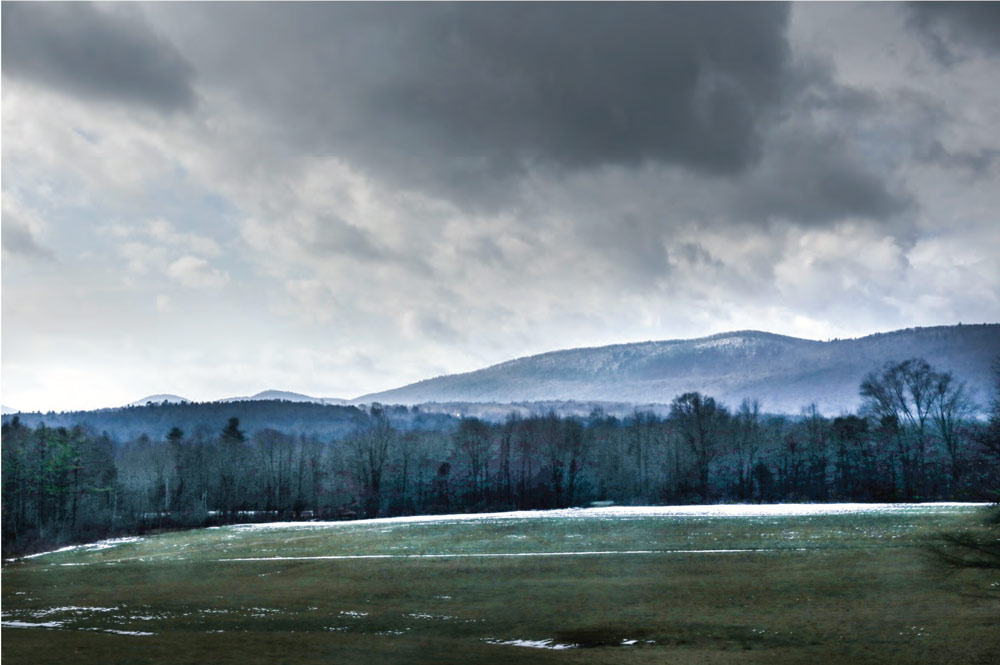
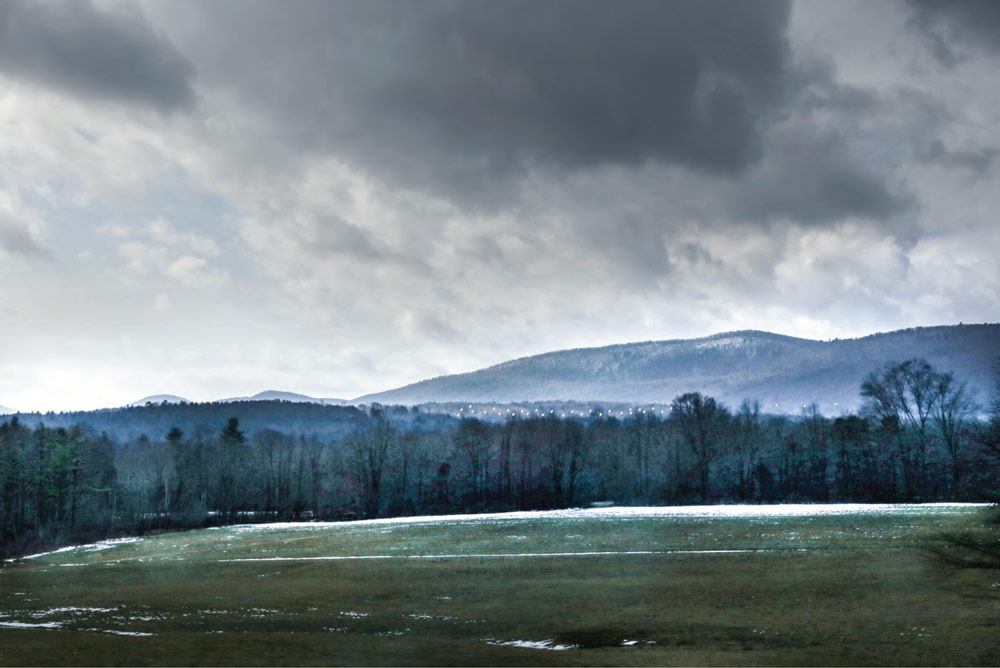
In 1980, Gould Meadows was designated a “Special Place” by Governor Dukakis. The first image is the view from Gould Meadows, shared by Tanglewood, seen by several hundred thousand visitors every year. Only one small white house can be seen in the entire panorama. The ridge immediately behind the house, starting left of it and extending almost to the right side of the picture belongs to the 37 Interlaken Cottage Era Estate (DeSisto).
The property was purchased a few years ago by a developer who wanted to put about 70 houses along that ridge. To help visualize what such a development would look like, the small white house that is visible has been pasted into 33 locations using the developer’s site plan. Many people in town, including the chair of our planning board, believe that the 37 Interlaken development would be hidden from view.
Look at the before and after pictures and click on the pdf link. Draw your own conclusions.
Charlie Kenny
Dear Charlie,
Thank you for contributing to Stockbridge Updates.
Carole
Dear Carole,
Today, a landowner or a developer can walk into Town Hall with an application for a development with every lot the size of one, two, or four football fields depending on the zoning district the land is in. Because of changes in legislation, court cases, and the Commonwealth’s policies supporting housing development, if that development complies with the town’s bylaws and regulations, it must be approved. In other words, development can now occur by right.
Aware of the unique character and beauty of the town and the desire to protect special places, the Planning Board is working on a proven concept that if passed at a future Town Meeting will allow boards and commissions to work with the developer. As the first step in this process, instead of finding the best sites for housing, the special features of the land, e.g., wildlife corridors or nesting areas for birds, a large front lawn, lovely old trees, or a stone wall are identified and permanently preserved with an easement. The siting of house lots then occurs with placement encouraged to take advantage of the land’s natural features, not a formula. The allowance for these lots is at approximately the same density as the underlying zoning allows, but the building envelops that owners are responsible for are smaller. For example, in a four-acre district, the housing may be on lots of approximately one-acre lots. The remaining three acres are protected open spaces available for passive recreation. The homes’ location creates more of a neighborhood feel, with substantially less environmental damage and infrastructure costs.
I understand that this new concept takes a while to get familiar with, but in your publication of a month ago, the concept was misconstrued. To address the issues, Jeff Lacy, a highly regarded consultant who has developed bylaws protecting small towns’ character in western Massachusetts and is now working with Stockbridge, developed a response. Because it was over your word limit, it was not published.
For people who are interesting in reading Jeff’s article, they can email me at christineb.rasmussen@gmail.com or call 298-7113. I hope next week Jeff’s article and other information on Natural Resource & Historic Preservation and Open Space Zoning will be readily available on the town’s website. I am writing this article based on my experience of working on land use issues, not as a member of the Planning Board.
Christine Rasmussen
Dear Christine,
Thank you for adhering to Stockbridge Updates policy so your letter could be included in this issue.
If it is deemed appropriate to place copy from Stockbridge Updates on the Town web site – we thank you. With a commitment to accuracy and without remuneration, SU endeavors to inform; posting our copy on Town web site helps.
SU never wishes to misconstrue but does point out contradictions, and questions assertions and generalizations in order to present Stockbridge with the best information available and indicate what to ask next.
As you say, landowners can develop by right once they comply with the town’s bylaws and regulations. That was always true and will remain true even as bylaws change. A landowner has rights/entitlements that can never be eradicated but can be limited when in the public interest to do so.
Carole