By Carole Owens with invaluable help from Jim Finnerty
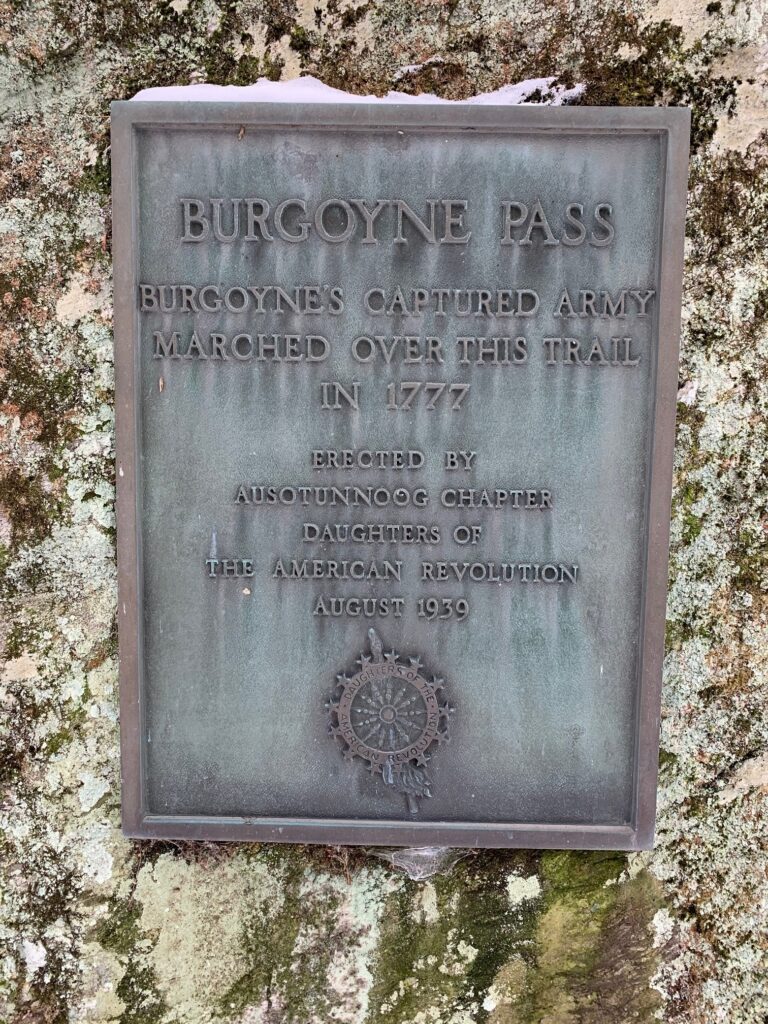
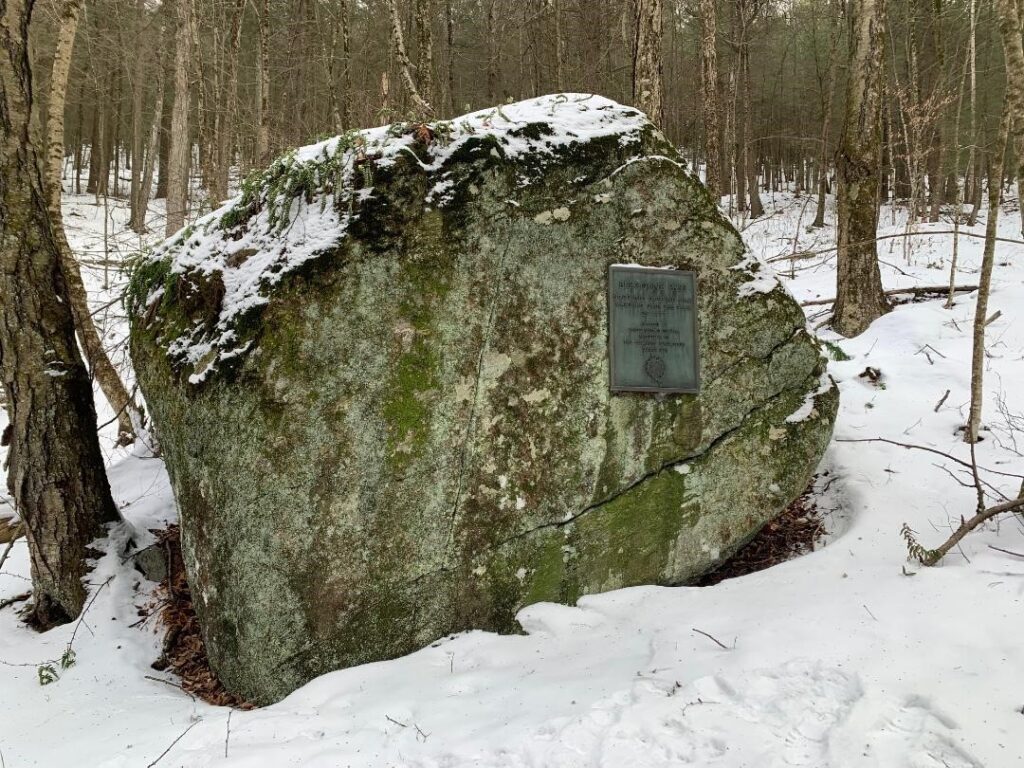
In 1926, on the 150th anniversary of the Henry Knox “canon” Trail, the states of New York and Massachusetts laid markers along the way. Stockbridge is not on it. Nope, Henry Knox, his troops and artillery, did not go through Stockbridge, but, do not despair, right in the heart of Stockbridge, we have the marker for the Burgoyne Pass. Never heard of it; read on…
John Burgoyne is best known for his role in the American Revolutionary War. Burgoyne designed an invasion scheme and was appointed a general in the British Army to command the troops that would put his plan into action.
Burgoyne’s plan was to move south from Canada. The British Army in New York would move north, join and strengthen Burgoyne’s army, and together they would conquer New England and isolate it from the rest of the colonies. Burgoyne believed that would quell the rebellion.
With 6,200 men, Burgoyne began his advance, but he moved too slowly. The Americans saw him coming and cut him off from the New York troops. Instead of coming to Burgoyne’s aid as planned, the British army in New York moved south and captured Philadelphia. Burgoyne was alone and vulnerable.
Burgoyne fought two battles near Saratoga, but was surrounded by American forces and, with no relief in sight, surrendered his entire army on October 17, 1777. Some historians mark his surrender as the turning point in the War. The French, watching America’s progress, were won over and joined them. France supplied the colonists since the spring of 1776 but joining the colonists on the field of battle was what America needed to win.
Rather than an outright unconditional surrender, Burgoyne had agreed to his men surrendering their weapons, returning to Europe, and pledging never to return to North America. Burgoyne was insistent even threatening to fighting his way back to Quebec if it was not agreed. It was but in Massachusetts it was resigned and the enlisted men became prisoners of war. Burgoyne and his officers returned to England, but he had one more march in front of him – from Albany to Boston through Stockbridge.
Back home in England, Burgoyne he was repudiated. Accused of sauntering” rather than marching southward – dreaming of victory rather than obtaining it. You know the saying about the arc of history bending toward justice? Well, historians have slowly shifted, or at east shared, the responsibility for the losses from Burgoyne to the Secretary of State for the Colonies who communicated widely but not well.