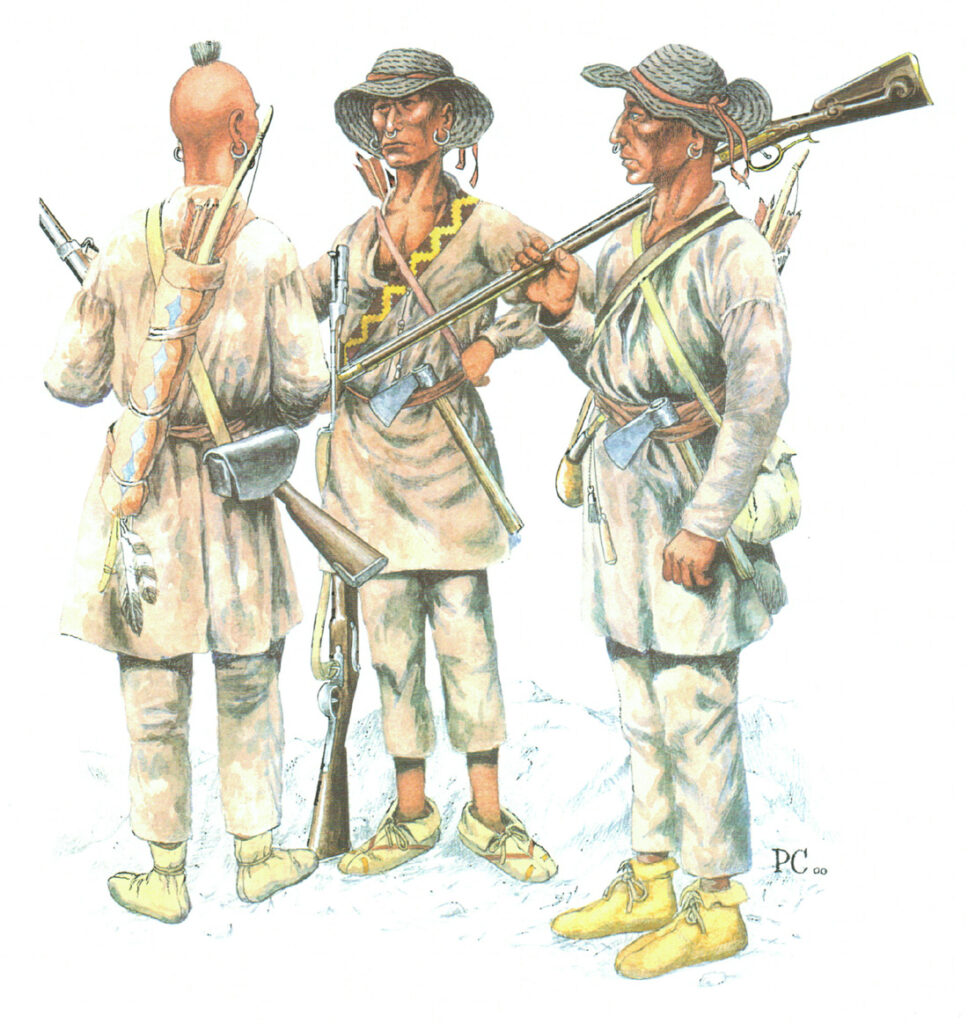
Serendipity, General George Washington, an 1100-pound Ox, Stockbridge Mohican Sachem Solomon Uhhaunnuhwaunnuhmut, Seeking a Needle in a Haystack
Part One by Rick Wilcox
Editor’s note: have you wondered about the Great Stockbridge archeological dig? Here is the back story by Rick Wilcox, former Stockbridge Chief of Police and current Stockbridge historian.
Town of Stockbridge Facilities Manager Chris Marsden, Stockbridge-Munsee Band of the Mohicans Historic Preservation Manager Bonney Hartley and archaeologist Casey Campetti, M.A. RPA were gathered at Bidwell Park, the site of a storm drainage upgrade that was funded by a grant from the Federal Emergency Management Agency. Part of FEMA’s legal obligations under Federal law was to conduct a survey for any pre- or post-contact cultural artifacts relating to Mohican presence. During a sidebar conversation, as they viewed nearby Laurel Hill, the trio wondered if archaeology would reveal the site of a 1783 Ox Roast that had been provided by General George Washington as a thank you to the Stockbridge Mohicans for their service in the Revolutionary War.
The mythology surrounding the ox roast had evolved over time to create an event that took place on Laurel Hill and that common knowledge suggested a survey of Laurel Hill might reveal cultural artifacts. The only likely location on the hill was the glen used as the gathering place for annual meetings of the Laurel Hill Association. A serendipitous moment unfolded when the Laurel Hill Association announced its desire to conduct a renovation of certain areas of the hill, which would require a history of the hill and a professional cultural resource survey to protect any pre- and post- contact cultural sites. To that end I was asked to create a history of Laurel Hill from 1735 to 1853 and Karen Marshall of Stockbridge authored a history from 1853 to present.
Research for the report eventually revealed that ownership of Laurel Hill by Stockbridge Mohicans included a three-acre home lot of Aaron Shaushockkock’s father on the north side of the hill as well as brief ownership of the same lot by Aaron himself. In addition, a five-acre lot on the southern half of Laurel Hill was owned by Jacob Tusnnuck. Tusnnuck and his wife Mary Wolummauck may have lived on the hill prior to his purchase of the land. By the time Mohican ownership of Laurel Hill had been established and it was confirmed that the ox roast had taken place across the river, the Stockbridge-Munsee Band of the Mohicans had been awarded a grant to conduct an archaeological survey on the Solomon Uhhaunauwauaunmut home lot.
The oldest historical record of the ox roast that I was able to uncover came from David Dudley Field, Sr.’s 1829 history of Berkshire County: “At the close of the war, Timothy Edwards and others, contractors for supplying a division of the Army at West Point with provisions, were ordered by Gen. Washington (as tradition is here) to give the Indians a feast, in consideration of their good conduct in the service. An ox, weighting 1100, was roasted whole, the whole tribe partook of it, men first, and then women, according to custom. The Rev. John Sergeant (the younger) and a Mr. Deane presided at the table, and the principal men of the place attended. The feast was kept near the residence of King Solomon; and after it was over, the Indians buried the hatchet, in token that the war was past, and performed other ceremonies in their own style, for the gratification of the company. ” Field arrived in Stockbridge in 1819 and one would wonder if he might even have been able to speak with someone who had firsthand knowledge of the ox roast a little more than forty years after the event.