Notes from Select Board Meeting, Auditor’s Report, March 30, 2021 via Zoom
Present:
Select Board
- Patrick White
- Roxanne McCaffrey
Finance Committee
- Jay Bikofsky, Chair
- Jim Balfanz
- Bill Vogt
- Neil D. Holden
- Steve Shatz
- Diane Reuss
- Pamela Boudreau
Also present:
- Michael Canales, Town Administrator
- Ray Ellsworth, Town Accountant
- David Irwin, Adelson & Company, Auditor
Irwin presented a 41-page report and analysis.
- There was one problem: the bids for procurement were mishandled. Canales discovered it as it pertained to the Larrywaug Bridge repair, reported it to the auditors and the Commonwealth, and corrected it by rebidding the project.
- Otherwise, the Stockbridge books were audited and reconciled without issue. The books were in accordance with government and auditing standards.
- Stockbridge has “promised obligations”, including Post Employment Liabilities (retirement and health insurance), backed by a trust that is 87% funded. According to Irwin, that far exceeds other towns many of which do not fund the liability at all.
- All expenditures were proper; receivables were 90% collected.
- In summary, the auditor reported, “numbers are good, revenue and assets good, declared a good job overall”.
- Suggestions:
- Strengthen the controls over use of town credit cards.
- Require licensed architect or engineer to sign-off on large capital projects.
- Bikofsky thanked the staff — Town Administrator, Accountant, and Treasurer for “full cooperation”. Bikofsky called for vote to approve the audit.
The audit was unanimously approved and the meeting adjourned.
Notes from the Select Board Meeting, April 1 via Zoom
- Chuck Cardillo, Chair
- Patrick White
- Roxanne McCaffrey
- Michael Canales, Town Administrator
Also present: Steve Stern, Ken Krentsa, Ben Liptzin
It was a single-issue meeting: the proposed Short-term Rental Bylaw.
- White made an opening statement about the number of houses in Stockbridge that are still primary residences. Of 1700+ houses, only 650 are primary residences, quoting an analysis by Town Assessor Michael Blay. If it dips lower, White said, that will signal a crisis.
- McCaffrey went through the proposed bylaws. While the intent was clear, there were questions.
- Event tents and amplified music at outside events is typically not allowed, why is it allowed in this proposed bylaw?
- White asked if this bylaw contradicts another bylaw: this one allows up to 175 people at an outdoor event, does another bylaw prohibit that number?
- Stern asked, how does this address the bad actor? Is a $100/day fine a deterrent to a proprietor charging $1000/night? Can a permit or registration be revoked after a shorter period of time (proposed bylaw says one year)? If an LLC is fined and then declares bankruptcy or dissolves, forms a new LLC, and continues to operate, what can the town do? (Canales said, “Nothing”) If too much noise, what remedy? (Cardillo replied, “Call the police.”)
- Liptzin asked, can’t Stockbridge refuse to register corporations and only register the owner and only fine the owner? This would prevent the dissolution of a corporation and continuation of renting under new name.
- Following up White asked, why not fine the owner?
- Cardillo hoped the Commonwealth would step in with regulations of short-term rentals.
- If there are dumpsters in front yard, who will enforce removing them?
- Is permitting stronger, more enforceable than registration?
- Can there be inspectors?
- Can Stockbridge limit registration of short-term rentals to Stockbridge residents only?
SB approved the proposed bylaw. Returned it to the PB for a public meeting.
Meeting adjourned
Editor’s questions:
- It appears enforcement is a recurring problem. Is this or any bylaw ready for Town Meeting before it is known how the elements of the bylaw will be enforced?
- Is the basic problem here that these units are hybrids, that is, neither residences nor licensed inns and B&Bs? If so, is the real problem to define them? If this use were defined, might it then be subject to regulations already on the books?
Stockbridge Bowl Stewardship Committee April 2 via Zoom
Present:
- Jamie Minacci, chair
- John Loiodice, Sewer and Water
- Charlie Kenny, Board of Health
- Michael Nathan, SBA
- Roxanne McCaffrey, SB
- Gary Kleinerman, Harbormaster
- Jim Wilusz, Tri-Town Health
- There was “housekeeping” with respect to approving minutes and issues that related to difference between in person and Zoom meetings (for example calling the roll for a vote rather than taking the ayes and nays verbally or by show of hands).
- In his report, Wilusz mentioned three matters that need attention as “Berkshire County becomes a significant destination”. They are: more sewer connections and fewer septic systems especially around the Bowl or at least, more regulations and enforcement of septic maintenance. Attention to mosquito control, and short-term rentals.
- Loiodice underscored concern over the ability to enforce town regulations.
- McCaffrey mentioned the SB approved a general bylaw regulating short-term rentals. (At the SB meeting there was concern expressed about ability and effectiveness of enforcement as spelled out in proposed bylaw. See notes on SB meeting)
- Nathan gave update on septic systems in the Lake Drive area — soil conditions were not favorable to septic systems. He expressed need for town sewer in that neighborhood.
Discussion continued re: converting septic systems to sewer connection especially around lake and with attention to very large septic systems like the one at Kripalu.
Potential problems might include leaching into lake or E. coli
- Kleinerman reported that the boat ramp will open on Memorial Day. Kleinerman also mentioned he will be helping with the Conservation Commission dock survey.
- Nathan wanted to make clear the parameters of the committee. It was his understanding it was an advisory committee. As such, he suggested, there should be formal votes to approve any advice the committee passes on.
- McCaffrey reported on the dredging proposed for next year. SBA President Richard Seltzer broached the possibility of “whole lake dredging”. McCaffrey reminded everyone that dredging must be approved by the Commonwealth, and she said “whole Lake” dredging would not be approved. She pointed out that dredging of areas designated for testing of would not be approved.
- Again, enforcement was mentioned as lakeside homeowners are apparently using lawn fertilizers which the Conservation Commission has regulations against.
The meeting was adjourned.
Editor’s question: If the parameters of the committee’s work are still being ironed out, and if as reported in the last issue, the Chair, was unaware of the proposed bylaw, is it too early to change the Stockbridge Bowl Stewardship Committee into a commission by bylaw?
Notes from the Assessors Meeting April 5 via Zoom
- Gary Pitney
- Doug Goody
- Tom Stokes
- Michael Blay, Town Assessor
Also present: Patrick White and Roxanne McCaffrey, SB
- All motor vehicle abatement applicants qualified.
- The Berkshire County assessors met to discuss how to evaluate utilities. Until now, the utilities (National Grid, Berkshire Gas, etc.) evaluated themselves. Recently a case before the Appellate Tax Board upheld the municipality’s evaluation over that of the utility. There is now precedent for the municipality evaluating the assets of the utilities and thereby raising more taxes. The value is based on all utilities’ equipment which is voluminous. The evaluation could result in increased tax income. The problem, Blay explained, is that local assessors do not know how to do the evaluation. This year they will probably hire consultants and attempt to train to do the task themselves in future years. Utilities are Stockbridge’s largest taxpayers. Blay’s fear is, if the tax bill goes up, the utility will pass the increase on to consumers.
- Farmland valuations come to Stockbridge from DOR (Mass Dept. of Revenue). To be farmland one must prove farm had $500 in sales annually.
- Forestry Land is akin to farmland, and enjoys tax breaks. Stockbridge holds a right of first refusal on forestry land if the owner tries to convert its tax status for development. If Stockbridge refuses and the forest’s tax status is converted, the owner owes Stockbridge for the back taxes due going back five years.
- Why is assessed value of property and sales price different? One reason, Blay explained, is that assessed value is only calculated once per year. There is a lag, and also, assessed value can be 90-110% of sales price due to the formula used.
- There are two Appellate Tax Board cases for unpaid assessments and/or requests for abatements (these matters are closed to public so information sparce). The two are Desisto (37 Interlaken) and Singular Wireless. There will be a hearing April 26 with Patrick Sheehan’s lawyers (for Desisto). It will be an executive session closed to the public.
- The Pilot Program is an initiative to encourage nonprofits to pay an amount to Stockbridge in lieu of taxes. Tom Stokes, Chair, was informed by White that Riverbrook School sent $2000 to the Town. Patrick would like to return it with thanks because Riverbrook is currently trying to raise money to repair and improve the house.
- Blay informed committee that the Assessor’s Office and other Town Offices are now on flextime. They may soon return to Town Hall with varying hours.
Meeting adjourned
Notes from the Planning Board Meeting: April 6 via Zoom
Board Members:
- William Vogt, Chair
- Marie Raftery
- Christine Rasmussen
- Katherine Fletcher
- Gary Pitney
- Nancy Socha
- Wayne Slosek
- Jennifer Carmichael, secretary
- Consultant: Philip Arnold
In addition: Mark Mills, Carl Sprague, Anita Schwerner, Pat Flinn, Patrick White, and Roxanne McCaffrey
- Approved minutes from February 23, March 15 and 16.
- Special Permit request. A special permit is required for a driveway longer than 500 feet. The driveway would be across from 25 Prospect Hill Road. The reason for the request is to position the proposed house at the back of the property where there is the best view. The 800-foot driveway was approved with four conditions:
- Replace six trees removed to accommodate driveway — each at least 3″ around.
- Maintain culvert and keep it clear of debris.
- The driveway will never be a road therefore no subdivision of land possible.
- The gravel drive will not be paved but remain permeable.
Next, in accordance with Mass General Law c. 40A, PB must “find” a nonconforming use is in harmony with community, essential to public welfare, not detrimental to adjacent uses, not a danger to traffic or pedestrian safety, does not overload municipal utilities, and does not compromise general safety and welfare.
Motion passed 5 – 2; Rasmussen nay and Fletcher abstained.
Public hearing closed.
- The issue of enforcement was broached. The need to inspect and enforce conditions even as ownership changes. Vogt suggested, singly or in cooperation with Conservation Commission, hiring another outside expert (a Conservation agent) to inspect and enforce. Fetcher observed that by law the Building Inspector “interprets and enforces” PB bylaws, special permits, conditions.
- Sign application for 5 East Street — the insurance company requested sign during construction so any emergency vehicles could find site. The bylaw allows a 4 square foot sign (2×2′) that is no more than 10 feet top to bottom — the PB does not have discretion. The applicant (Kistler and Knapp Construction) was asked to reduce size. When in compliance, sign is by right.
- A proposed amendment to “Stockbridge Zoning Bylaws Principle Uses” that precludes residences on the ground floor in the business district. Approved by PB — 6 to 1. Fletcher voted “no” stating that the “grandfathering” — allowing residences on the main floor in business district to remain residences even if bylaw passes — seemed unclear especially after sale of the property. Next steps send to Attorney General of Commonwealth for approval, and to SB for inclusion/non-inclusion on Town Warrant.
- Parking, Driveway and Sign Bylaws returned by the SB with suggestions.
- SB to remain permitting authority.
- 4′ x 4′ sign, rather than 2x 2′, is too big. Consultant Phil Arnold will discuss with Town Counsel — there may be a 1st Amendment issue — no decision.
- Driveways — removed paragraph that is redundant of language in curb cut bylaw -approved and advanced to Public Hearing.
- Parking. No resolution. The problem appears to be that everyone in business district (with possible exception of Red Lion Inn and Michael’s) is out of compliance with current bylaw. Equally they would be out of compliance with proposed bylaw. Vogt said there was “no point in passing a bylaw that makes everyone noncompliant” and asked if the consultant or anyone had a solution. Rasmussen suggested having a Public Hearing and asking the public. Dismissed as bad idea. Tabled.
- Accessory Dwelling Unit (ADU) Bylaw. One per property or more allowed? In which zoning districts are ADUs allowed? Could there by an ADU by right if it were 800 square feet or smaller? No decision.
- Natural Resource Preservation Zoning Bylaw (NRPZ). Suggested that consultant Jeff Lacy drop what he called “Section H. Cottage Era Estate Bylaw (CEE)” and concentrate on NRPZ with goal to have it ready for Town Meeting. Socha, Fletcher, Pitney and Slosek all mentioned that the genesis of everything they were doing for the last year was related to the Cottages — historic properties. They were confused why that was discarded and concentration was solely on NRPZ because NRPZ was not the issue initially addressed.
- Vogt said PB would get to CEE after NRPZ was completed. Vogt also shared that while the consultant combined NRPZ and CEE, now they would be two separate bylaws. Vogt asked for a motion to approve concentration on NRPZ only. The vote was approved 5-2; Fletcher and Pitney voted “no”.
- With respect to OML: Town Counsel requested a statement be read into record for PB acknowledgement. It acknowledged there was a subcommittee of the PB from November 1 – February 15 made up of Vogt, Rasmussen and Socha who met with consultant Lacy and then disbanded. Replaced by Rasmussen meeting with Lacy and reporting to PB.
- Anita Schwerner asked is only one member of PB, Rasmussen, meeting with consultants, Lacy and Arnold, also a violation of OML?
- Carl Sprague, as Chair of the Historic Preservation Committee, offered any help PB might want in sorting out historic properties.
- Schwerner also expressed the concern that there was a lot of confusion with respect to process and content of bylaws.
Meeting adjourned
Editor’s note: Of six proposed bylaws, only one advanced to Attorney General for review and approval.
Notes from the Select Board Meeting: Thursday, April 8 — via Zoom
Present:
- Patrick White
- Roxanne McCaffrey
- Michael Canales, Town Administrator
Also present: Jim Balfanz, Steve Shatz, Jay Bikofsky, Barbara Zanetti, Kate Fletcher, Michael Canales (sorry if any attendees missed — limited number shown on the CTSB screen)
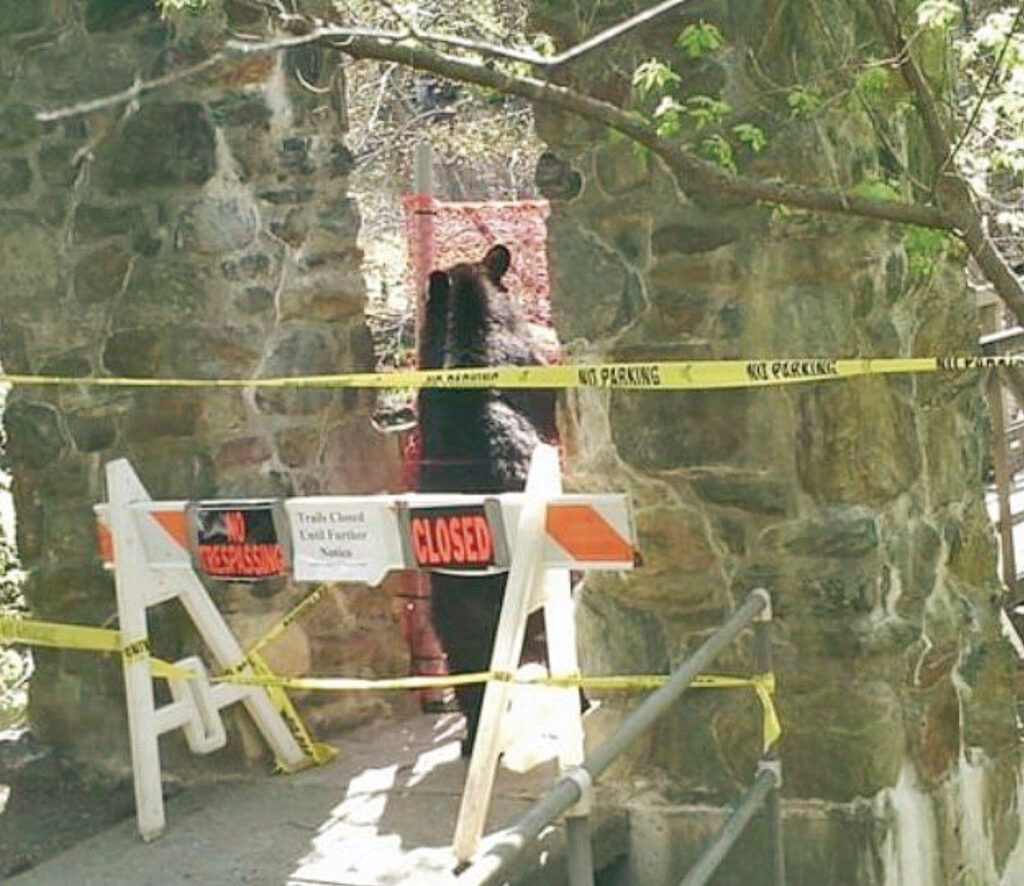
- Wildlife Feeding Ordinance (also called the Bear Bylaw). McCaffrey said this was a bylaw requested by Police Chief Fennelly to protect wildlife and people. For feeding wildlife, there is a $50 fine for the first and a $100 fine for the second offense.
White said Section B includes “attractives” — anything that would attract bears — and that appears to include bird feeders and feeding birds. He went on to say that there are 1,500 acres of preserve surrounding the business district — Bear Town Mountain, Ice Glen, Laura’s Tower and Laurel Hill. It is bear habitat and they wander down. He also mentioned that it appears to ban feeding birds in winter even though bears are hibernating.
McCaffrey suggested putting it before people at Town Meeting and they can approve/disapprove. White disagreed saying instead a bylaw should be “right” before put before Town Meeting.
White suggested removing Section B totally and also inviting John Drake, Animal Control Officer, to discuss. White said just demand dumpsters be locked, don’t fine citizens. McCaffrey said that is already a Tri-Town Health ordinance. White asked, then, what is the point of this? Why are we doing this? McCaffrey said (a) the Chief wanted it (b) to keep bears out of business district.
The matter was tabled until Wildlife Warden, Selectman Cardillo, and police chief could be present.
- Ray Ellsworth is retiring May 1 (although he agreed to stay on for essential tasks until a replacement found). He was thanked by all present for doing an excellent job. Canales said the position had to be advertised and a Search Committee formed. He suggested the same four people as last time — Jay Bikofsky, Jorja Marsden, Bronley Boyd, plus the Town Treasurer Erica Olsen and Michael Canales. McCaffrey took exception and reminded Canales the Select Board appoints committees and suggested Christine Rasmussen and David McCarthy. Canales stated his preference to keeping it to 5 committee members. White suggested the town advertise more broadly including sites such as “Indeed” and others.
- Residential Exemption was presented by White. It shifts the tax burden from the most vulnerable to the wealthiest. It is a tax policy the Select Board has the power to adopt. However White prefers taking it to Town Meeting and only instituting it with the support of the town.
White offered to present the negative as told to him and the positives. Negatives others stated: it is a progressive tax; it “soaks the rich”; it may place an additional burden on the assessor’s office.
Positives: it corrects an inequity, that is, very expensive homes being built raises taxes on all; it helps the most economically vulnerable and helps elderly remain in their homes. Finally, it becomes a right and people are helped without disclosing personal data or requesting assistance. White said these are “proud old Yankees” who don’t like to ask.
McCaffrey said she was of the population who could benefit so she opened the discussion to others only adding “the devil is in the details”.
Fletcher thanked White and spoke in Favor.
Bikofsky, Shatz, and Balfanz agreed it was “hard to be seen to be against this, however…”
- There may be other programs that can help this population without instituting the Residential Exemption.
- There should studies and proof of program’s effectiveness.
- The nonvoting second homeowners should have chance to weigh in on this since the tax would shift to them.
Next steps could include a study, more discussions with interested parties, and/or inclusion on Town Meeting warrant.
- Streetlights. $15,000 is included in budget for approval at Town Meeting. If approved, it will fund a consultant in order to the cost/benefit of transferring ownership of our streetlights from National Grid to the town and prepare way for transition. It is a potential cost savings of $28,000/annually. Stockbridge would then have to buy the lights (not the poles), equip them with LED lights, and hire an electrician to repair and replace parts and maintain lights.
The Green Community Committee has spent a year studying this and recommends to the SB that town move forward.
On related issue, White asked if the lights would be “control ready” meaning the town could control the on/off switch for the lights (for example saving on Tanglewood light in winter) and could the one odd light pole NOT painted dark green be painted.
Fletcher told a charming story about Mary Flynn doing battle with National Grid to paint the poles dark green (one was missed).
- McCaffrey introduced subject of incentives for the buildings in the town commercial area (Main and Elm) to enhance and improve at least store fronts. McCaffrey was researching because she was worried about Stockbridge business district. There are tax deferment and grant programs for “vacant store front” that have been vacant for a specific time. Barbara Zanetti mentioned a COVUD related grant program. The conversation will continue. McCaffrey and Zanetti will do more research.
Meeting adjourned.
Editor’s questions:
- With respect to Bear Bylaw, is the goal of a bylaw a scattergun approach or is the goal of a bylaw to be as narrowly focused as possible?
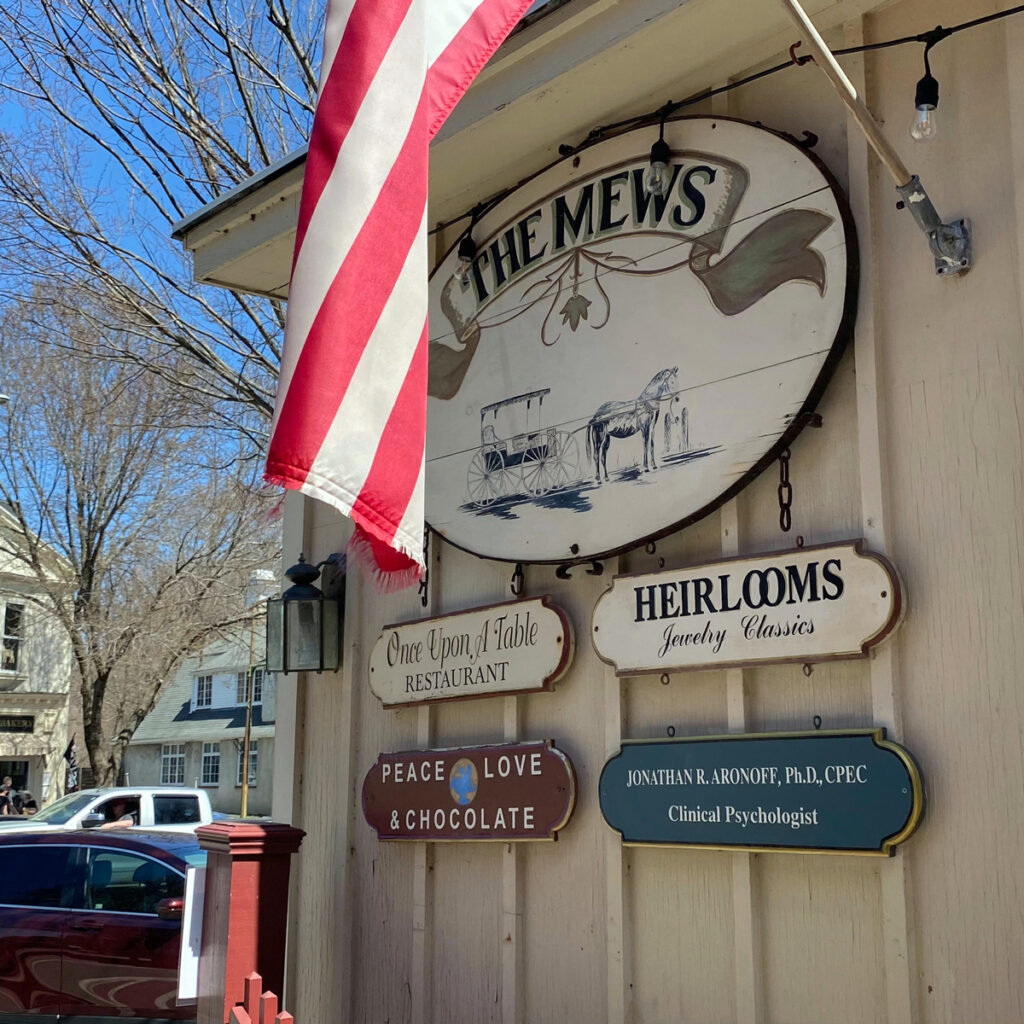
- With respect to “vacant store fronts”, is this a solution in search of a problem? The Mews sold as has Yankee Candle. One business, Vlada’s, closed due to COVID. White mentioned many buildings are not owned by the businesses. Even if businesses close, in what way are the stability and maintenance of the buildings, at risk? Does building maintenance fall to the owner or the business leasing?