

Now we are seven and all systems are go. Click http://www.stockbridgeupdates.com and in upper right corner, subscribe or leave us a comment. Find our complete archive from the first issue in August 2020 through April 15, 2026. Search an old article, read or reread them, and of course, take another look at all those fabulous photographs. if you would like to support Stockbridge Updates, go to VENMO @carole-owens-6 (no caps) or mail a check to P. O. Box 1072, Stockbridge, MA. 01262. If you like this issue, pass it on.
IN THIS ISSUE: VOL. VII NO. 09 05/01/2026
by Carole Owens, Executive Editor
by Christine Rasmussen
by Brent Wiggens
by Sally Underwood-Miller

Hawk, a predator lands to catch its prey (look for the bunny) Photo: Lionel Delevingne
Editorial
Editorial: Come Together
There are weekly get-togethers in Stockbridge. A mutual concern brought folks together. It was about declining involvement in local politics. (“Opting Out,” SU, April 15) Fewer people are running for office, attending meetings, or speaking up when they do attend. We wanted to find out why and fix it. It is a serious purpose discussed in a fun and friendly atmosphere. If this issue interests you, come.
At the first meeting, the first reason suggested was that national politics – with all the divisions and invectives – cast a pall over local involvement. We agreed it might be true, but that we should move beyond it. We are spectators of national politics, but at home, we can do things. We can think of warm and welcoming ways to involve folks. Maybe as simple as offering a ride to a meeting or inviting someone to explain an issue or issues up for a vote.
“All politics is local” is a saying that belongs to us. It was coined by Thomas P. “Tip” O’Neill (D, MA), member of the US House of Representatives for 35 years and Speaker from 1977 to 1987. For many years, “All politics is local” shaped politics and political campaigning. It meant that what voters care most about is what affects them the most – local politics.
Stockbridge has a history of involvement, of coming together, and offering differing opinions. We didn’t take differences personally; actually, we thought we benefited from hearing different points of view. We thought the best solutions came from an amalgam. The idea that there was only one right answer and that only one person had the best idea was just plain silly. That the smartest guy in the room knew what to do and should shove it down everyone else’s throat was repugnant.
Today it seemed as if a lot changed while maybe we weren’t looking. At our get together, we got down to work and got specific. We made a list of changes to encourage neighbors to join in self-governing. The list got pretty long. Here are three examples from the list of changes that might encourage more people to join in:
- No more two minutes to speak and 10 minutes total for public comments. Nope. Instead, make it clear that we are curious about what our neighbors think. We want to hear it. We trust our neighbors to keep comments focused and to the point, because they know that “the mind can absorb no more than the seat can endure.” We trust them to keep it short.
- So called work sessions are a way to work around Open Meeting Laws (OML). Keep closed meetings to a minimum. Voters need to know what’s going on, what the issues are, and how issues are being resolved. (See section on OML below).
- In the same way, Zoom recordings of our government meetings need to be posted within 48 hours. It is not a time-consuming task – in fact there is nothing to do. Other towns just connect the Zoom to CTSB-TV. It records and transmits to CTSB simultaneously. Many of us are older and don’t go out at night; many of us still work and cannot get to meetings, and many of us are part-time residents and are out of state as meetings occur. Regardless, we all want and deserve to be informed.
- We all wanted to keep in mind the Norman Rockwell painting of the man standing and speaking out at a Town Meeting – one of the Four Freedoms. We agreed to approach the task with a positive attitude, and rather than complaining, to plot a path around the obstacles.
The door is open and all are welcome. Come because it is a job worth doing. Just call (3952) or email first carole@stockbridgeupdates.com .
Carole Owens
Executive Editor
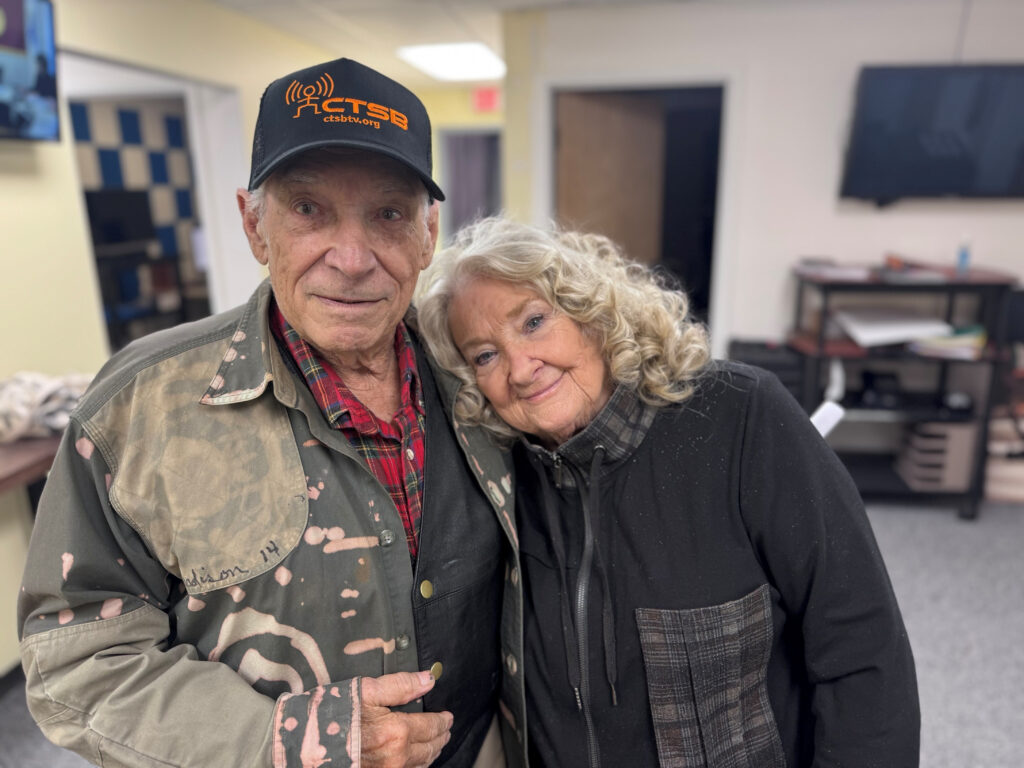
by Carole Owens, Executive Editor
Events
Events
- The Baby Town Meeting is May 11, 2026, at 6pm. The Finance Committee holds the Baby Town Meeting to help voters prepare for Town Meeting. The Finance Committee will go over the Warrant articles, as answer all questions you have about the Warrant articles that deal with financial matters. The voters affirm or reject each article on the Warrant by their votes. Finance Committee prepares the voters for that task by providing information but does not pass judgment on the articles.
- Stockbridge Library, “Join us Saturday, May 2 at 3pm, for this documentary film with director Norm Anderson.This documentary is a little-known story of the small group of American women who volunteered to serve in the Vietnam War through the Red Cross Supplemental Recreation Activities Overseas (RCSRAO) program. They were better known by our brave military men as “The Donut Dollies” (a nickname from WWII and the Korean War).
- Ventfort Hall Mansion and Gilded Age Museum is hosting a community day, Saturday, May 9, 2026, from 10am to 4pm. It is free. Contact Linda Rocke, linda@gildedage.org or Chelsea Gaia, Chelsea@gildedage.org. On Community Day, see the mansion, walk the grounds, enjoy music on the veranda by DJ Seth P, and learn how you can be part of this legacy! There’s more – visit the “Bookshires” pop-up bookshop, dine at Cousins Maine Lobster food truck, and hear lectures every hour on the hour starting at 10 am through 3 pm in the library. There will be Tarot readings and stereoscope demonstrations will also be done throughout the day. Located at 104 Walker Street in Lenox.
- Austen Riggs presents: Psychosis Care and Connection: A Retreat on Humanistic Approaches, June 25 – 27, 2026 at Gould Farm, Monterey. A round table retreat with the aim of fostering dialogue and sharing approaches to working with psychosis and nurturing community through lectures, experiential events and cultural engagement in the Berkshires.
- League of Women Voters will host a Lenox candidates’ forum May 4, 2026, 5:30pm, Lenox Town Hall

News
From the Statehouse
Renewable Energy Regulations
By Christine Rasmussen
Solar is proving itself a clean solution to rising power demand. Canary Media reported that the U.S. saw the third-largest rise in its electricity demand of any country last year, but it met 88% of that new need with clean power.
In an effort to reduce its emissions by at least 33% by 2025, 50% by 2030 compared to 1990 levels, and to achieve zero emissions by 2050, the Governor and the legislature passed legislation. It fast-tracks the building of solar facilities by dividing the permitting review. The state reviews facilities over 25 MW in fifteen months, and towns have twelve months to review facilities of 25 MW and below. If a town lacks the capacity to conduct the review, it can request that the state conduct it.
Small towns are struggling to balance state renewable energy goals with local land use concern. Each facility requires 200 acres. The problem led to legal challenges and bylaw disputes. Key issues include:
- Conflict with State Mandates: Small towns face pressure to meet state net-zero goals by 2050, which encourages developers to target rural farmland. However, towns often want to restrict large-scale projects to protect local resources.
- Moratoriums Rejected: Small towns like Blandford have tried to implement solar moratoria, but the Massachusetts Attorney General’s office (AGO) has repeatedly rejected them, ruling that temporary bans without convincing evidence of harm violate the mandate to promote solar energy.
- Legal Battles over Siting: Developers are taking towns to court (e.g., Tracer Lane II Realty), arguing that zoning restrictions are too restrictive. The Supreme Judicial Court is currently reviewing cases on whether towns can reject projects to protect forests, as reported in Stockbridge Updates.
- Environmental & Safety Concerns: Residents frequently voice concerns about lithium-ion battery storage fire risks near residential areas, and solar panels impacting wetlands or groundwater.
Solar Bylaw Challenges: Developing effective zoning is challenging because Massachusetts law prohibits the “unreasonable regulation” of solar energy systems, leaving towns struggling to define what is reasonable.
- Focus on Agriculture: Many rural communities are facing proposals for large solar arrays on agricultural land, causing a push for better “dual-use” (agrivoltaics) regulations.
- Land Use Disputes: Significant tension exists between clearing forests/farmland and the desire to protect them, with many arguing for the use of rooftops and parking lots instead.
Under traditional zoning laws, towns can request a zoning moratorium to have more time to prepare for new development in their community, e.g., sewer installation and zoning updates to reflect the proposed changes, without losing community character. However, this letter from the MA Attorney General’s Office has the mandate to approve all proposed zoning bylaws to ensure their legality. On March 11, 2026, the Massachusetts Attorney General’s Office (“AGO”) disapproved a proposed temporary zoning moratorium on large-scale solar installations and battery energy storage systems (“BESS”) in the Town of Blandford. The decision is the latest in a growing line of AGO disapprovals of municipal bylaws that frustrate state law on the siting of solar and BESS facilities.
An example of a dispute: Blandford’s Zoning Moratorium Proposal
Blandford proposed amending its zoning bylaws to prohibit the use of land or structures for large-scale solar and BESS installations through May 31, 2026, or until the Town adopted amended zoning bylaws, whichever occurred earlier. The town cited several justifications for the bylaw: three approved installations already completed or under construction, two more in permitting, and three additional projects expressing interest. Uses are allowed only by site plan review and special permit in the town’s Agricultural zoning district which covers roughly 90% of the Town’s land area. A planned Eversource substation expansion would further increase the area’s attractiveness to developers, the Town characterized the situation as one of “unexpectedly high demand” creating “an urgent need to regulate the use.”
What happened? Under Massachusetts law, proposed town bylaws (not city ordinances) must be approved by the Attorney General (AG) as consistent with state law before going into effect. The AG disapproved because it violated G.L. c. 40A, Section 3 which “prohibit or unreasonably regulate” solar energy systems.
It cited a possible “collision” with another state law, and the AG concluded that Blandford’s moratorium impermissibly restricted solar and BESS uses without evidence of a necessary health, safety, or welfare basis for doing so.
Critically, the AGO found that, “the general stated need to put a hold on new, proposed, or anticipated projects simply to study potential impacts or to oconsider zoning regulations—absent any evidence of an actual project impact prompting the need for study—does not by itself qualify as ‘a reasonable basis grounded in public health, safety, or welfare.’”
One key takeaway is that the AGO has consistently rejected local solar moratoria as frustrating state law—the decision’s footnote recites numerous recent denials in Northfield, Ware, Carver, Wareham, Leyden, Pelham, Spencer, Wendell, and others—yet towns continue to propose them. While the result in Blandford was entirely consistent with prior decisions of the AGO, the decision provides a particularly comprehensive explanation.
The position of the Berkshire Regional Planning Commission (BRPC) is that while supporting the adoption of solar and BESS facilities, BRPC has concerns that the regulations were developed with limited representation from small towns. There is also confusion about the adoption of bylaws and the need for town meeting approval. Towns without professional staff do not meet the requirements to prevent the automatic approval of a facility. While supporting the adoption of solar energy, the process of significant solar and BESS expansion is creating friction in local towns over land use and safety. While state goals encourage projects, many municipalities, particularly in Western MA, are struggling with the conversion of farmland and forests into energy sites, often facing proposals for large-scale lithium-ion battery containers near residential areas.
Editor’s note: Legislation for meeting the needs of clean energy and affordable housing, greatly diminished local control. SU thanks Christine for her diligence, attention to detail, and bringing this issue to our attention. While we all want clean energy and sufficient housing, the impact on Stockbridge and Berkshire County could be great and very negative.

by Christine Rasmussen
News
Notes from the Fire Station Planning Committee, April 16, 2026, Hybrid meeting
The last public meeting of this committee was Fall 2025. The committee is now chaired by Peter Socha. Members include Scott Muir, Jay Bikofsky, Bruce Auerbach, and Travis Searing.
The committee met with Skanska construction.
Skanska will serve as project manager and conduct a Feasibility study. The feasibility study includes site selection, selection of an architect/designer, construction options related to sustainability. They discussed designer selection and next steps in a feasibility study.
The plan is for a new forehouse to be built and a paid staff of fire fighters and EMTs to be hired. It is envisioned as a joint effort with other towns such as West Stockbridge. Since the new firehouse would serve more than Stockbridge, a study was concluded with respect to locating the firehouse. Location dictates response time and is important. It was decided somewhere along Route 102 towards West Stockbridge.
The plan is described as a matter of public safety. During the budget hearings in SB and Finance Committee, Town Manager, Michael Canales said that spending will increase by more than 4% “largely driven by public safety, employee benefits, and contract obligations.” (“Notes from the SB,” SU, March 2026).
Skanska said keeping the public informed was a necessity.
Editor’s question: Generally, the voters approve implementation of projects through discussion and a vote on the budget necessary to implement at Town Meeting (TM). For example, at Town Meeting, CPC recommends projects, but voters approve or reject them. Salaries for Town staff is approved or rejected by the voters at TM. Town Meeting is preceded by public forums dedicated to voters asking questions and making suggestions before details are finalized. Details including building location, building cost, salaries of fire fighters and EMTs, have not been discussed in a public forum before a vote and before decisions. To Town Administrator: is the process different when it is identified as a matter of public safety? If the answer is yes, could you explain how? Thank you

News
Notes from the Select Board, April 2, 2026, Hybrid meeting
- Permit granted to build a porch onto a house at 2 Cherry Street.
- Request for public comment – no comments
- Michael Dutil was appointed to the Agricultural and Forestry Commission
- Town Administrator explained we share a Building Inspector with Becket and Great Barrington. This vote made the fees uniform across those three towns.
- Adam Plummer, resident living on Wheatleigh Drive, Stockbridge, brought forward a request to add to the Warrant for this Town Meeting (TM). He wanted Chapter 40, Section 6N of the Mass General Law added. A vote in the affirmative would grant help from the Town maintaining and repairing Wheatleigh Drive, a private road. The discussion was lengthy.
History: David Rothstein gave Stockbridge 22 acres on Wheatleigh Drive. Plummer suggested, if that made the Town a “resident” on the road, then the Town may have a legal obligation to maintain and repair the road as other residents do. It may also have some legal liability.
Michael Canales said he consulted Town Counsel and Stockbridge has no obligation.
Plummer said he had to “push back.” Plummer pointed if any suit were brought, a court would decide any obligation or liability not a lawyer.
Plummer asked the SB to approve an addition to the Warrant for this Town Meeting (May 18th] about assistance in maintaining Wheatleigh Drive, a private road.
Cardillo was opposed to the Wheatleigh Drive suggestion because it could open flood gates and encourage all folks on private roads to come forward. That could add costs to the Town budget. Canales corrected Cardillo and explained that the Town can assist and the landowners still pay the costs of maintenance and repairs on private roads.
As the discussion continued, the SB encouraged Plummer to postpone the addition to the Warrant this year and work out the details attendant on the Town helping maintain private roads – as they did with the request from Beachwood a few years ago. The SB decided to open the discussion to all residents on private roads.
After much discussion, it was decided that SB would not place the initiative on this year’s Warrant as suggested by Plummer speaking for Wheatleigh Drive. Instead, the Wheatleigh Drive residents would work to create a detailed plan and come back to SB for inclusion on the 2027 TM Warrant.
- Boat Ramp closed until end of May for repairs and redesign
- The operating budget was approved after discussion of the amount of money awarded to the Stockbridge Bowl Stewardship Commission. The amount ($2500) remained in the approved budget.
- The Warrant was approved after discussion of the possibility of removing the SBSC from our bylaws. If removed, it would be dissolved as a commission, but could possibly continue as presently constituted(?) and be called a committee. The motion to dissolve SBSC failed, Cardillo requested that SBSC report more regularly to SB, and the Warrant was approved and closed.
- Patrick White asked that an article be added to the Warrant for $50,000 for the South Berkshire Ambulance Squad (SBAS) — $25,000 toward operating costs and $25, 000 for capital expenditures (new trucks). It was approved as two articles. Cardillo explained it would be a temporary cost because when our new firehouse and paid staff were in place, then Stockbridge and SBAS would provide Mutual Aid for which neither service charges the other. As always, it would be available free just as Stockbridge has Mutual Aid agreements with Lee and Lenox.
Click Here to read the Warrant approved at SB meeting

News
Notes from the Stockbridge Bowl Stewardship Committee (SBSC), April 9, 2026, Hybrid meeting
Chair Michael Nathan was absent, and Vice Chair Don Chabon ran the meeting. The discussion at the April 2 Select Board meeting about continued existence of SBSC was postponed until Nathan’s return.
There was no writeup about SBSC in the Town Report. The Vice Chair apologized and it was recommended that for the Town Report 2027, SBSC make their submission by Valentine’s Day.
Chabon suggested that a sentence be added to the SBSC report to SB that said in effect – the lake is healthy, there is no significant decline in the lake, but continued vigilance is required
Sally Underwood-Miller hoped the salt level in the lake would be measured on a regular basis.
Another member wanted to aerate the lake periodically. Another member suggested they meet with Tri-Town Health and clarify what actions could prevent cyanobacteria blooms and what can treat them (to reduce them) if they do occur
A report on the progress at the boat ramp included information that steps were being taken to save the oak tree, the parking lot graded, and a 20 x 50 foot retention pond installed to catch run off.
Chabon mentioned some signs had fallen or been taken down and he would reinstall them

News
Promoting Democracy
By Brent Wiggens
Living in a representative democracy for a while, one tends to become a little like a fish in water: we take the stuff for granted until it starts to dry up or become toxic. Our local democracy is showing the effects of a drought in participation, both in attendance at public meetings and in the willingness of people to take on the responsibilities of representing their interests and those of their neighbors on town bodies. The hazards of serving are all too evident in these uncertain and contentious times. No one needs to be shamed into attending or serving. That is not my purpose. I believe that a good start would be to remove unnecessary impediments to participation and to remind ourselves that what sometimes seems a burden, or perhaps just a right we choose not to exercise, is also an opportunity to be sure that the opinions, values and the material and spiritual interests of people just like ourselves are taken seriously in the way our town is run.
I speak only for myself here, but while discussing this reluctance to take part with friends and neighbors who are also concerned with how it may adversely affect the future of our town a few ideas for addressing it have emerged.
- The opportunity to access video recordings of all town public meetings promised to make it possible for people to be informed of the proceedings of more meetings than they can attend in person and to respond to them. Time flies and if these recordings are not quickly made available to the public their usefulness as a tool of democracy is reduced to nothing more than an archive of done deals. The timely posting of these recordings to CTSB ought to be made a priority.
- The citizens of this town should be trusted and allowed to speak without someone giving them the hook at the end of a couple of minutes. All who wish to speak should be heard. Oh, some of us tend to prattle a bit, but no one is going to filibuster a town meeting. If we can’t slow down enough to hear our neighbors out, we are moving too fast for Stockbridge, even in the 21st Century.
- People have become aware that substantive bits of town business that ought to be done in sunlight and known to the public are happening in informal “planning sessions” that are not public and are neither recorded nor are minutes published for them. This creates the perception that the participation of the public is something those charged with making town government work would rather do without. And who wants to feel they are a fifth wheel? This is just backwards, of course, but it takes patience to work with the public. We must insist that all parts of town government be patient enough with us to respect and encourage our participation and our right to know what is being done in our name and with our taxes.
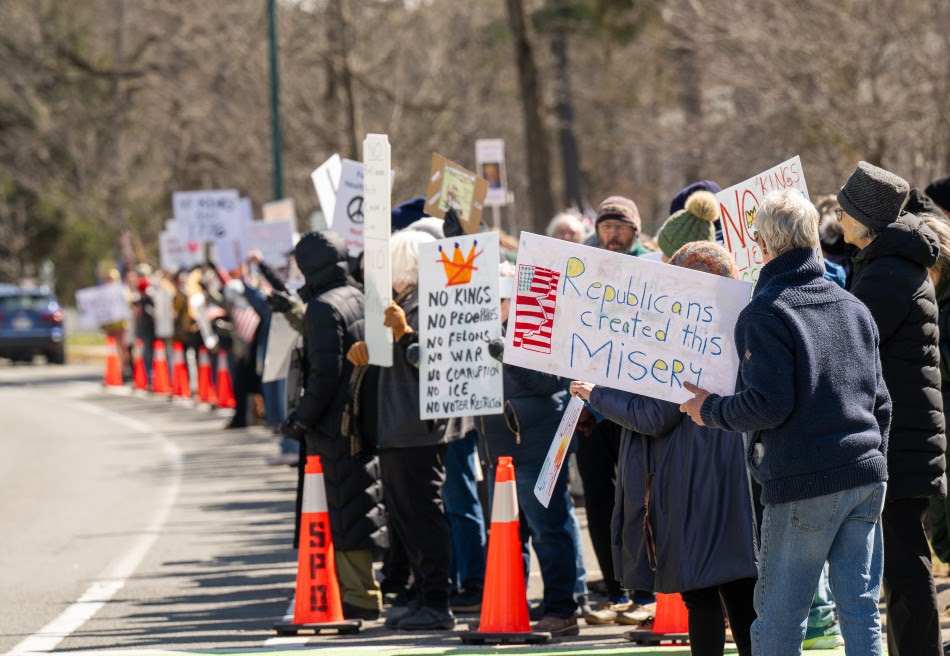
by Brent Wiggens
Reader to Reader
Reader to Reader
Carole,
Thanks a lot!!
Jeff
Jeff Nestel-Patt
West Stockbridge Historical Society
Hi Carole,
Our Board unanimously decided to dissolve our 501(c)(3) today. Therefore, it is official that we will close our doors August 31st. Do you still want us to come to CTSB [on the Stockbridge Updates TV show] to talk about the daycare crisis?
Let me know.
Marianne Vallee, Director
Lenox Children’s Center
9 Old Center Street
Lenox, MA 01240
Dear Marianne,
Yes, I am looking forward to the interview. At Lenox Children’s Center, you and your staff provided an important service. The families you served were grateful and very sad with te outcome. Childcare is a problem across the country. It is an important conversation.
Carole
Dear Carole,
I always enjoy the photography that punctuates issues of Stockbridge updates. Would you consider asking the photographers to provide captions to appear alongside their photo credits? Even after more than 13 years in Stockbridge, there are many places I don’t recognize and can’t identify by sight. Noting locations, plant species, and other subject matter would enhance my appreciation of our beautiful town.
With gratitude,
Jon Geldert
Dear Jon: Aren’t you nice — that’s my fault — the photographers never did any captions but there was one staffer who did. The captions were meant to be more funny than informative, and I didn’t always think they were funny, so I dropped them. Your idea of just identifying places or species is a very good suggestion, and I will do that. Right now, is there a place you didn’t know? Send a copy of the photo and I will identify if I can.
Carole
Thanks, Carole,
Appreciate your kind and thoughtful reply. Yes, humor is tricky to navigate, especially amongst an opinionated population! Informative is probably less prone to controversy. No need to “back-caption” older photos, but very sweet of you to offer.  Hope you are enjoying this mini heat wave we are having!
Jon
To the editor
I want to thank the Humane Society which has given us a wonderful example of how to get things done and help people with little or no money. Too bad that we don’t apply their methods to how we manage our communities. Today everything seems to be about money and costs. We have to hire an Expert to tell us what to do and they give us expensive answers. But we have experts in our midst that can volunteer the information and people who can help to get things done.
My father, Joseph Franz was a wonderful example of how to get thing done with less money. We would not have Tanglewood or Jacob’s Pillow Dance theater if it were not for him volunteering his services. He was paid very little. Eliel Saarinen, the Expert Architect, was paid $2,000 for plans that were never used. My father was paid $1,000 and he built Tanglewood for less than the money that was raised from volunteer contributors.
Wouldn’t it be wonderful to go back to simpler times and keep our Berkshires as beautiful as they are with the use of our home-grown experts?
Shirley F. Miller
To the editor: The funding of ambulance services seems to be a recurring issue. (First printed in the Berkshire Eagle in answer to “Great Barrington calls Southern Berkshire Ambulance Squad’s nearly $1M request unsustainable,” Eagle, April 9.)
It makes no sense. Providers complain that insurance does not cover the cost, but insurance companies don’t need a ride in the ambulance. People do and should be responsible for the bill. If they are reimbursed by insurance, so much the better, but that should not affect the vendor.
Perhaps the service has become more than people can afford. Once upon a time, ambulances were station wagons, even hearses. They provided a ride to the hospital — no treatment along the way. Perhaps we should move back to that model. It is good to have treatment during the ride, but how many of us can afford to ride in a half-million-dollar limousine?
In another state, I subscribed to an ambulance service. Here, that seems not to be an option. Why not? If ambulance companies go out of business, I suppose you can call Uber for a ride to the hospital. If you can’t walk to the car, you will have to suffer at home. That seems silly, but it might be in our future.
As with any business, any ambulance service has to charge enough to pay its expenses and earn a little profit. If it can’t, it will close up shop. Public funding might extend the service, but customers have to be willing to pay
Watch Now!
Stockbridge Updates on TV: David Rothstein, architect of White Pines and entrepreneur of the Music Inn.
Click the above to watch the video
News
SU FYI
- From The Berkshire Waldorf School (BWHS): the Afghan Scout Relief Fund (ASRF) enables Afghani children to continue their schooling now entirely denied in Afghanistan for girls and young women under the Taliban regime. ASRF is a 501c3 tax exempt organization founded in New Mexico. Their motto is Rescue – Empower – Transform. More information about ASR is available at: gates@afghansscoutrelieffund.org
In collaboration with ASRF, BWHS helped “Afghan Women Continue Studying Safely in the U.S.” Three students attended and graduated from BWHS and are now accepted to American colleges. Steve Sagarin, Director of BWHS, writes, “Afghan women are being heard in the halls of the US Congress. These women are incredible!!” Steve goes on, “We are advocating on Capitol Hill to build support for a formal Congressional letter to Secretary Rubio, asking for an exemption from the travel ban for Afghan women who wish to study in the US. ASRF has been working with Senator Graham and Congressman Bacon, the Senate and House support a letter we helped draft. It’s now our job to convince other Senators and Representatives to sign onto the letter. This effort must wrap up by late May and it’s imperative we get as many signatures as possible before the letter heads over to State and Homeland Security. That will take many visits from our students. Your support today helps ensure their voices are not just heard—but impossible to ignore. We need funds for plane tickets, lodging, food and more advocacy expenses. We’re happy to accept frequent flyer miles. If you’re willing to be a chaperone, please contact me at the school.” Steve Sagarin, Director BWHS

- The Open Meeting Law (OML)
We may think the OML is a pain in the neck – just an additional bureaucratic layer to make elected officials despair of having run for office. Some of us even say the most important reason to change from a 3- to a 5-member Select Board is so two members can talk to each other about issues before them outside of meetings. Oh dear – talk about dodging the intent of the law as the reason to vote in favor of it.
OML is a codified defense of democracy and the democratic process. It empowers the people. OML has one underlying purpose: to cause elected officials to discuss the issues at a public meeting to which all have access and to argue the merits and vote their conscience in public. To put that purpose in government-speak, OML
- Promotes transparency in governmental decision-making processes.
- Encourages public participation in local governance.
- Prevents secret deliberations that could undermine public trust.
- Establishes clear guidelines for meeting notifications and minutes.
- Protects the public’s right to be informed about governmental actions.
It protects out rights – why circumvent or vote against it?

Photo: Dana Goedewaagen
- Journalism Corner
Question for the press: If an author asks another person to sign an article or column he wrote, because, for some reason, he doesn’t want us to know who actually wrote it, wouldn’t that be a very good reason for the public to know? The concealment is the larger story. Wouldn’t a newspaper that reports facts about others want to report that fact? Wouldn’t that paper want its readers to know who wrote what?
Question from the press: Congrats to Clarence Fanto for his article, “Is Using AI Plagiarism,” Berkshire Eagle, April 24, 2026. We all should be asking that question and many more about AI. From the article: “Williams College, for example, has a Committee on Academic Integrity that found more students responsible for violating the honor code last fall than in recent years, primarily driven by prohibited use of artificial intelligence, according to the Williams Record newspaper.”

News
The Great Barrington Kennel Club
By Sally Underwood-Miller
The Great Barrington Kennel Club has been the only AKC member organization in the Berkshires since 1941. The club has hosted two all-breed Conformation shows a year since then, most recently the first weekend in February.
Finding a suitable venue for a dog event is always tricky. We’ve been at the Big E for many years now. It has plenty of parking, accommodates RVs, a convenient location and has lots of space, and nearby lodging and food.
In 2018 we held our first Scent Work trials open to all breeds and mix-breeds at the Big E in conjunction with the Conformation shows. We soon learned that was not ideal. One of the issues we face is lodging that will accept dogs and we wanted to be closer to home in a stand-alone site. Our first local trials were held at Camp Mah-Kee-Nac in Stockbridge. Sites often worry about having more than 100 dogs and what that might mean, but MKN soon learned that we leave a site cleaner than when we arrived, and that we are a happy easy to get-along-with group! Due to a conflict with MKN schedules, we now hold our fall trials at Camp Danbee in Peru, MA, MKN’s sister camp. Our experience with MKN lead us to a search for a new spring SW venue to replace the Big E. We came upon Eisner Camp in Great Barrington. Both these sites – Danbee and Eisner – provide wonderful and varied search areas, as well as lodging and meals for handlers with dogs.
Scent Work is a game played by a handler and dog team that is based on the kind of training one might do to ready a bomb or drug-sniffing dog for that task. Dogs have 100,000 times our ability to detect odor and can be trained to reliably find cancer, COVID, endangered species, invasive species (zebra mussels, lantern flies, etc.), identify low blood sugar in diabetic humans or an oncoming seizure, Search and Rescue, among many others.
Our competitors’ dogs search at five levels – Novice, Advanced, Excellent, Master and Detective, each level becoming more complex and involving more and different scents to search for (Birch, Anise, Clove and Cypress). The searches also vary with Containers, Interiors, Buried, and Exteriors. There is also a Handler Discrimination element where dogs find their handlers scent.
Our most recent trial at Eisner Camp featured all the weather the Berkshires could throw at us – high 80s and sunny Friday, perfect 70s Saturday and miserable, rainy, snow, cold 40s Sunday!
Friday’s 2 Detective trials are for the elite searchers, with 5-10 (unknown number) “hides”, in up to 15 minutes – judge’s choice- interior and exterior.
Saturday’s and Sunday’s classes are Novice through Master levels. We have five judges, a trial secretary who assembles the scores, and a myriad of volunteers, all necessary to hold a trial, and, of course, a Trial Chair who puts it all together

by Sally Underwood-Miller
Sign Up for
Stockbridge Updates
Local news provided free of charge.
Past Issues
-
VOL. VII NO. 14 07/15/2026
-
VOL. VII NO. 13 07/01/2026
-
VOL. VII NO. 12 06/15/2026
-
VOL. VII NO. 11 06/01/2026
-
VOL. VII NO. 10 05/15/2026
-
VOL. VII NO. 09 05/01/2026
-
VOL. VII NO. 08 04/15/2026
-
VOL. VII NO. 07 04/01/2026
-
VOL. VII NO. 06 03/15/2026
-
VOL. VII NO. 05 03/15/2026
-
VOL. VII NO. 04 03/01/2026
-
VOL. VII NO. 03 02/15/2026
-
VOL. VII NO. 02 01/15/2026
-
VOL. VII NO. 01 01/01/2026
-
VOL. VI NO. 22 10/15/2025
-
VOL. VI NO. 21 10/01/2025
-
VOL. VI NO. 20 09/21/2025
-
VOL. VI NO. 19 09/15/2025
-
VOL. VI NO. 18 09/01/2025
-
VOL. VI NO. 16 08/15/2025
-
VOL. VI NO. 15 08/01/2025
-
VOL. VI NO. 14 07/21/2025
-
VOL. VI NO. 13 07/15/2025
-
VOL. VI NO. 12 07/01/2025
-
VOL. VI NO. 11 06/15/2025
-
VOL. VI NO. 10 06/01/2025
-
VOL. VI NO. 09 05/15/2025
-
VOL. VI NO. 08 05/01/2025
-
VOL. VI NO. 07 04/01/2025
-
VOL. VI NO. 06 04/15/2025
-
VOL. VI NO. 05 03/15/2025
-
VOL. VI NO. 04 03/01/2025
-
VOL. VI NO. 03 02/15/2025
-
VOL. VI NO. 02 02/01/2025
-
VOL. VI NO. 01 01/15/2025
-
VOL. V NO. 22 11/15/2024
-
VOL. V NO. 21 11/01/2024
-
VOL. V NO. 20 10/15/2024
-
VOL. V NO. 19 10/01/2024
-
VOL. V NO. 18 09/15/2024
-
VOL. V NO. 17 09/01/2024
-
VOL. V NO. 16 08/15/2024
-
VOL. V NO. 15 08/01/2024
-
VOL. V NO. 14 07/15/2024
-
VOL. V NO. 13 07/01/2024
-
VOL. V NO. 12 06/15/2024
-
VOL. V NO. 11 06/01/2024
-
VOL. V NO. 10 05/15/2024
-
VOL. V NO. 09 05/01/2024
-
VOL. V NO. 08 04/15/2024
-
VOL. V NO. 07 04/01/2024
-
VOL. V NO. 06 03/15/2024
-
VOL. V NO. 05 03/01/2024
-
VOL. V NO. 04 02/15/2024
-
VOL. V NO. 03 02/01/2024
-
VOL. V NO. 02 01/15/2024
-
VOL. V NO. 01 01/01/2024
-
VOL. IV NO. 28 12/15/2023
-
VOL. IV NO. 27 12/01/2023
-
VOL. IV NO. 26 11/15/2023
-
VOL. IV NO. 25 11/01/2023
-
VOL. IV NO. 24 10/22/2023
-
VOL. IV NO. 23 10/15/2023
-
VOL. IV NO. 22 10/01/2023
-
VOL. IV NO. 21 09/22/2023
-
VOL. IV NO. 20 09/15/2023
-
VOL. IV NO. 19 09/08/2023
-
VOL. IV NO. 18 09/01/2023
-
VOL. IV NO. 17 08/22/2023
-
VOL. IV NO. 16 08/15/2023
-
VOL. IV NO. 15 08/01/2023
-
VOL. IV NO. 14 07/15/2023
-
VOL. IV NO. 13 07/01/2023
-
VOL. IV NO. 12 06/15/2023
-
VOL. IV NO. 11 06/01/2023
-
VOL. IV NO. 10 05/15/2023
-
VOL. IV NO. 09 05/01/2023
-
VOL. IV NO. 08 04/15/2023
-
VOL. IV NO. 07 04/01/2023
-
VOL. IV NO. 06 03/15/2023
-
VOL. IV NO. 05 03/11/2023
-
VOL. IV NO. 04 02/15/2023
-
VOL. IV NO. 03 02/01/2023
-
VOL. IV NO. 02 01/15/2023
-
VOL. IV NO. 01 01/01/2023
-
VOL. III NO. 24 12/15/2022
-
VOL. III NO. 23 12/01/2022
-
VOL. III NO. 22 11/15/2022
-
VOL. III NO. 21 11/01/2022
-
VOL. III NO. 20 10/15/2022
-
VOL. III NO. 19 10/01/2022
-
VOL. III NO. 18 09/15/2022
-
VOL. III NO. 17 09/01/2022
-
VOL. III NO. 16 08/15/2022
-
VOL. III NO. 15 08/01/2022
-
VOL. III NO. 14 07/15/2022
-
VOL. III NO. 13 07/01/2022
-
VOL. III NO. 12 06/15/2022
-
VOL. III NO. 11 06/01/2022
-
VOL. III NO. 10 05/15/2022
-
VOL. III NO. 09 05/01/2022
-
VOL. III NO. 08 04/15/2022
-
VOL. III NO. 07 04/01/2022
-
VOL. III NO. 06 03/15/2022
-
VOL. III NO. 05 03/01/2022
-
VOL. III NO. 04 02/15/2022
-
VOL. III NO. 03 02/01/2022
-
VOL. III NO. 02 01/15/2022
-
VOL. III NO. 01 01/01/2022
-
VOL. II NO. 24 12/15/2021
-
VOL. II NO. 23 12/01/2021
-
VOL. II NO. 22 11/15/2021
-
VOL. II NO. 21 11/01/2021
-
VOL. II NO. 20 10/15/2021
-
VOL. II NO. 19 10/01/2021
-
VOL. II NO. 18 09/15/2021
-
VOL. II NO. 17 09/01/2021
-
VOL. II NO. 16 08/15/2021
-
VOL. II NO. 15 08/01/2021
-
VOL. II NO. 14 07/15/2021
-
VOL. II NO. 13 07/01/2021
-
VOL. II NO. 12 06/15/2021
-
VOL. II NO. 11 06/01/2021
-
VOL. II NO. 10 05/15/2021
-
VOL. II NO. 09 05/01/2021
-
VOL. II NO. 08 04/15/2021
-
VOL. II NO. 07 04/01/2021
-
VOL. II NO. 06 03/15/2021
-
VOL. II NO. 05 03/01/2021
-
VOL. II NO. 04 02/15/2021
-
VOL. II NO. 03 02/01/2021
-
VOL. II NO. 02 01/15/2021
-
VOL. II NO. 01 01/01/2021
-
VOL. I NO. 10 12/15/2020
-
VOL. I NO. 09 12/01/2020
-
VOL. I NO. 08 11/13/2020
-
VOL. I NO. 07 11/01/2020
-
VOL. I NO. 06 10/18/2020
-
VOL. I NO. 05 10/01/2020
-
VOL. I NO. 04 09/15/2020
-
VOL. I NO. 03 09/01/2020
-
VOL. I NO. 02 08/18/2020
-
VOL. I NO. 01 08/06/2020